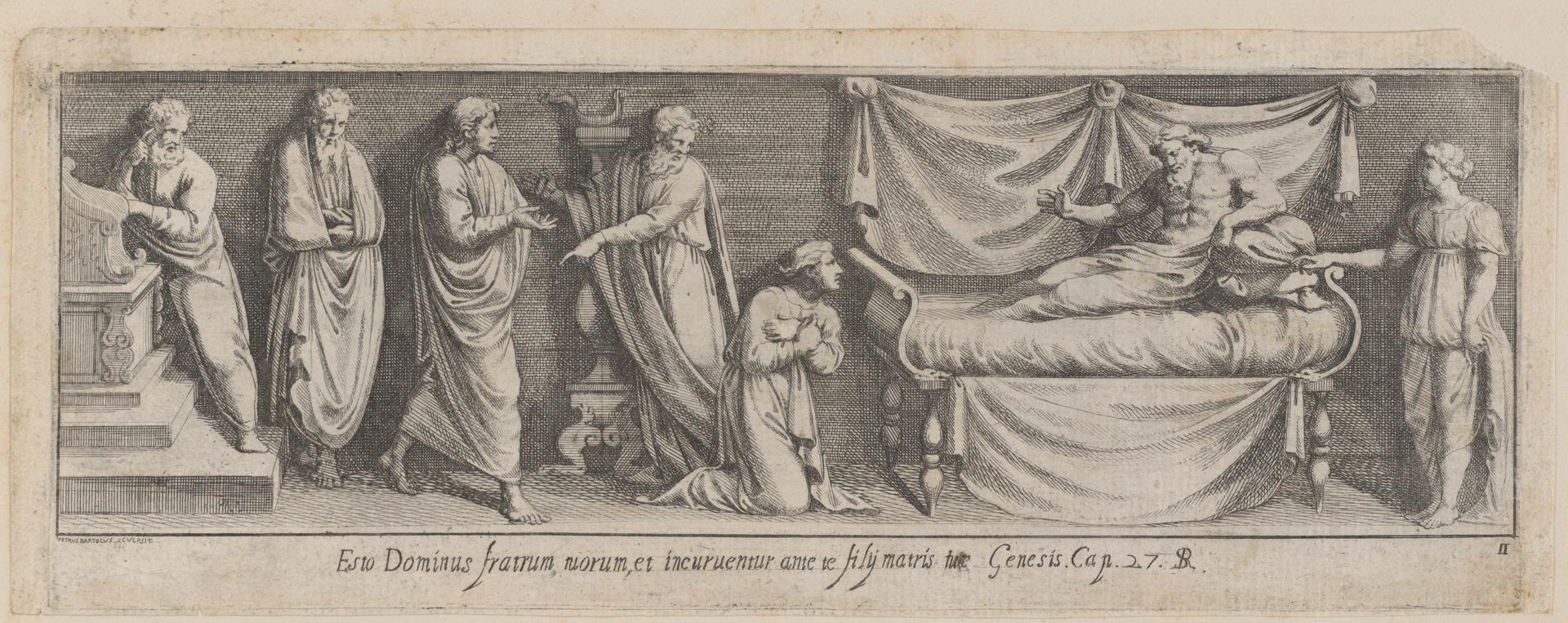
Plate 11: Bathsheba interceding with David for Solomon, from Genesis 27, after a lost fresco in the basamento of Bay 11 of the Vatican Loggia
Original title: Plate 11: Bathsheba interceding with David for Solomon, from Genesis 27, after a lost fresco in the basamento of Bay 11 of the Vatican Loggia
kurzbeschreibung
Unlike related sheets in the series, this etching by Pietro Santi Bartoli (1650–1677) centers not on David's reign but on Bathsheba's plea for her son Solomon. The print reproduces a lost fresco from the socle zone of Bay 11 in the Vatican Loggia and renders the biblical narrative in classical guise.
Description
From left to right the figures line up, all draped in antique garments. On the ground a man kneels, turning toward someone lying on a bed; at right a woman stands and follows the action with her gaze. The arrangement feels mirror-like in its order, the tones remain monochrome, and light falls evenly across the surface. The style is classicizing, with emphasis on posture and movement.
Context
Between 1650 and 1677 Bartoli made this print as part of a series reproducing frescoes in the Vatican Loggia. Those frescoes derive from designs by Raphael and treat scenes from the Old Testament. The Roman engraver specialized in copying ancient and Renaissance art. The motif refers to Genesis 27 and brings Bathsheba's request for Solomon into focus.
Impact
Crisply drawn lines and the mirror-like order give the sheet a calm, balanced appearance. The antique draperies and the classicizing treatment of the figures lend the scene a dignified, historicizing air.
Technique
The work is executed as an etching, an intaglio process: the drawing is scratched into an acid-resistant ground on a metal plate and then etched. This produces fine lines and an even tone, as the monochrome reproduction reveals.
AI-generated description text
Source: Metropolitan Museum of Art · Public Domain (CC0 1.0)