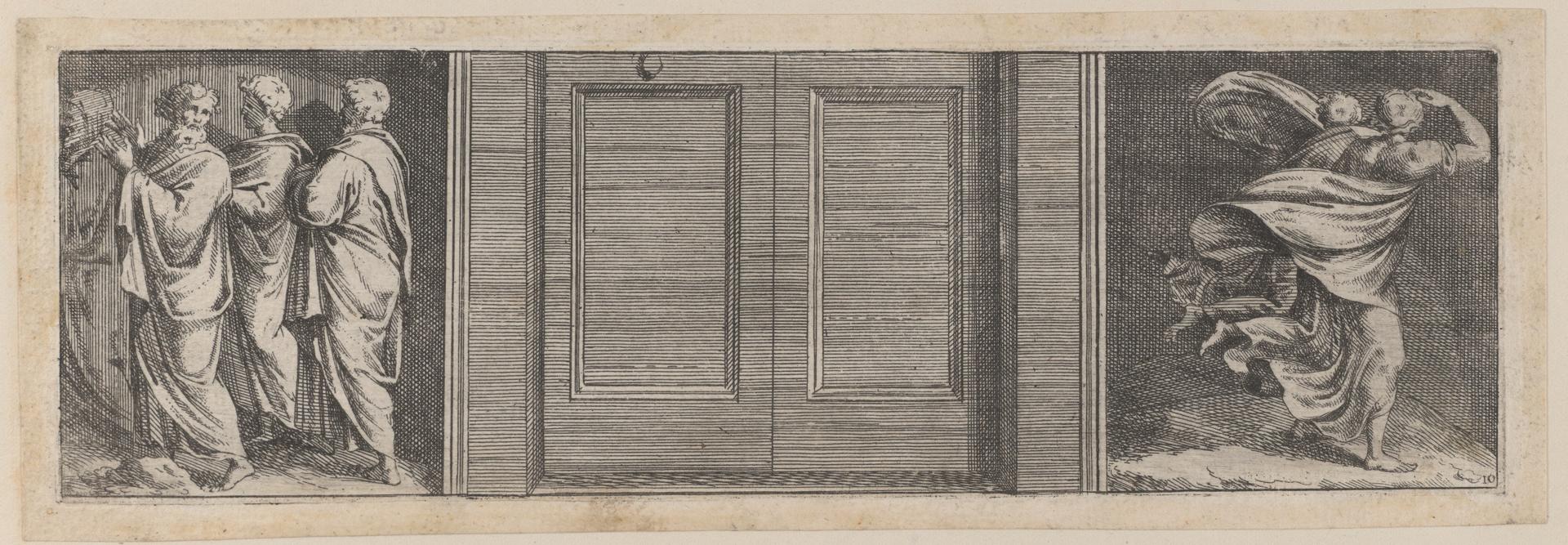
Plate 10: Three figures at left and two figures running at right, after a lost fresco in the basamento of Bay 9 in the Vatican Loggia
Original title: Plate 10: Three figures at left and two figures running at right, after a lost fresco in the basamento of Bay 9 in the Vatican Loggia
kurzbeschreibung
Pietro Santi Bartoli made this etching between 1650 and 1677, setting three standing figures on the left against two figures in motion on the right. The source was a fresco in the base zone of the ninth bay of the Vatican Loggia, now lost. The sheet belongs to Bartoli's documentary copies of antique art.
Description
On the left side three calm figures stand in classicizing drapery, while on the right two forms move: one with a raised arm, the other leaning forward. Two large doors sit at the middle and split the layout into two halves. Black and white governs the print throughout, and the garments are worked out with delicate textures. An even light lies across the sheet; strong shadows or hard contrasts are absent, which underlines the classicist tendency.
Context
Bartoli was a Roman engraver and antiquarian who devoted himself entirely to reproducing ancient and post-antique artworks. Under Pope Leo X the Vatican Loggias had been furnished with frescoes; Bartoli's series made these works known beyond Rome as well. The years 1650 to 1677 fall in a period of intensive engagement with the classical heritage, to which publications such as Bartoli's 'Admiranda Romanarum Antiquitatum' also contributed.
Impact
The sheet feels calm and balanced, thanks to the symmetrical arrangement around the central doors. Static and moving figures meet, producing a quiet tension that stays within a classically harmonious frame. The precise rendering of the drapery and the clear linework make the print read like a careful archaeological study.
Technique
The work was executed as an etching, an intaglio process: the drawing is scratched into a metal plate, which is then bitten with acid. Extremely fine lines form the structure of figures and garments. The sheet measures 8.2 × 24.2 cm, the plate 7.2 × 23 cm, giving a compact horizontal format.
AI-generated description text
Source: Metropolitan Museum of Art · Public Domain (CC0 1.0)