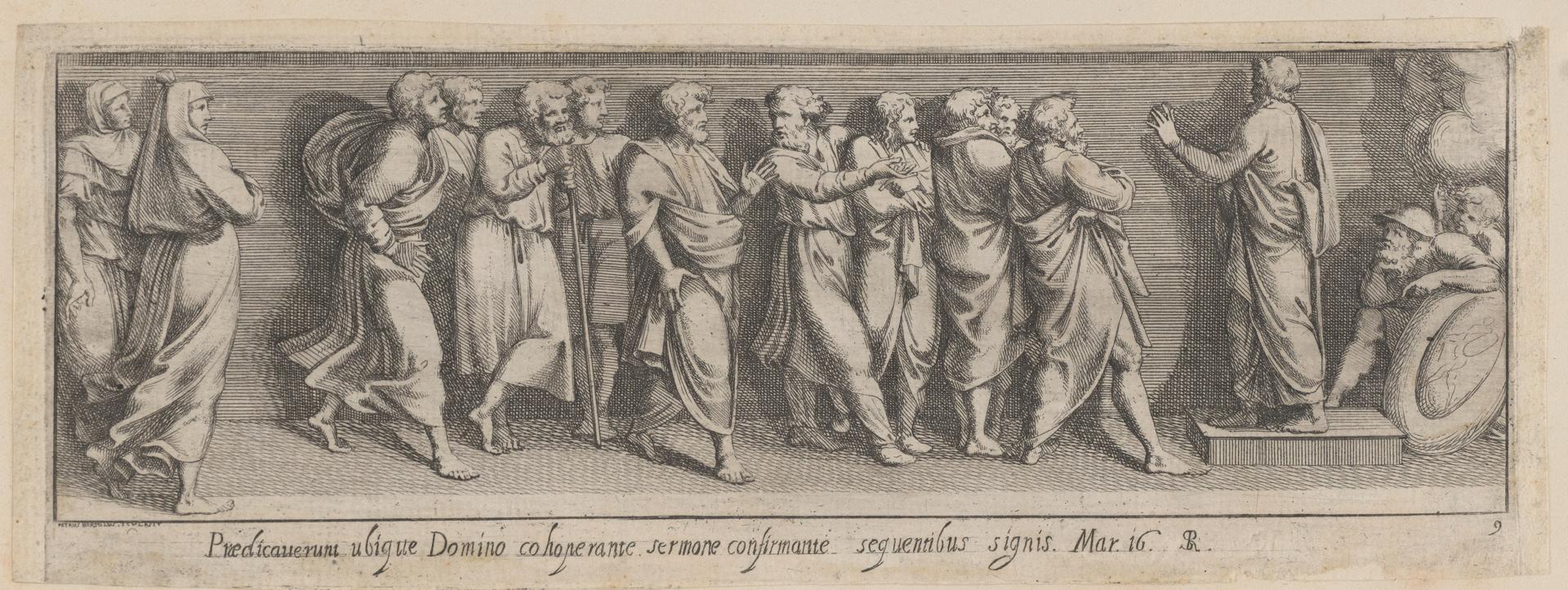
Plate 9: Joshua, standing at right, speaks to the people of Israel
Original title: Plate 9: Joshua, standing at right, speaks to the people of Israel, after a lost fresco in the basamento of Bay 10 of the Vatican Loggia
kurzbeschreibung
Pietro Santi Bartoli's etching, made between 1650 and 1677, presents Joshua standing on the right as he addresses the people of Israel. The sheet belongs to a series reproducing a lost fresco from the base of Bay 10 in the Vatican Loggia. A crowded scene unfolds, with Joshua in antique dress surrounded by a group of listening men.
Description
The layout stretches horizontally, gathering figures in classical garments around a dramatic moment. At the front, a man with raised hand appears to deliver a sermon. Around him, men react in various ways, from attention to confusion: some tilt their heads, others lift their arms or turn away. Another figure in the background is drawn into the action. Light falls evenly without visible shadows, and the figures stand in a row that directs the eye toward the speaker.
Context
Bartoli produced this etching as part of a series that recorded frescoes in the Vatican Loggia. The Loggia was a major early sixteenth-century decorative project featuring biblical scenes after designs by Raphael and his workshop. The fresco referenced here, in the base section (basamento), is lost, so Bartoli's print serves as an important visual source. The series arose from commission or support within the Roman art market, which sought reproductions of famous works.
Impact
The precise linework and calm, even lighting give the etching a clear narrative effect. The arrangement of figures emphasizes the speaker's rhetorical gesture and creates a quiet, dignified atmosphere. Viewers are drawn to the interaction between Joshua and the group without distraction from dramatic shadows.
Technique
Etching involves biting lines into a ground on a metal plate before inking and printing. Fine lines and precise details in garments and faces are characteristic of the technique. The sheet is monochrome black and white, which underscores the graphic impact of the lines.
AI-generated description text
Source: Metropolitan Museum of Art · Public Domain (CC0 1.0)