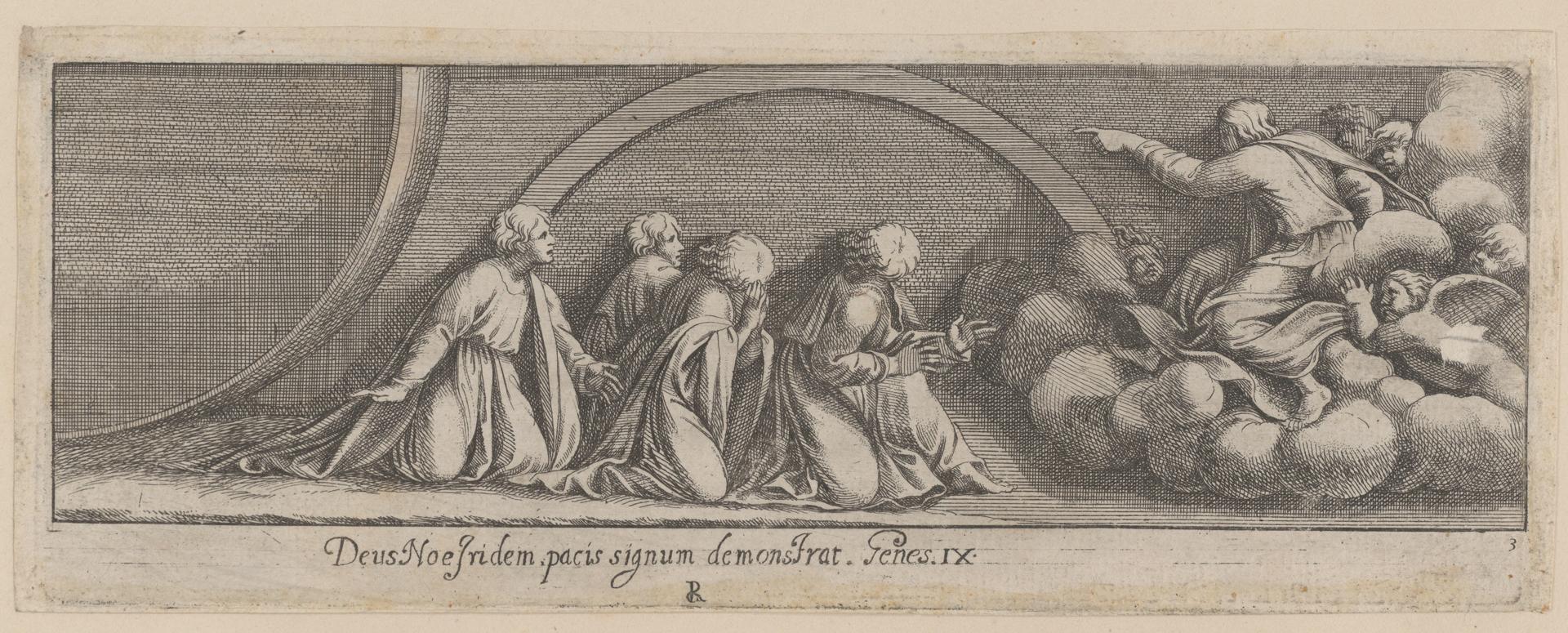
Plate 3: God Addressing Noah and his Sons, from Genesis Chapter 3, after a lost fresco in the basamento of Bay 13 of the Vatican Loggia
Original title: Plate 3: God Addressing Noah and his Sons, from Genesis Chapter 3, after a lost fresco in the basamento of Bay 13 of the Vatican Loggia
kurzbeschreibung
Pietro Santi Bartoli's etching of 1650–77 stands apart from many prints on the Genesis story in that it records neither the Creation nor the Flood but God's conversation with Noah and his sons. The source was a fresco in the base zone of Bay 13 of the Vatican Loggia, now lost. The sheet is laid out horizontally, presenting the biblical encounter across a wide field, with a Latin inscription added along the lower margin.
Description
Instead of a single monumental scene, this print relies on a broad, shallow arrangement: several kneeling figures in long-sleeved garments are spread across the format. At the right a figure leans forward, hand raised, turned toward God. Clouds and an arch close off the space behind. Held in monochrome with evenly distributed light, the print reveals the linear structure typical of etching; the style is Baroque, with densely set strokes and graded shading.
Context
Between 1650 and 1677 Bartoli worked on a record of the frescoes in the Vatican Loggia, which go back to Raphael and his workshop. The model for this sheet, a fresco in the base zone of Bay 13, no longer exists, so the print preserves it as one of the few surviving witnesses. The Loggia series was a large undertaking that brought biblical narratives to a wider public.
Impact
The calm and clarity of the lines give the sheet a dignified, almost ceremonial tone. Out of the group of kneeling figures the leaning, gesturing one steps forward, creating a tension that runs toward the meeting between God and humanity. What separates this view from related sheets is the interplay of quiet devotion and a single, directed movement.
Technique
The drawing was etched into a copper plate and printed from it. Hair-fine strokes and graded shading model the bodies and open up spatial depth. The Latin text in the lower area follows the custom of reproductive prints of the period.
AI-generated description text
Source: Metropolitan Museum of Art · Public Domain (CC0 1.0)