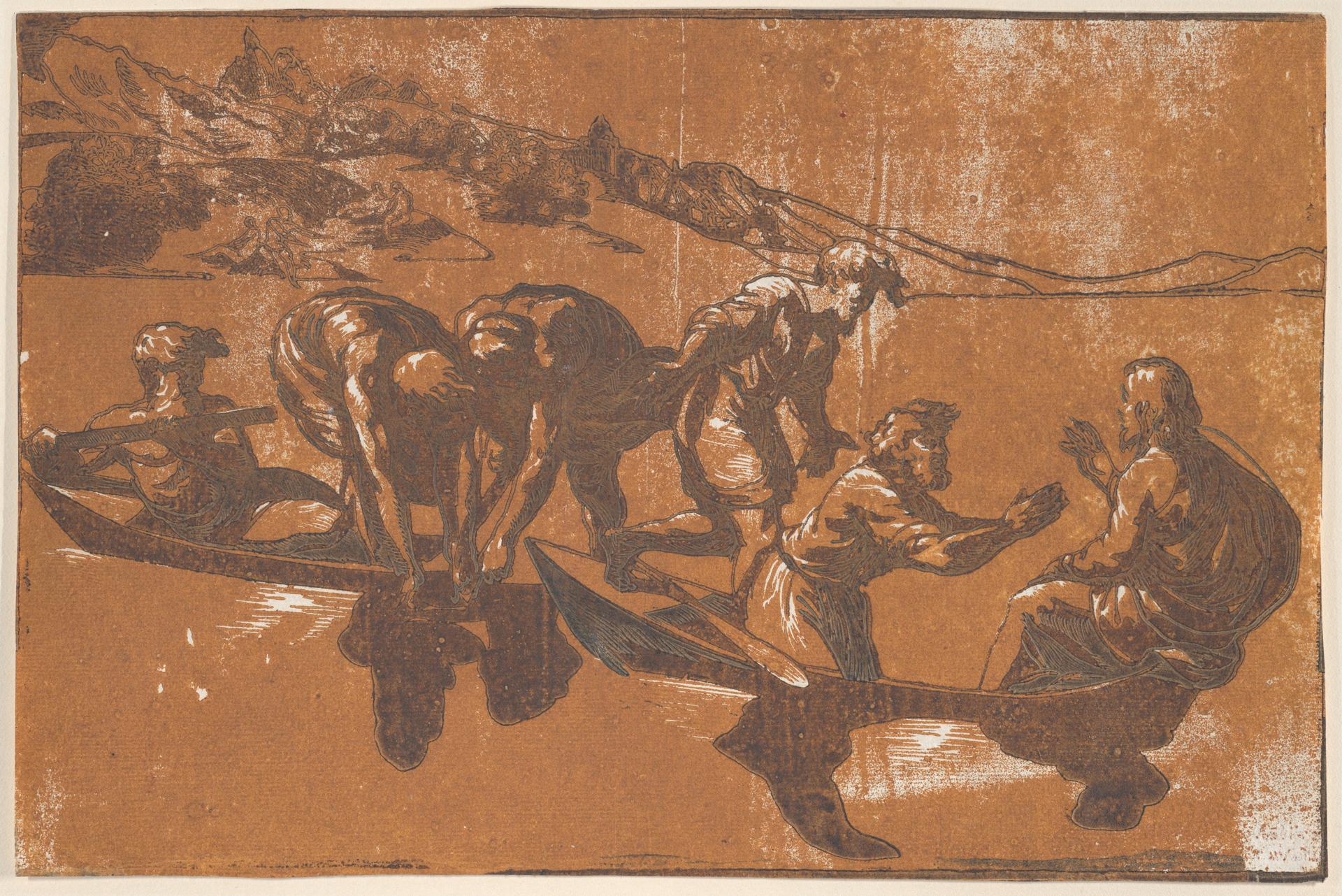
The Miraculous Draught of Fishes (1540–50, Met-Objekt 5984)
Original title: The Miraculous Draught of Fishes
kurzbeschreibung
People wade through a stretch of water hauling fish out of it while others look on from boats — this biblical event is what Niccolò Vicentino captured in a chiaroscuro woodcut dated 1540–50. The sheet was printed in shades of brown from three blocks.
Description
Several figures stand in the water, busy with the catch; more of them watch the work from the boats. Trees and rocks line the setting as a natural backdrop, and the traditional garments worn by those taking part point to a historical or biblical context. Light and dark areas in brown model bodies and gestures, bringing the figures forward into space.
Context
Vicentino belongs to the sixteenth-century Italian woodcutters who specialised in chiaroscuro printing. Ugo da Carpi had introduced the technique to Italy around 1516; several blocks now allowed for tonal gradations. The miraculous draught of fishes, taken from the Gospel of Luke, was a common subject in Renaissance art. Vicentino's prints were often made after designs by other artists, though which design lies behind this particular work has never been settled.
Impact
The stepped brown tones give the sheet a quiet, almost meditative mood that suits the biblical story. Contrasts of light and shadow draw the eye to the main figures and lend the scene a sculptural depth that is striking for its period.
Technique
The chiaroscuro woodcut was printed from three blocks in brown, with overlapping tones producing a painterly effect. At 23.2 × 39 cm the format matches the usual dimensions of Renaissance prints, made for collectors and lovers of art.
AI-generated description text
Source: Metropolitan Museum of Art · Public Domain (CC0 1.0)