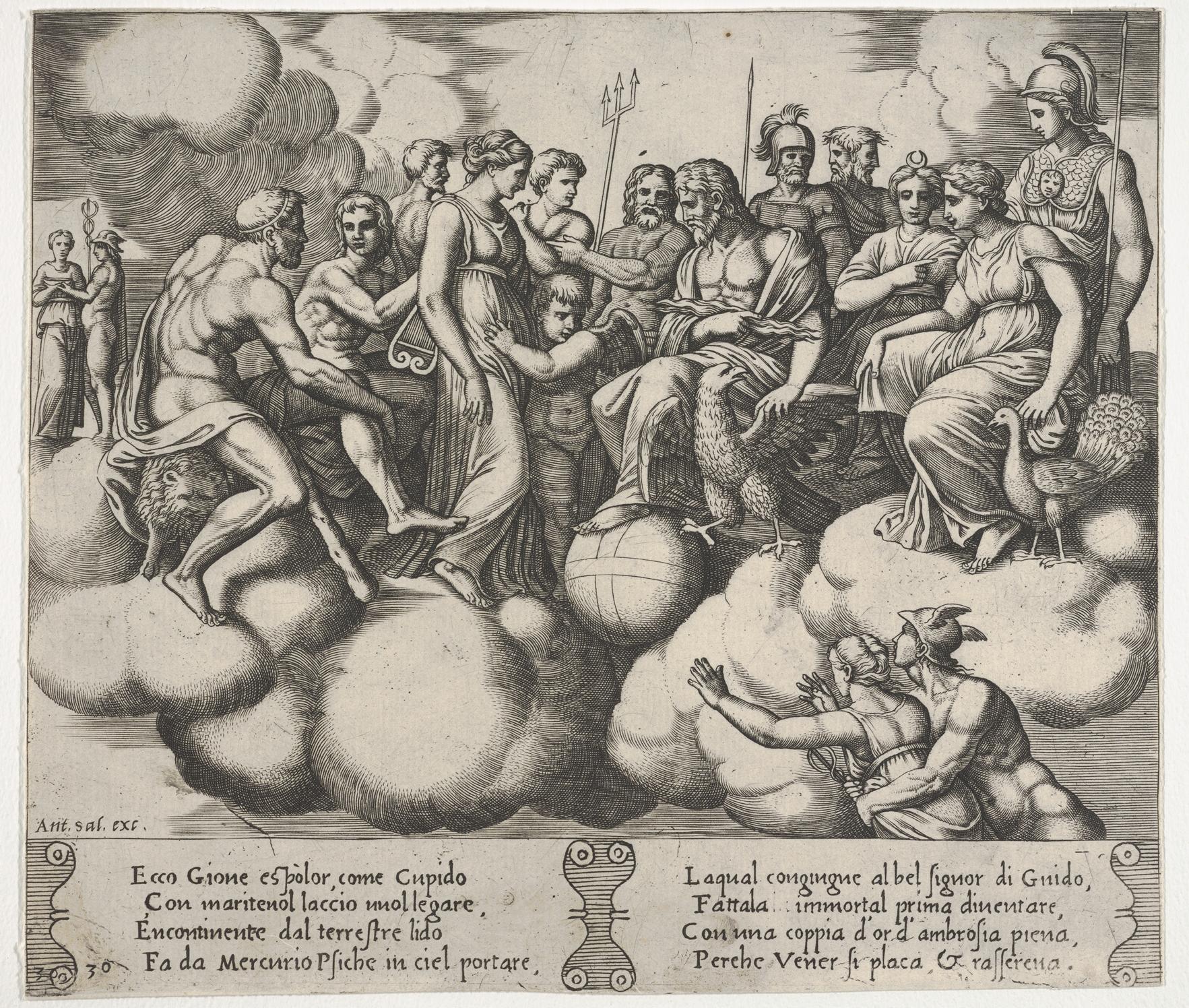
Plate 30: Cupid and Psyche plead their cases before the Gods, from "The Fable of Cupid and Psyche"
Original title: Plate 30: Cupid and Psyche plead their cases before the Gods, from "The Fable of Cupid and Psyche"
kurzbeschreibung
From the series The Fable of Amor and Psyche, this engraving was made between 1530 and 1560 and shows Amor and Psyche pleading their case before the assembled gods. It was executed by the engraver known by the notname Master of the Die. The print measures 19.6 x 22.6 cm and was produced as a copperplate engraving.
Description
Several figures recline and stand on clouds. At the front left a man is seated, identifiable as Amor, with a lyre at his side; beside him stands a woman, likely Psyche, holding a harp. On the right a draped figure embodies a goddess and carries a bird. Behind them appear further persons with attributes and fabrics that hint at their divine roles. The arrangement feels orderly and nearly symmetrical, and Latin text lines run along the bottom edge.
Context
The print belongs to the Renaissance milieu, when classical subjects such as the tale of Amor and Psyche from Apuleius's Metamorphoses enjoyed great popularity. The Master of the Die, an Italian engraver, worked from a lost design by Raphael. The series was published in Rome and aimed at lovers and collectors of prints. Such sheets carried classical imagery forward and formed part of the humanist education.
Impact
The dense, carefully controlled linework gives the event a clear narrative quality. Because the figures are balanced against one another, a calm, restrained impression emerges that suits the serious mythological content. Evenly distributed light and the absence of colour bring out the graphic character of the print.
Technique
For copperplate engraving, lines were incised into a metal plate and then pulled onto paper. This allows fine, precise hatching that models shadows and bodily volume. The balanced distribution of light and dark matches Renaissance printmaking and demonstrates the engraver's high level of craftsmanship.
AI-generated description text
Source: Metropolitan Museum of Art · Public Domain (CC0 1.0)