The Sistine Madonna
Original title: The Sistine Madonna
kurzbeschreibung
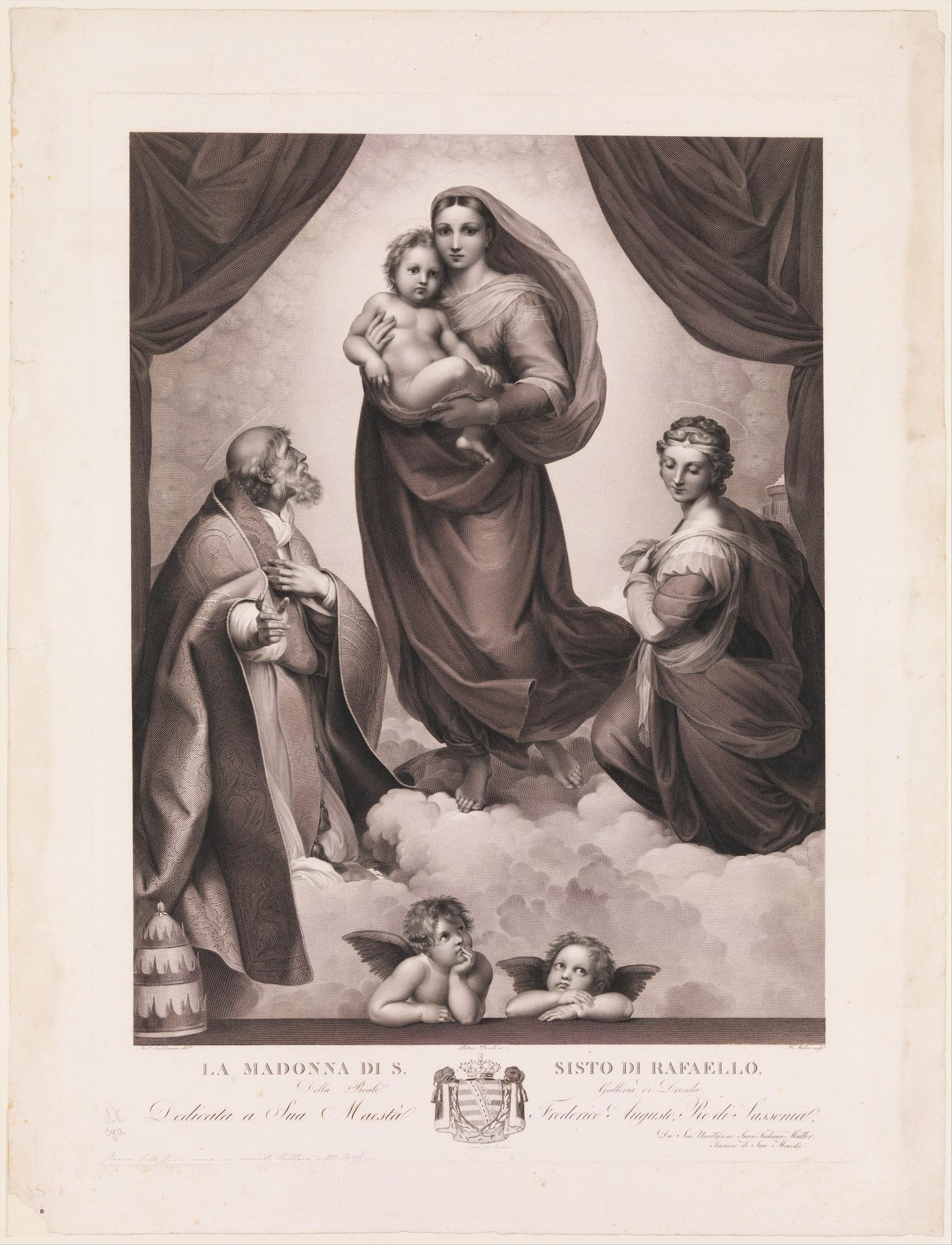
Johann Friedrich Wilhelm Müller translated Raphael's Sixtine Madonna into etching and engraving. Seven states exist of this undated print; the present impression is the fourth. The Virgin and Child appear surrounded by other figures and angels.
Description
Hovering above clouds, the Madonna with the Christ Child meets the viewer's gaze. To her left stands a man in long robes; to her right a woman kneels, both turned toward the apparition in adoration. Two angels below the clouds look up at the scene. A large window and draped curtains frame the composition, while inscriptions and a coat of arms occupy the lower edge.
Context
As a reproductive print, the sheet reproduces Raphael's famous painting of the Sixtine Madonna. Müller was a nineteenth-century German engraver. The coat of arms suggests the print was made in the orbit of the Saxon electors' collection.
Impact
The eye is first drawn to the floating Madonna, then glides to the two kneeling figures and the angels beneath them. The monochrome execution and confident linework give the sheet a calm, solemn mood. Figures and draperies are rendered so precisely that a sculptural presence emerges, recalling the original painting.
Technique
Etching and engraving are combined here. This method allows fine lines and graduated shading that trace the picture's structure closely. The fourth of seven states reveals how the plate was progressively reworked.
AI-generated description text
Source: Metropolitan Museum of Art · Public Domain (CC0 1.0)