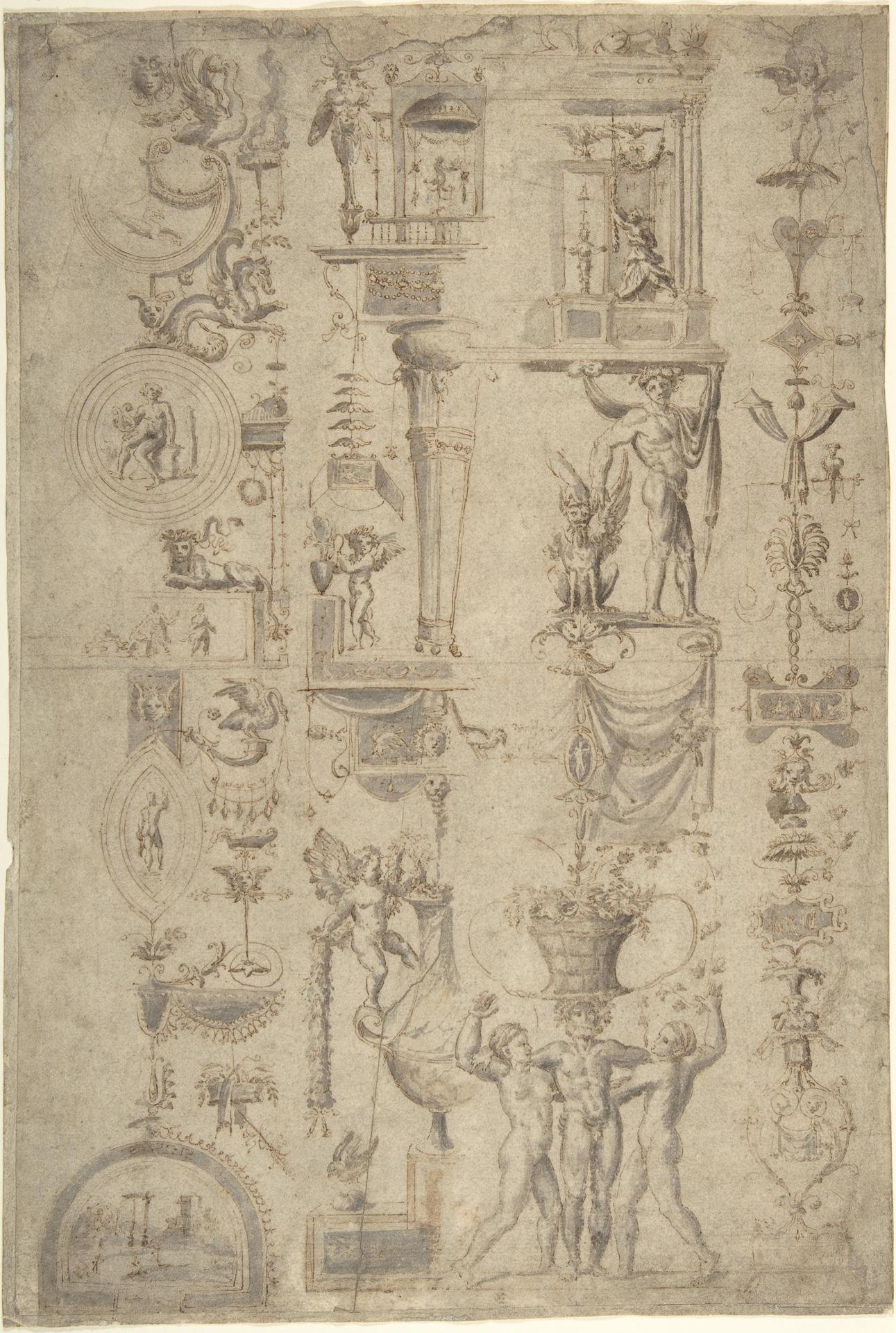
Design of Antique-Style Ornament ("Grotteschi")
Original title: Design of Antique-Style Ornament ("Grotteschi")
kurzbeschreibung
A multi-part ornament crowded with motifs from antiquity fills this anonymous Italian drawing of the 16th century. It was executed in pen and brown ink with brush washes in gray and brown tones, and measures 33.0 x 22.5 cm. Numerous figures and architectural elements press together across the sheet in a dense, symmetrical order.
Description
A monumental column anchors the middle, flanked by two figures in animated poses. Below them a row of putti and figures from myth unfolds. Toward the edges further ornaments appear: coats of arms, masks and shields. The layout is rich in detail and marked by Renaissance habits, with the weight of the strokes shifting throughout. Muted brown and gray tones govern the palette.
Context
Italy in the 16th century: antique models were studied and reworked with real intensity at the time. Grotesques, named after Roman grottoes, ranked among the most popular decorative motifs of the Renaissance. That no artist's name has come down to us points to workshop production, perhaps a model for craftwork or frescoes. Designs of this kind often served other artists as pattern books.
Impact
The tight arrangement produces an ornamental abundance that holds the eye for a long while. Symmetry and lively figures lend the sheet a quiet yet animated presence. The restrained color feels elegant and unobtrusive.
Technique
Pen and brown ink lay the groundwork, supplemented by brush washes in gray and brown. This allows fine lines for detail and broader areas for shading. The paper size of 33.0 x 22.5 cm matches what was usual for design drawings of the period.
AI-generated description text
Source: Metropolitan Museum of Art · Public Domain (CC0 1.0)