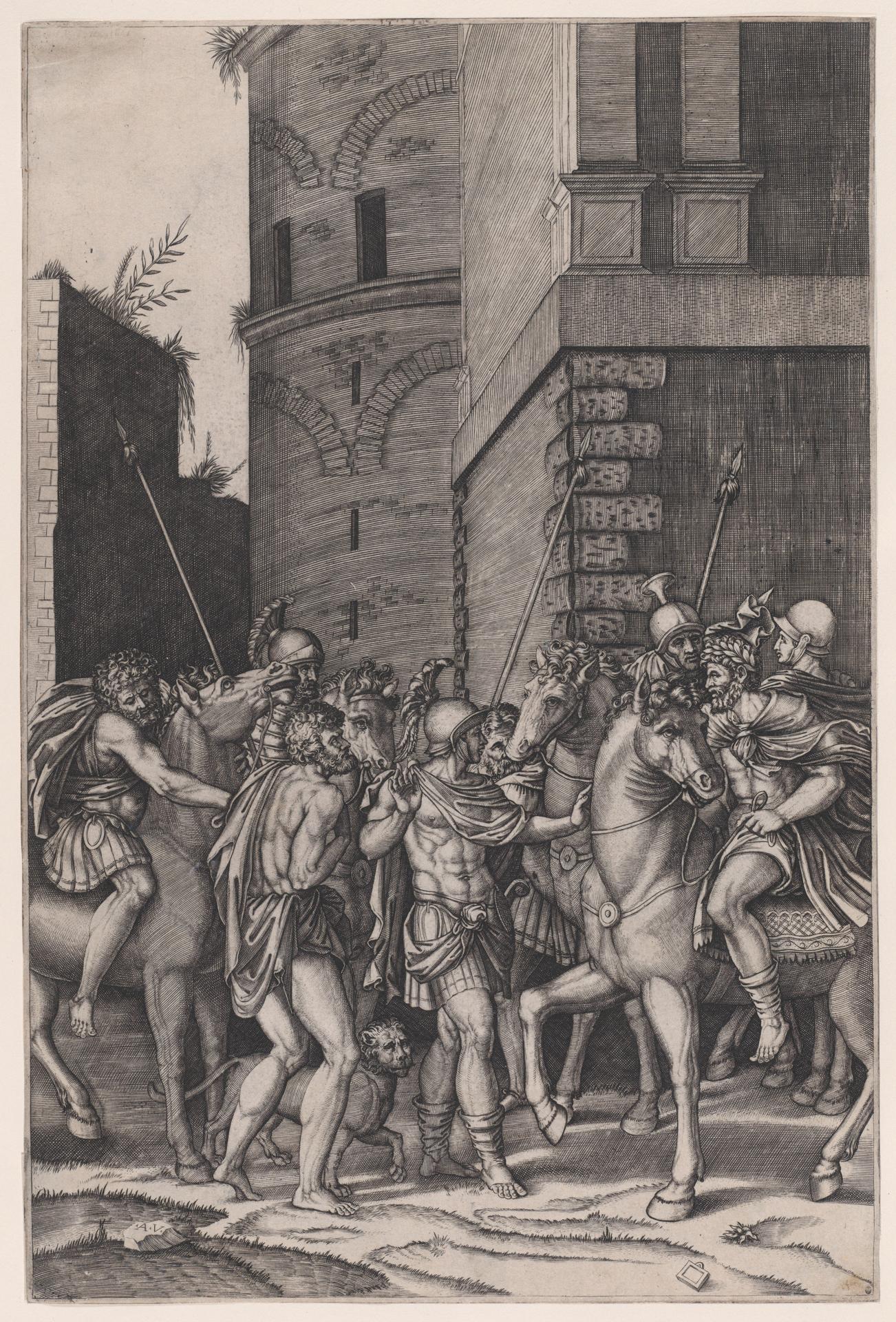
The Emperor Meeting the Warrior
Original title: The Emperor Meeting the Warrior
kurzbeschreibung
Agostino Veneziano, also known as Agostino dei Musi, engraved Der Kaiser trifft den Krieger around 1516–17. The print presents a crowd of men in classical-style dress within an urban setting; a mounted rider holds the nearest zone while other figures, some of them in armour, accompany the action.
Description
A horseman dominates the foreground, hemmed in by numerous figures who stand or stride. Armour and helmets on several of them mark them as warriors. Walls and a tower rise in receding layers behind, pointing to a historic or military setting. Every figure is drawn with great care, their gestures lively and full of movement. The layout is layered and densely peopled, and the placing of the figures and their interaction generate tension.
Context
The Italian Agostino Veneziano was a Renaissance engraver who worked in the workshop of Marcantonio Raimondi, then the leading printmaker in Rome. This sheet belongs to a period of intensive engagement with antique subjects and martial themes, favoured by the patrons and collectors of the age. Veneziano often drew on designs by other artists, and in this way helped spread the iconography of the Renaissance.
Impact
The crowded throng of figures and their agitated poses give the print a vivid, almost narrative presence. Crisp contours and a wealth of detail lend the scene monumental weight and draw the viewer into the historical event.
Technique
Engraving is an intaglio process in which the lines are cut into the plate. The monochrome image works through shading and contrast produced by lines of varying density and direction, shaping light and volume. The precise, delicate handling of the burin testifies to the engraver's high craftsmanship.
AI-generated description text
Source: Metropolitan Museum of Art · Public Domain (CC0 1.0)