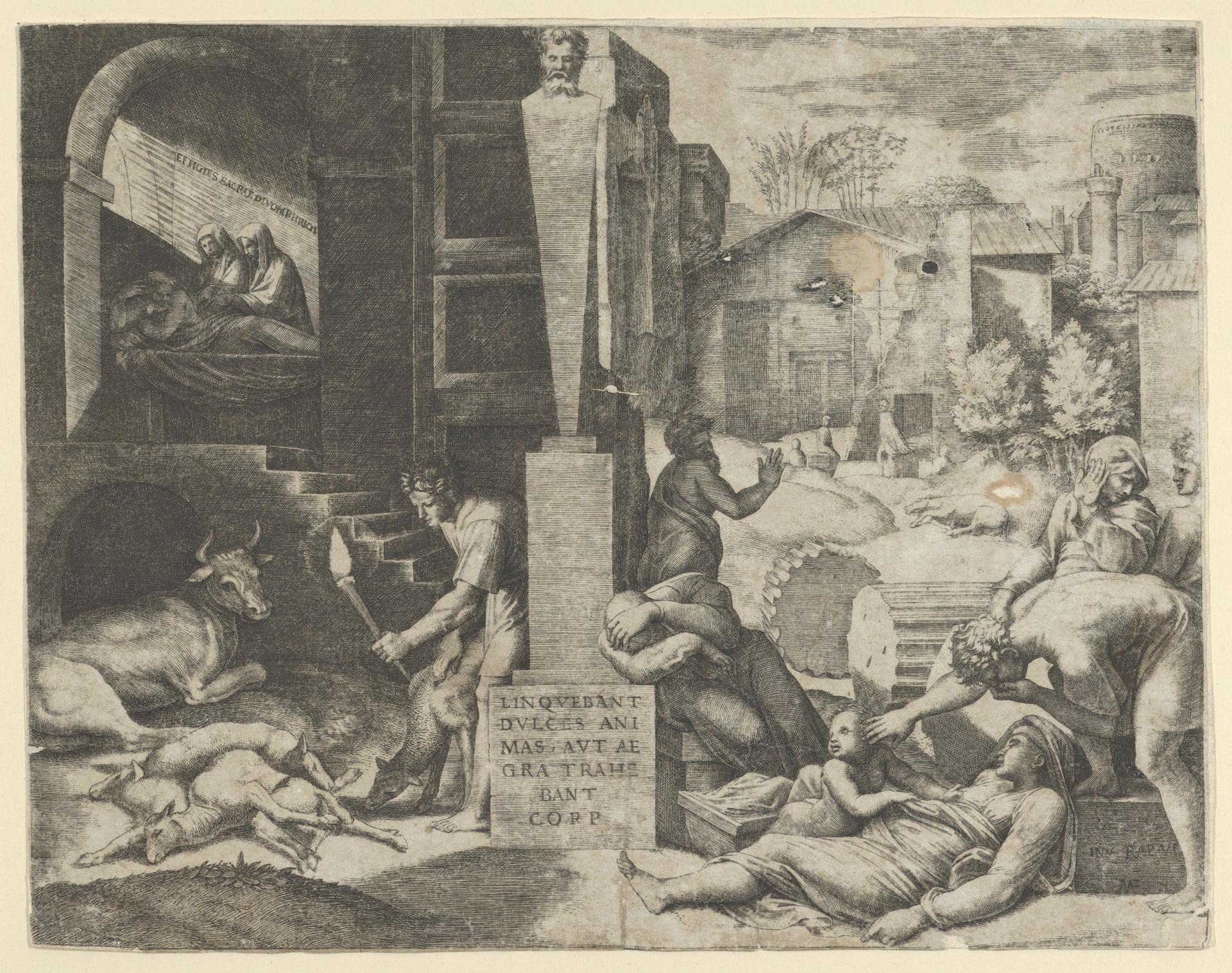
A Plague Scene at Right, a Man at Left Holding a Torch Illuminating Part of the Scene at Left, Sick People at the Right
Original title: A plague scene at right, a man at left holding a torch illuminating part of the scene at left, sick people at the right
kurzbeschreibung
A man raises a torch over the sick: Marcantonio Raimondi's Pest Scene, from about 1515–16, gathers plague victims around a single source of light. The engraving, heavily reworked at a later stage, measures 19.9 × 24.7 cm.
Description
At the front a figure holds the torch aloft, and its glare falls across the sufferers. Several of the sick lie on the ground to the right, while others sit or stand with faces contorted by pain. A woman carries a child in her arms, and the child too looks ill. Further back a woman lies in bed with a child, apparently also marked by the disease. Animals appear on the ground, hinting that the illness has spread to the animal world as well.
Context
Plague was a constant presence in sixteenth-century Europe and often found its way into art. Raimondi, a Renaissance engraver, was best known for his reproductive prints after Raphael. Who commissioned the Pest Scene, or on what occasion it was made, is not recorded. The heavy reworking of the print points to later treatment of the plate.
Impact
The scene feels dark and oppressive, and the torchlight only heightens that impression. The deliberate ordering of the figures and the precise account of suffering leave a strong mark on the viewer.
Technique
As an engraving, this is an intaglio print: the lines are cut into a metal plate. That the plate was heavily reworked suggests later alterations or a refreshing of the image. The gradations of grey come from differences in the density and depth of the engraved lines.
AI-generated description text
Source: Metropolitan Museum of Art · Public Domain (CC0 1.0)