The Plague
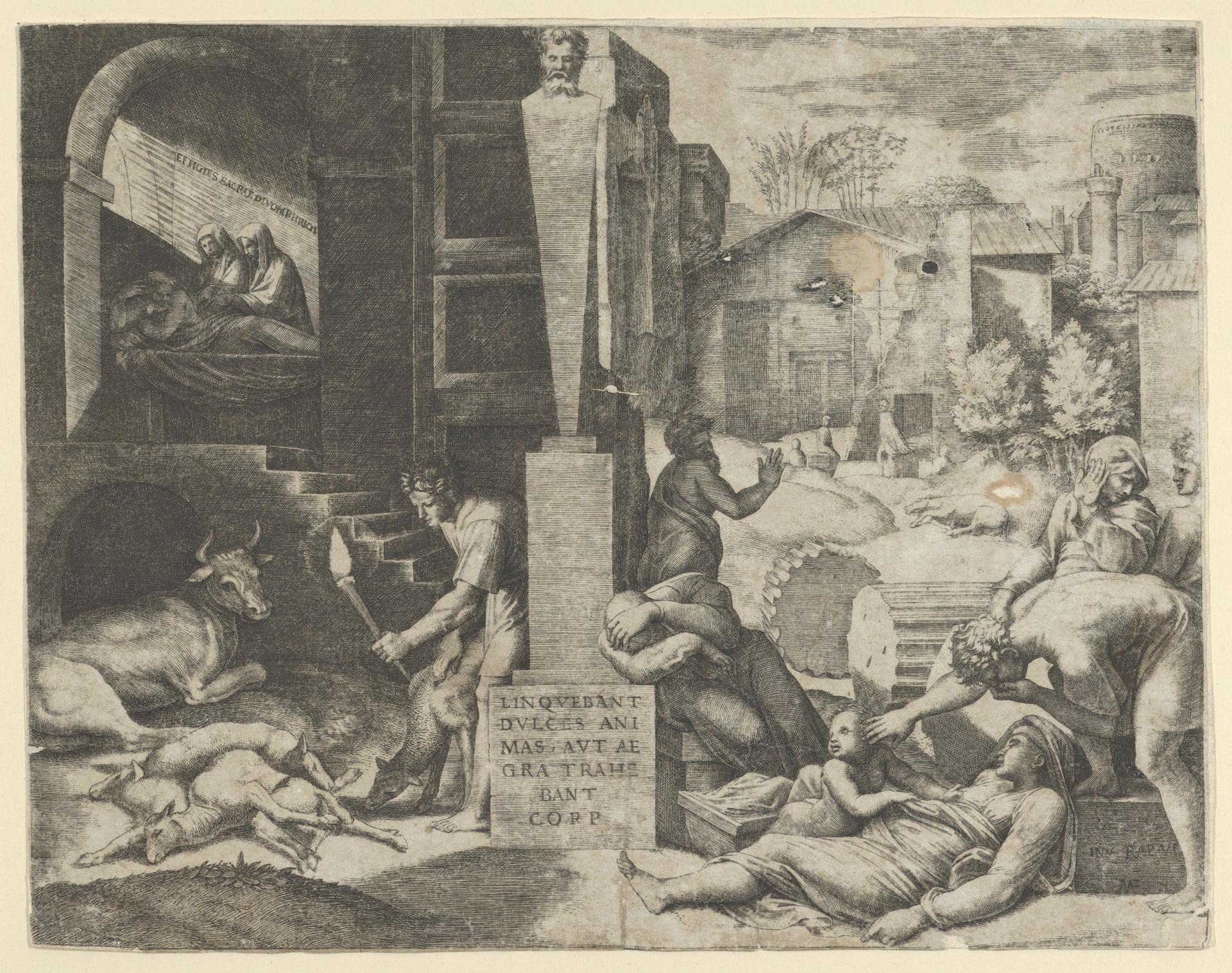
Original title: A plague scene at right, a man at left holding a torch illuminating part of the scene, ill people at the right
kurzbeschreibung
A torch's flame cuts through the gloom: Marcantonio Raimondi's engraving of about 1515–16 presents a plague scene in which a large statue of a man hangs from a rope. To the right, the sick and dead animals on the ground show how devastating the epidemic is. On the left, a man with a torch lights the events.
Description
The layout divides into three zones: on the left, a man holds aloft a torch whose glow illuminates the scene; in the middle, a monumental statue hangs from a rope; on the right, a group of people in various stages of illness presses together. Buildings and a landscape close off the space. Several animals lie lifeless on the ground, underscoring the plague's impact. The engraving's greys are monochrome, yet the torchlight creates dramatic accents.
Context
Raimondi, an Italian Renaissance engraver, is known above all for reproductive prints after Raphael. This sheet was made in an era when Europe was repeatedly struck by waves of plague—for contemporaries, the subject was therefore highly topical. The print can be read as a moralizing or allegorical interpretation of transience and divine punishment, a motif widespread in the sixteenth century.
Impact
A sense of oppression and fascination alike emanates from this view, heightened by the contrast-rich torchlight. The precise handling of line and the considered arrangement of figures give the sheet a calm, almost monumental dignity that aesthetically elevates the horror of the plague. Lighting and the central statue direct the viewer's gaze straight to the suffering of those depicted.
Technique
In this engraving, the design is incised into a copper plate and then printed on paper. Fine lines and hatching produce nuanced grey values and a sculptural effect in the figures. Raimondi used this method to achieve high detail and an atmospheric play of light.
AI-generated description text
Source: Metropolitan Museum of Art · Public Domain (CC0 1.0)