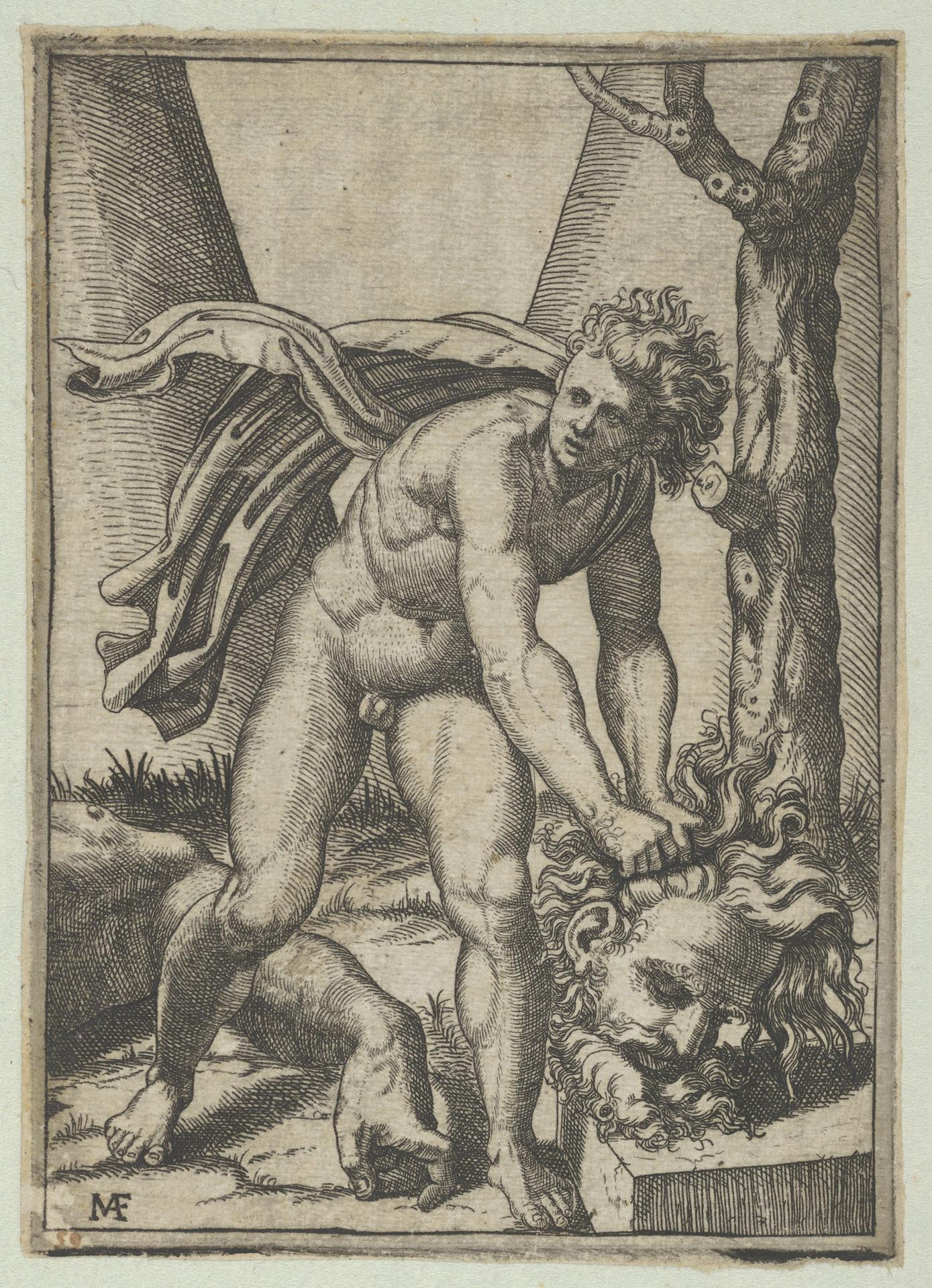
David with the head of Goliath
Original title: David with the head of Goliath
kurzbeschreibung
Engraving and etching, with pencil additions across the upper section, this small sheet by Marcantonio Raimondi measures 11.8 by 8.6 cm and dates from around 1515–16. It presents the young David displaying the head of the defeated Goliath. The mix of techniques shapes both the linear structure and the gradations of tone.
Description
David stands at the front, muscular and barefoot, his hair in short curls. A tunic hangs from a strap over one shoulder. His hand grips the head of Goliath, which rests on the ground. He looks to the right as he presents the trophy. Trees and grass suggest a landscape behind him. Crisp contrasts of light and dark arise from fine hatching, and the arrangement of the picture feels animated.
Context
The sheet belongs to the High Renaissance, when Raimondi was working in Rome in close collaboration with Raphael. The engraving probably goes back to a drawing by Raphael that later artists took up again. Raimondi was a leading figure in reproductive printmaking; such prints helped spread the compositions of Italian masters.
Impact
The triumphant David and the defeated giant face one another, producing dramatic tension. Delicate linework and a balanced layout give the small format a monumental presence. Engraving and etching together create a varied surface texture that guides the viewer's eye.
Technique
Engraving and etching are combined: the fine lines of the burin define contours and details, while etching allows softer tonal values. The upper area of the sheet was later supplemented in pencil, pointing to a restoration or reworking. The paper matches the typical small format of prints from that period.
AI-generated description text
Source: Metropolitan Museum of Art · Public Domain (CC0 1.0)