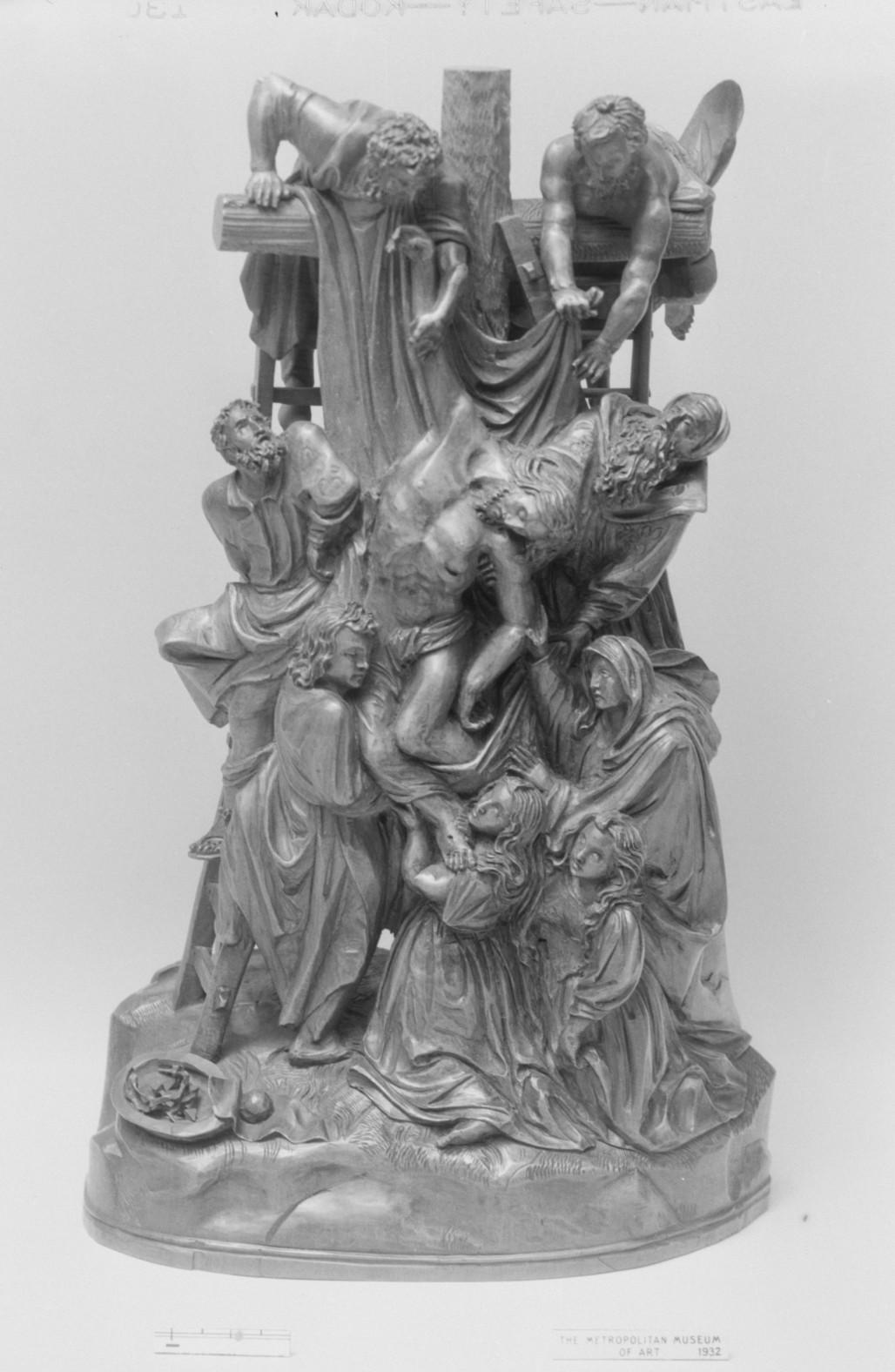
Descent from the Cross (17th century)
Original title: Descent from the Cross
kurzbeschreibung
Dating from the 17th century, the Descent from the Cross is a sculpture by Peter Paul Rubens. It presents the taking down of Christ from the cross, surrounded by grieving figures. The work was made of boxwood and reaches a height of 26.7 cm.
Description
Christ appears at the center, encircled by several figures, among them Mary, who supports his body. Other figures express mourning and lamentation, while two persons at the edge are drawn into the events of the crucifixion. The layout is compact and rich in detail, with numerous movements and emotions. The surface appears monochrome, which is due to the black-and-white photograph.
Context
In the 17th century, when religious art was widespread in Europe, this work by Peter Paul Rubens was created. Rubens was regarded as a master of dynamic arrangements and intense emotional expression, which is also evident here. The Descent from the Cross is one of the central themes of Christian iconography and was treated by many artists of the era.
Impact
Through the dense arrangement and expressive figures, the sculpture unfolds a lasting emotional impact. The precise execution and detailed design direct the viewer's attention insistently to Christ's passion. The monochrome appearance underscores the serious and solemn character of the work.
Technique
Boxwood served as the material, valued for its fineness and durability. The carving method is precise and reveals high craftsmanship, as was typical for 17th-century sculpture. The detailed elaboration of the figures and the scene demanded great skill and care.
AI-generated description text
Source: Metropolitan Museum of Art · Public Domain (CC0 1.0)