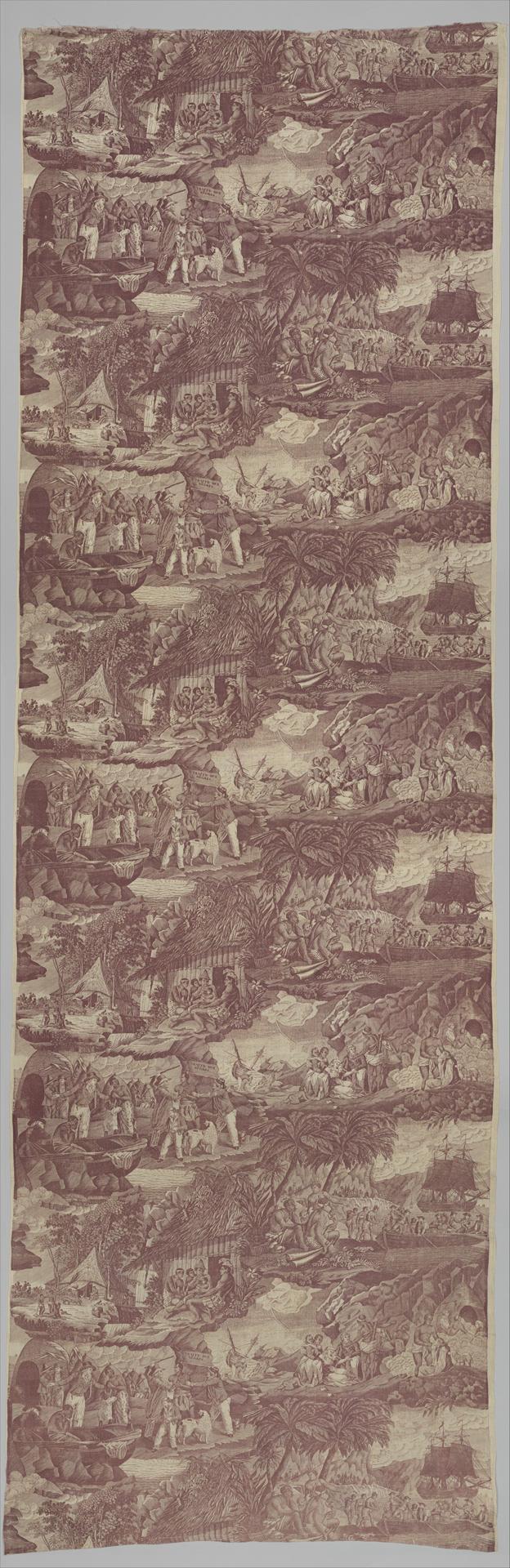
Traite des Nègres (The Slave Trade)
Original title: Traite des Nègres (The Slave Trade)
kurzbeschreibung
Frédéric Etienne Joseph Feldtrappe created "Der Sklavenhandel" in the early 19th century as a roller-printed cotton. The print presents a horizontal sequence of scenes that illustrate different aspects of the transatlantic slave trade, from field labor on plantations to the embarkation of those who were deported.
Description
A densely populated and meticulously detailed pictorial sequence stretches across the entire width. It shows groups at work on plantations as well as scenes of transport and shipment. Brown tones predominate, as was common for roller prints of the period. The lighting appears even, with no discernible shadows, suggesting constant printing conditions. The execution is precise and detailed, typical of printed cotton goods from the early 19th century.
Context
The work was created at a time when the transatlantic slave trade was increasingly criticized and restricted internationally—the British Slave Trade Act of 1807 is one example. Printed cotton fabrics served as a widespread medium for disseminating images in large quantities, including on political and social issues. Feldtrappe used this technique to convey a contemporary view of the slave trade. No commissioner or specific purpose is recorded.
Impact
The factual, richly detailed account has a documentary effect and invites the viewer to follow the individual stages of the slave trade. The even coloration and precise execution give the print a calm yet emphatic presence that encourages reflection on the injustice shown.
Technique
The process is roller printing on cotton: ink is transferred to the fabric via engraved rollers. This allowed large quantities of fabric to be printed quickly and inexpensively with fine details. The predominantly brown tones point to dyes commonly used for this printing technique.
AI-generated description text
Source: Metropolitan Museum of Art · Public Domain (CC0 1.0)