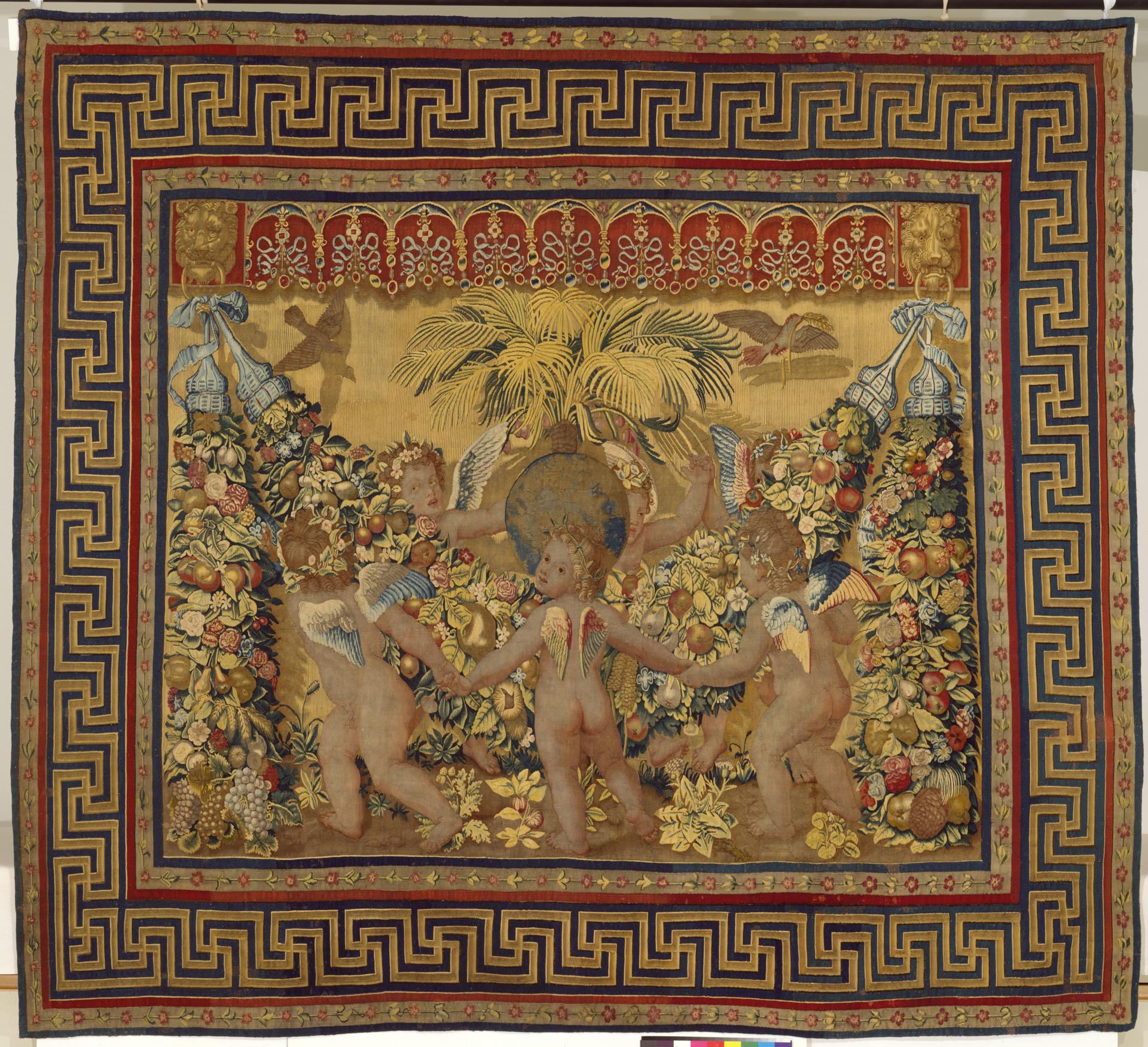
Six Putti Dancing Around a Globe and a Palm from a set of the Giochi di Putti
Original title: Six Putti Dancing Around a Globe and a Palm from a set of the Giochi di Putti
kurzbeschreibung
This tapestry, woven around 1635 from wool and silk, shows six winged putti dancing around a globe and a palm tree. The motif comes from the 'Giochi di Putti' series and the piece is attributed to Giovanni da Udine.
Description
A globe anchors the center, and six naked, winged putti dance barefoot around it. From the globe a palm tree rises, with a dove perched in its fronds. Lush garlands of flowers and fruit in red, yellow, green and blue frame the figures. Warm gold and brown tones fill the background, making the scene stand out. A border with a Greek key pattern in blue and gold completes the design.
Context
In the 1630s tapestries with mythological and allegorical themes were in high demand among European nobility. The 'Giochi di Putti' (children's games) drew on ancient models and enjoyed great popularity. Giovanni da Udine, born Giovanni dei Ricamatori, created ornamental designs and worked for the Medici, among others. The series probably came from a princely commission, though nothing is known about the exact circumstances of its creation.
Impact
The warm palette and the lively portrayal of the dancing putti give the tapestry a cheerful, decorative air. Dense floral and fruit ornaments create a festive, almost lush mood. Viewers feel transported into an Arcadian world.
Technique
Hand-woven, this tapestry uses wool for the warps, while the wefts are wool and silk. That mixture allowed fine gradations of color and glossy accents, especially in the floral parts. The weave made possible a detailed rendering that resembles painting.
AI-generated description text
Source: Metropolitan Museum of Art · Public Domain (CC0 1.0)