Dying Slave
Original title: Dying Slave
kurzbeschreibung
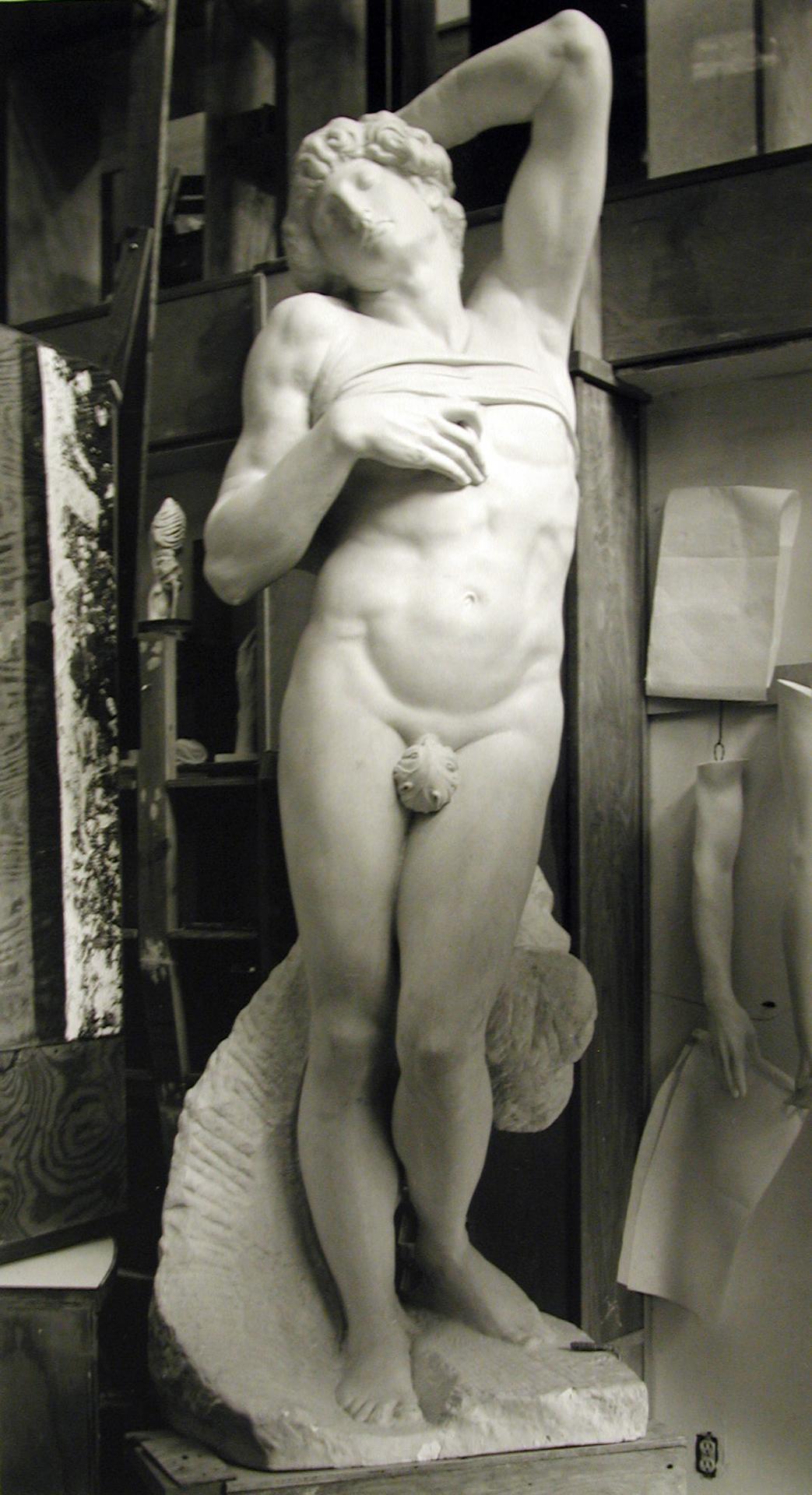
A male nude in plaster, dated between 1505 and 1545, is attributed to Michelangelo Buonarroti. The figure recalls the Dying Slave from the unfinished tomb project for Pope Julius II. What appears is a bound slave who no longer struggles and seems to find release in death.
Description
The muscular body lies diagonally, twisted almost painfully. The head tilts slightly upward, the arms point in different directions. A cloth around the hips has slipped backward; the left foot is raised, the right rests on the ground. Tools and materials in the surroundings suggest a workshop.
Context
The sculpture belongs to Michelangelo's tomb for Pope Julius II, planned from 1505 but never completed. The slave figures were intended as allegories of the bound arts or of the human soul. The plaster version is a replica or cast from a workshop, as the studio setting in the image analysis indicates. The dating 1505–45 covers the period in which Michelangelo worked on various versions.
Impact
Grace and suffering merge and speak directly to the viewer. The animated pose and carefully modeled muscles give the figure a sensual yet melancholy presence. Light and shadow on the plaster surface heighten the drama.
Technique
Executed in plaster, a material for casts and studies. The surface appears smooth, the muscles worked out in detail. The figure was presumably made in a casting process that allowed a copy of the marble original.
AI-generated description text
Source: Metropolitan Museum of Art · Public Domain (CC0 1.0)