Twelve Heads
Original title: Twelve Heads
kurzbeschreibung
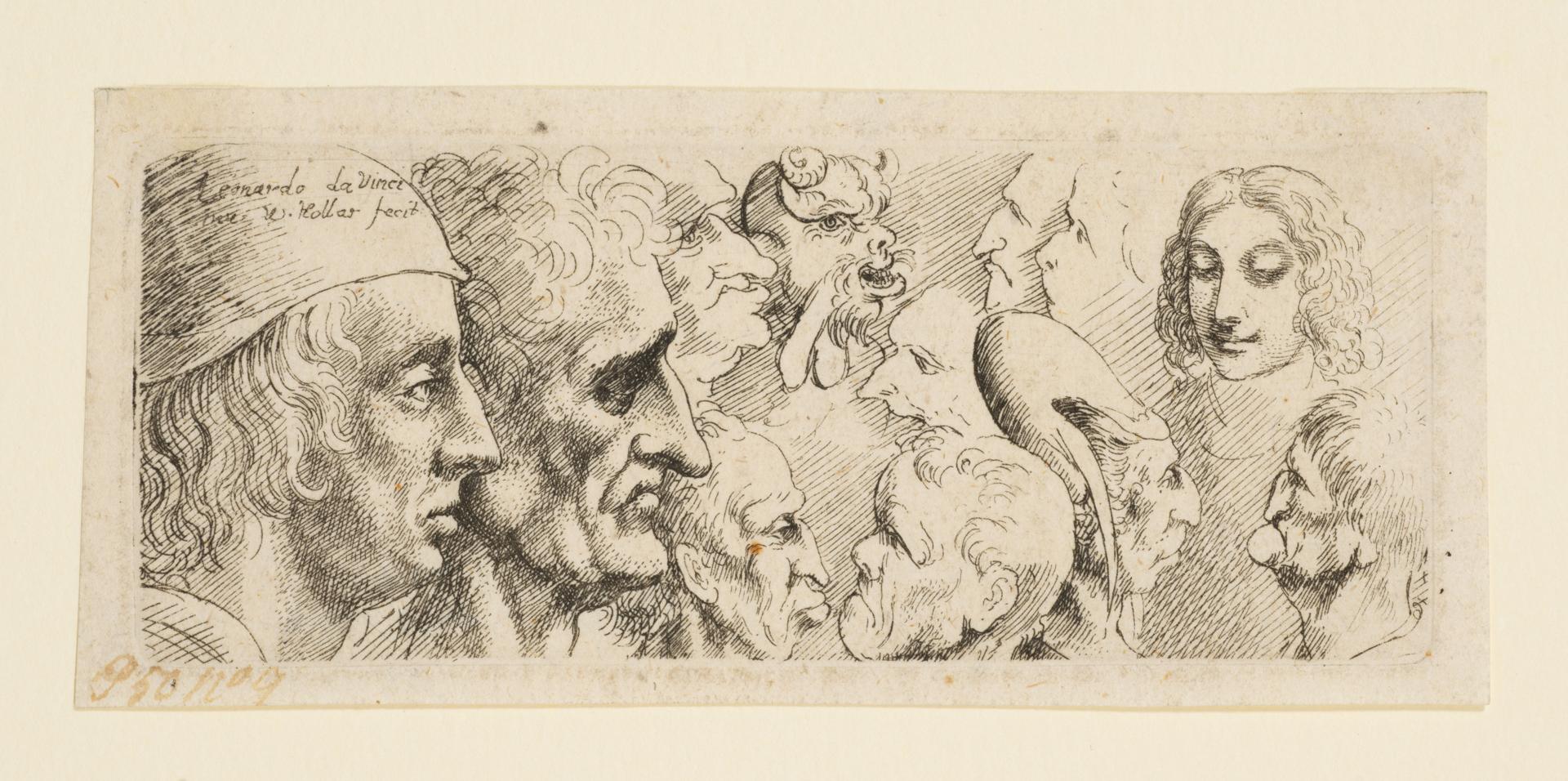
Wenceslaus Hollar's etching Zwölf Köpfe, made around 1645, presents a study that gathers twelve distinct heads side by side in a single horizontal row. This impression is from the second of two states and measures approximately 5.1 × 11.7 cm.
Description
Twelve heads run in an uninterrupted line, varying in age, sex, and expression. Some face the viewer directly, others appear in profile or three-quarter view; hairstyles range from curls to short hair to baldness. One head with horns seems to allude to an animal and stands out from the rest. Hair and facial features are rendered with precise strokes, and a light shadow lifts the heads from the ground. An inscription at upper left refers to Leonardo da Vinci and W. Holler.
Context
Hollar, a Bohemian printmaker, was known for his detailed etchings. Around 1645 he was working in England, where he was valued for portraits and topographical views. According to the inscription, the sheet probably derives from a model by Leonardo da Vinci, which suggests an engagement with the Italian Renaissance. Study sheets with varying head types were common in the seventeenth century and served as exercises or collections of character studies.
Impact
The precise linework and the range of facial expressions hold the viewer's gaze. Because the heads are lined up side by side, a calm rhythm emerges, enlivened by the slight shadow. Realistic features and the fantastic element of the horned head meet and create tension.
Technique
The sheet was produced by the intaglio process of etching, in which the drawing is bitten into a copper plate. With fine lines and hatching, Hollar captured the different surfaces of hair and skin. The print survives in the second of two states, indicating later reworking of the plate and a changed edition.
AI-generated description text
Source: Metropolitan Museum of Art · Public Domain (CC0 1.0)