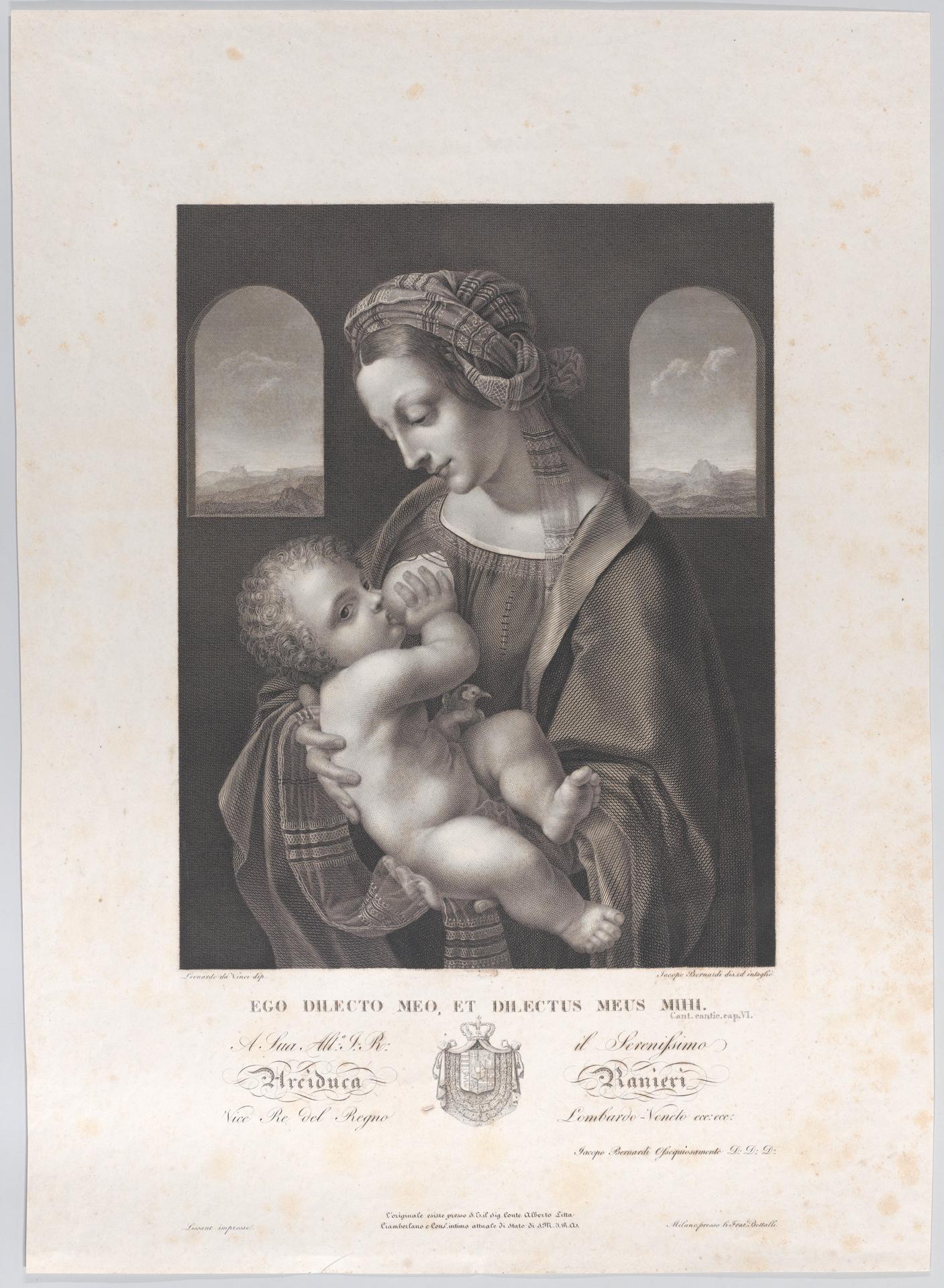
Virgin and Child (ca. 1830)
Original title: Virgin and Child
kurzbeschreibung
Mary wears a headscarf and holds the naked Christ child in her arms. This etching by Jacopo Bernardi from around 1830 presents the two as the central figures. Two windows open onto a landscape. The line etching is finely executed and follows classicist ideals of form.
Description
Mary and the child face the viewer directly. Her garment falls in soft folds, the headscarf framing her face. The child is barefoot and wears only underdrawers, which emphasizes his nakedness. Behind the figures, two round-arched windows open onto a simple landscape. The layout is symmetrical. The etching remains monochrome; light is evenly distributed, the lines clear and precise.
Context
Jacopo Bernardi worked as an Italian copper engraver in the 19th century and became known mainly through reproductions of paintings. The print was made around 1830, when religious prints for private devotion were in strong demand. Such etchings were often sold in portfolios or as single sheets. The source model is not recorded; the classicist style, however, suggests an orientation toward Renaissance models.
Impact
The etching feels calm and devotional. The symmetrical arrangement and clear lines contribute to this. Mother and child appear familiar yet elevated, inviting the viewer to quiet contemplation. Because the print remains monochrome, attention turns to the drawing and the fine modeling of the figures.
Technique
In etching, the drawing is scratched into an acid-resistant layer on a copper plate and then etched—an intaglio process. Fine lines and hatching create soft tonal gradations and render details precisely. At 52.6 × 37.8 cm, the sheet matches a format common for printed devotional images, allowing detailed reproduction.
AI-generated description text
Source: Metropolitan Museum of Art · Public Domain (CC0 1.0)