James-Jacques-Joseph Tissot (1836–1902)
Original title: James-Jacques-Joseph Tissot (1836–1902)
kurzbeschreibung
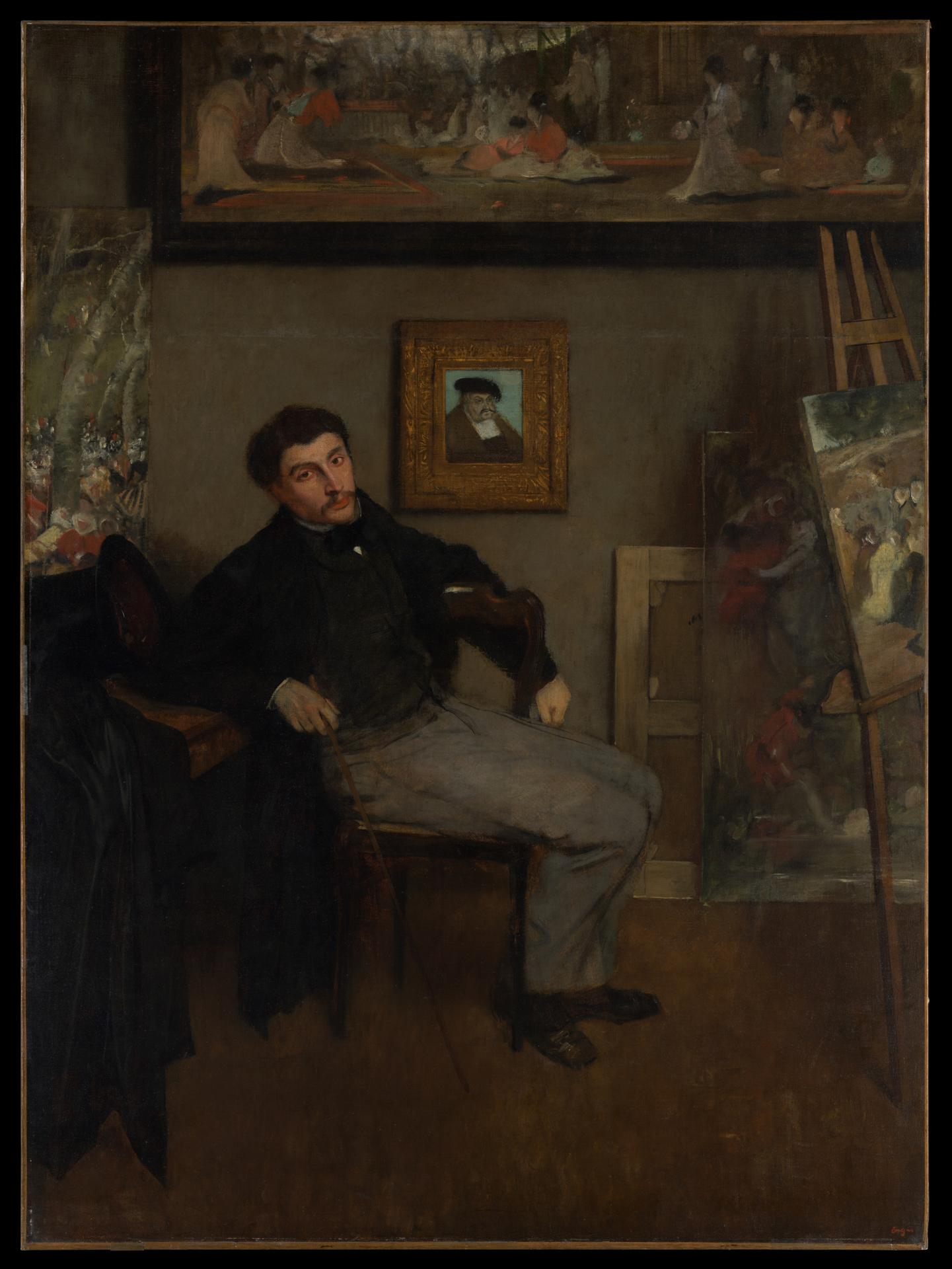
Edgar Degas painted this portrait of fellow artist James-Jacques-Joseph Tissot around 1867–68. In oil on canvas, Tissot sits in an interior surrounded by a collection of paintings and an easel.
Description
A wooden chair holds the sitter, dressed in a dark coat over shirt and trousers. He grips a cigar in his right hand, his gaze directed to the left. The background is a wall hung with several paintings: on the lower left, one showing a figure in traditional dress, and above it a multi-figure scene reminiscent of a celebration. To the right stands an easel with another painting that includes figures. The palette is mostly dark, with browns and grays; light enters from the left, falling on the man and the wall, bringing the figures forward.
Context
Degas and Tissot were friends on the Paris art scene in the 1860s. Tissot was then known for his detailed genre scenes, while Degas was increasingly turning to portraiture. The work dates from a period when Degas was abandoning historical subjects for contemporary ones. In 1872 the painting was shown at the Galerie Durand-Ruel and later acquired by Tissot's family.
Impact
The dark palette and side lighting create a serious, contemplative mood. The portrayal of the artist in his studio feels intimate yet detached, drawing attention to Tissot's personality.
Technique
Oil on canvas, in which Degas combines realistic detail with soft tonal transitions. The style shows hints of Impressionism in its handling of light and areas of color, yet remains precise in rendering textures.
AI-generated description text
Source: Metropolitan Museum of Art · Public Domain (CC0 1.0)