The Sixth Knot
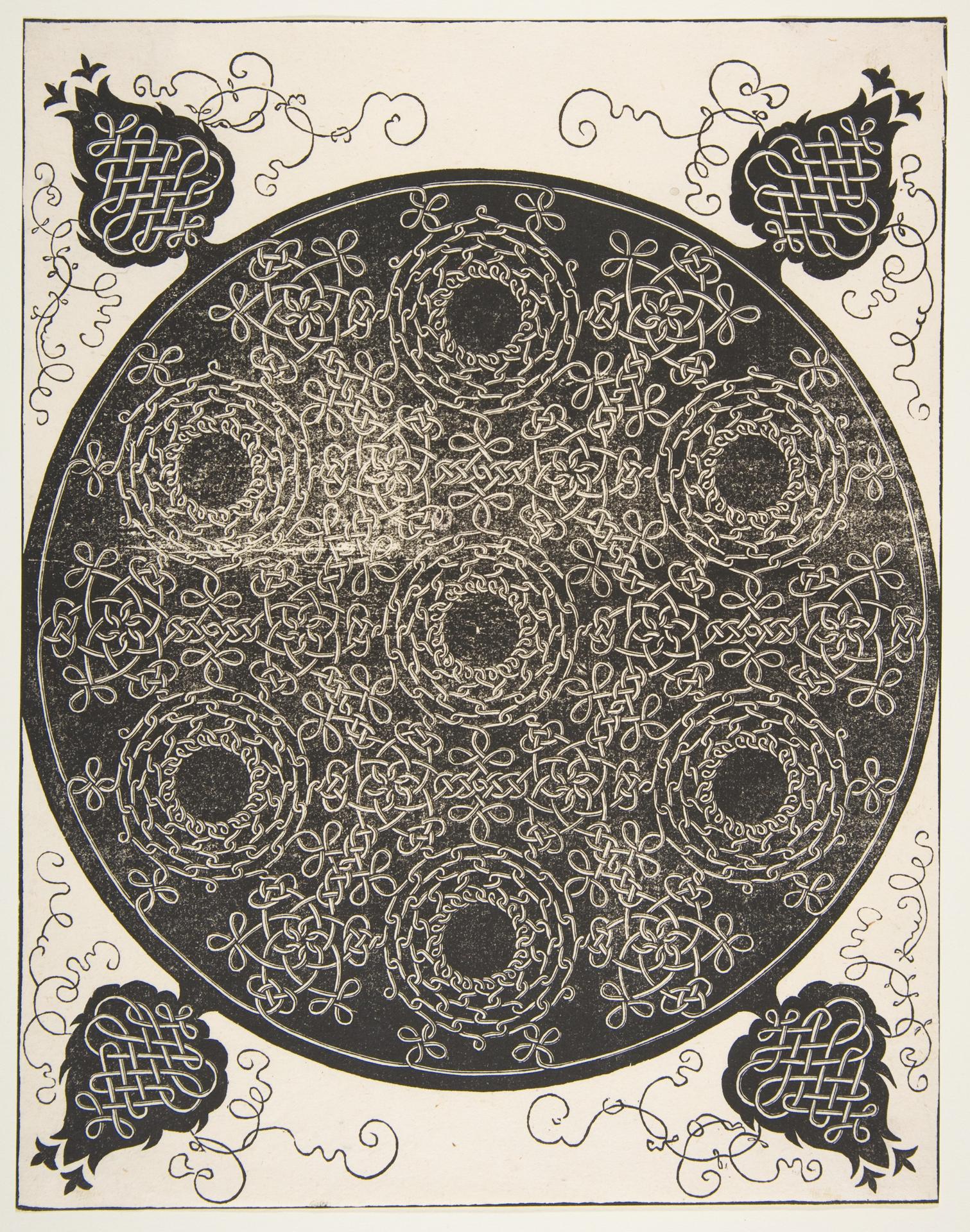
Original title: “The Sixth Knot”. Interlaced Roundel with Seven Wreaths
kurzbeschreibung
The Sixth Knot is a woodcut by Albrecht Dürer, created before 1521. It features an interlaced roundel with seven wreaths, a prime example of Dürer's intricate graphic work.
Description
The composition is centered on a circular design filled with a dense, interlacing pattern of black lines on a white background. At the center, a smaller, similarly intricate motif is surrounded by seven wreaths, each decorated with elaborate knots. Above and below the circle, two symmetrical, plant-like ornaments echo the interlacing theme. The fine, detailed lines suggest meticulous craftsmanship, characteristic of Renaissance printmaking.
Context
Dürer produced a series of six 'knot' woodcuts, likely inspired by Italian Renaissance ornamental designs, particularly those of Leonardo da Vinci. These prints were created in Nuremberg, where Dürer ran a prolific workshop. The series reflects the Renaissance fascination with geometry and decorative patterns, often used as models for craftsmen. The exact date of creation is uncertain, but it is placed before 1521, during Dürer's mature period.
Impact
The print exudes a sense of rhythmic harmony through its interwoven lines, drawing the viewer's eye into a hypnotic, labyrinthine pattern. Its stark black-and-white contrast enhances the clarity and precision of the design, giving it a timeless, almost architectural quality. The work balances complexity with order, inviting both close inspection and appreciation of its overall symmetry.
Technique
Dürer employed the woodcut technique, carving the design into a wooden block and printing it in black ink on paper. The fine lines and delicate interlacements required exceptional skill in both drawing and carving. The white background emphasizes the negative space, making the black lines appear crisp and dynamic.
AI-generated description text
Source: Metropolitan Museum of Art · Public domain (CC0)