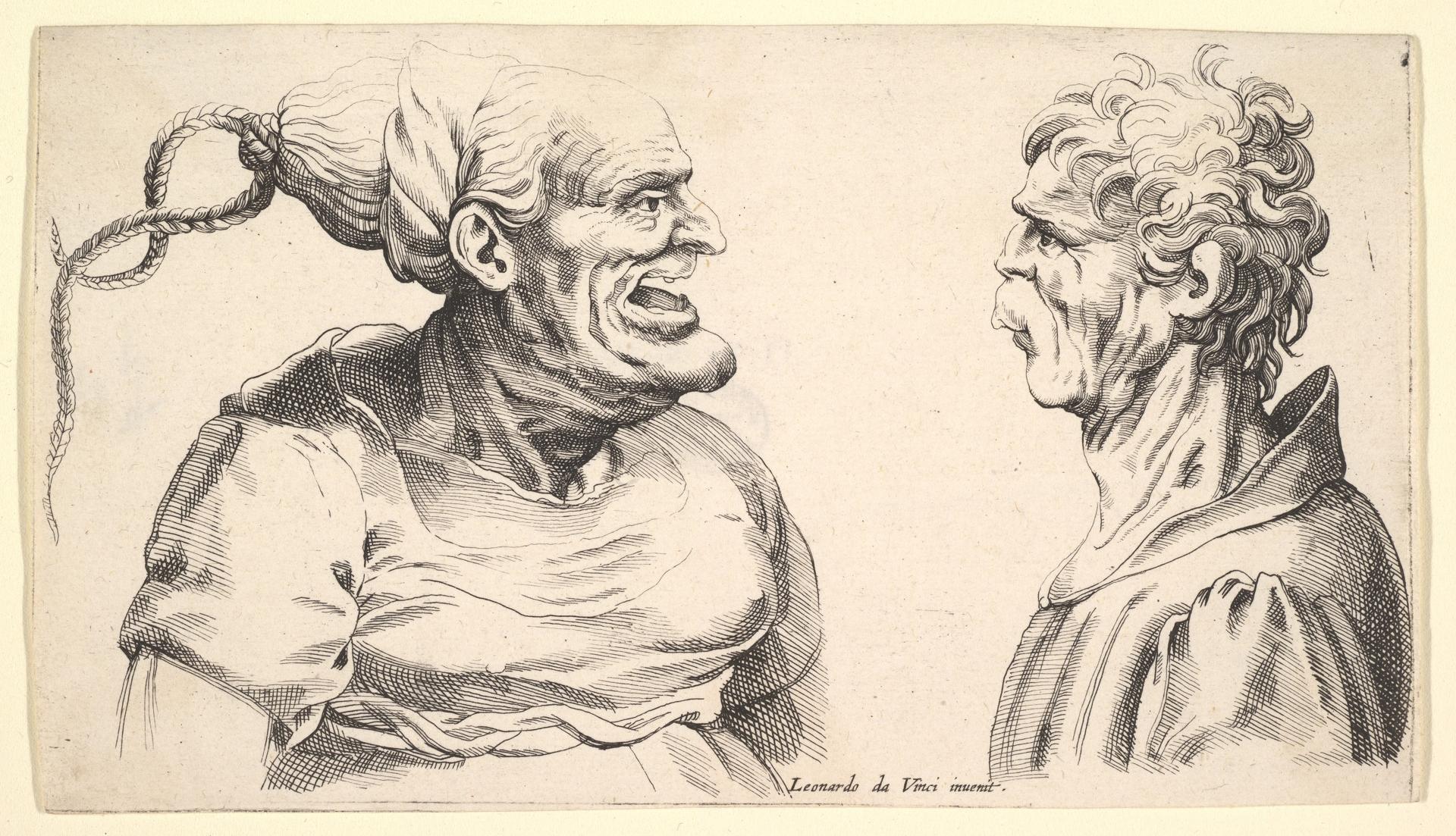
Two deformed heads (1645–50, Met-Objekt 5483)
Original title: Two deformed heads
kurzbeschreibung
Two human heads in profile, one with sharply distorted features and the other calmer: Wenceslaus Hollar recorded this subject in a black-and-white etching between 1645 and 1650. The sheet belongs to his series of physiognomic studies, and it renders the deformed faces with unusual precision.
Description
The left head draws the eye at once, with its deep brow furrow and unkempt hair; the mouth hangs open, the teeth show, and the eyes are wide. Beside it sits a second head in profile, less misshapen, with curling hair and a more composed expression. Both are pushed close to the viewer, and the empty ground frames them without distraction.
Context
Hollar, a Bohemian printmaker, worked in seventeenth-century England, where his richly detailed etchings were prized. The deformed heads most likely grew out of medical or physiognomic inquiries into facial deformity and its expression.
Impact
Precise linework and strong shading give the print an almost documentary immediacy. The distorted features stay realistic and quiet rather than tipping into the grotesque, which invites the viewer to look soberly rather than recoil.
Technique
Etching allows for fine detail, and that shows in the handling of facial features and hair. Delicate lines and graded shadows are characteristic of how Hollar worked.
AI-generated description text
Source: Metropolitan Museum of Art · Public Domain (CC0 1.0)