The Toilet of Bathsheba
Original title: The Toilet of Bathsheba
kurzbeschreibung
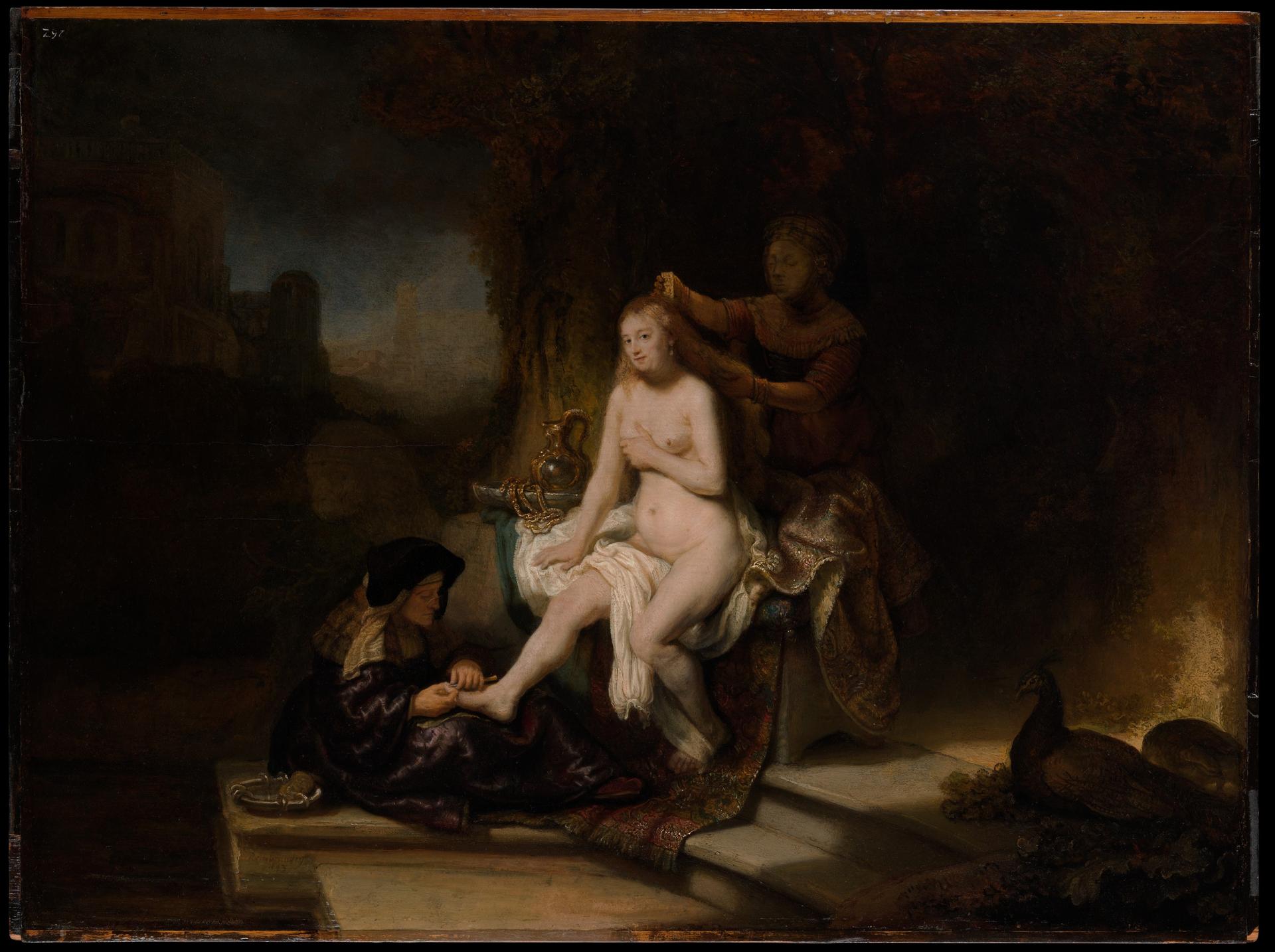
Rembrandt van Rijn painted Bathsheba in an interior in 1643. The oil on wood measures 57.2 x 76.2 cm. Bathsheba is attended by two maidservants; behind her, a landscape with classical buildings opens up.
Description
In the foreground a woman sits with a white cloth around her hips. A maidservant wearing a headscarf arranges her hair, while another kneels before her and washes her feet. Beyond, there are classical buildings and trees. Brown tones dominate the palette, with bright accents in the cloth and garments. Side lighting picks out the figures and details.
Context
The painting dates from Rembrandt's Amsterdam years, when he was in demand as a portrait and history painter. Bathsheba was a common subject in seventeenth-century Dutch art. Rembrandt presents the scene not as a public bath but as a private, intimate toilette—unusual for its time. No patron is recorded; the format suggests a cabinet piece for a private collector.
Impact
Muted browns and the light from the side create a quiet, almost reverent mood. The lifelike rendering of the figures and the strong shadows give the scene something sensual yet dignified. The calm arrangement invites close attention to the gestures of care and the poised bearing of the main figure.
Technique
Oil paint on oak panel—the usual method of seventeenth-century Dutch painting. Rembrandt applied the paint in several layers, using fine brushstrokes and glazes for soft transitions and lighting effects. The dark palette and the directed light demonstrate his mastery of chiaroscuro, the interplay of light and dark.
AI-generated description text
Source: Metropolitan Museum of Art · Public Domain (CC0 1.0)