Herman Doomer
Original title: Herman Doomer (ca. 1595–1650)
kurzbeschreibung
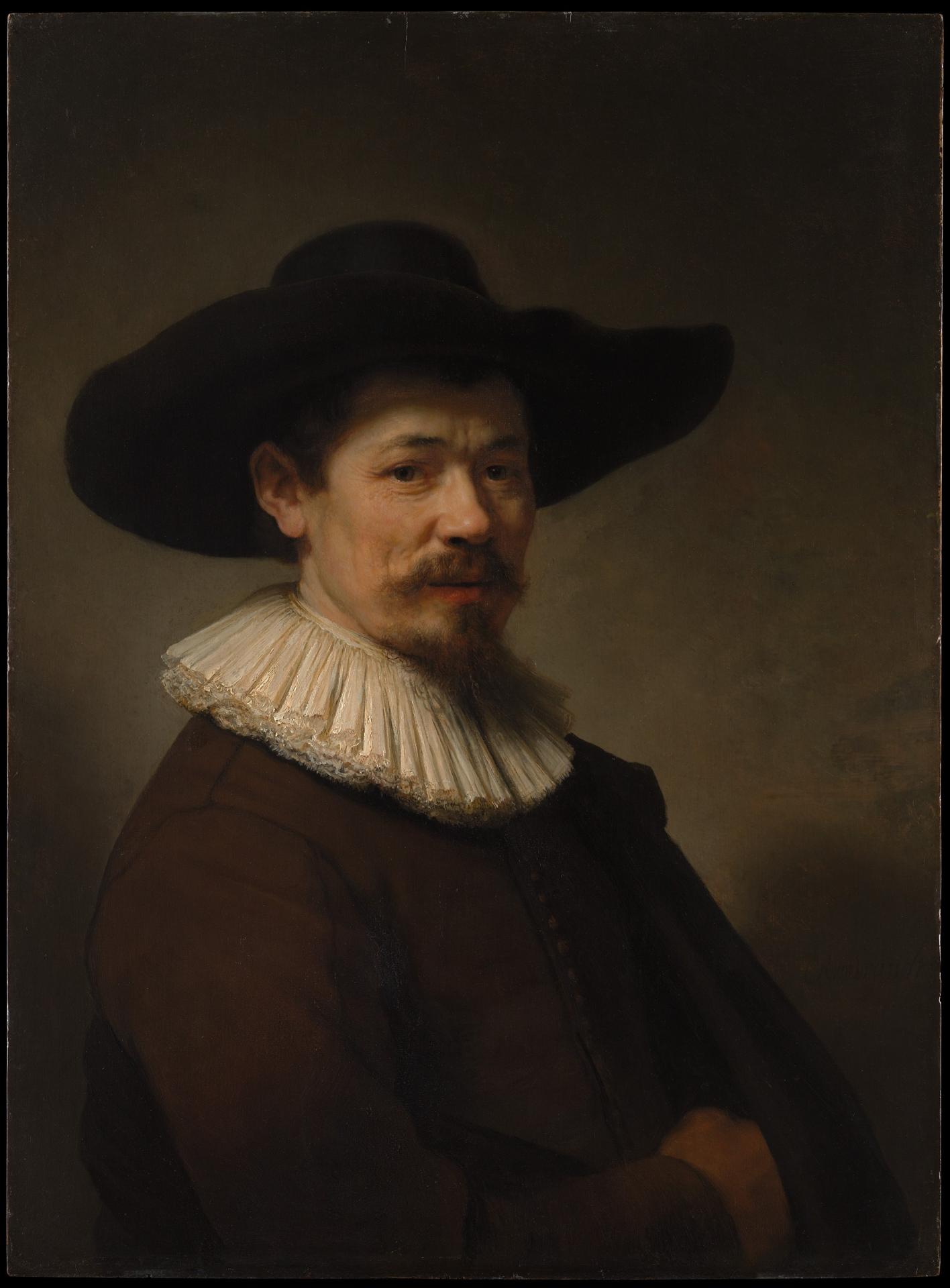
Rembrandt painted Herman Doomer, an Amsterdam artisan, in 1640 in oil on wood. The portrait presents the man as a half-length figure against a dark ground, focusing on his facial features and clothing.
Description
Herman Doomer appears in a dimly lit space, wearing a wide black hat and a dark long-sleeved shirt with a white ruff collar emerging from it. A neat beard and mustache frame a serious, thoughtful face. Side lighting sculpts the contours of his face and the brim of his hat, while the background remains blurred and dark. Head and shoulders are the sole focus of the layout; no other objects or figures are present.
Context
The sitter was a respected cabinetmaker and art dealer in Amsterdam, who had connections to Rembrandt. In 1640, a phase when Rembrandt was a sought-after portraitist in the city, he took up this portrait. It belongs to a series of likenesses he made of prosperous citizens and craftsmen.
Impact
The muted palette and dark background concentrate attention and give the portrait a sense of dignity. Light and texture are captured so precisely that a quiet, intimate mood arises, drawing the viewer to the sitter's person.
Technique
Oil paint on oak panel was used, with fine glazes alternating with impasto passages. This allows for nuanced gradations of light and shadow; the materiality of the clothing and the liveliness of the face stand out clearly.
AI-generated description text
Source: Metropolitan Museum of Art · Public Domain (CC0 1.0)