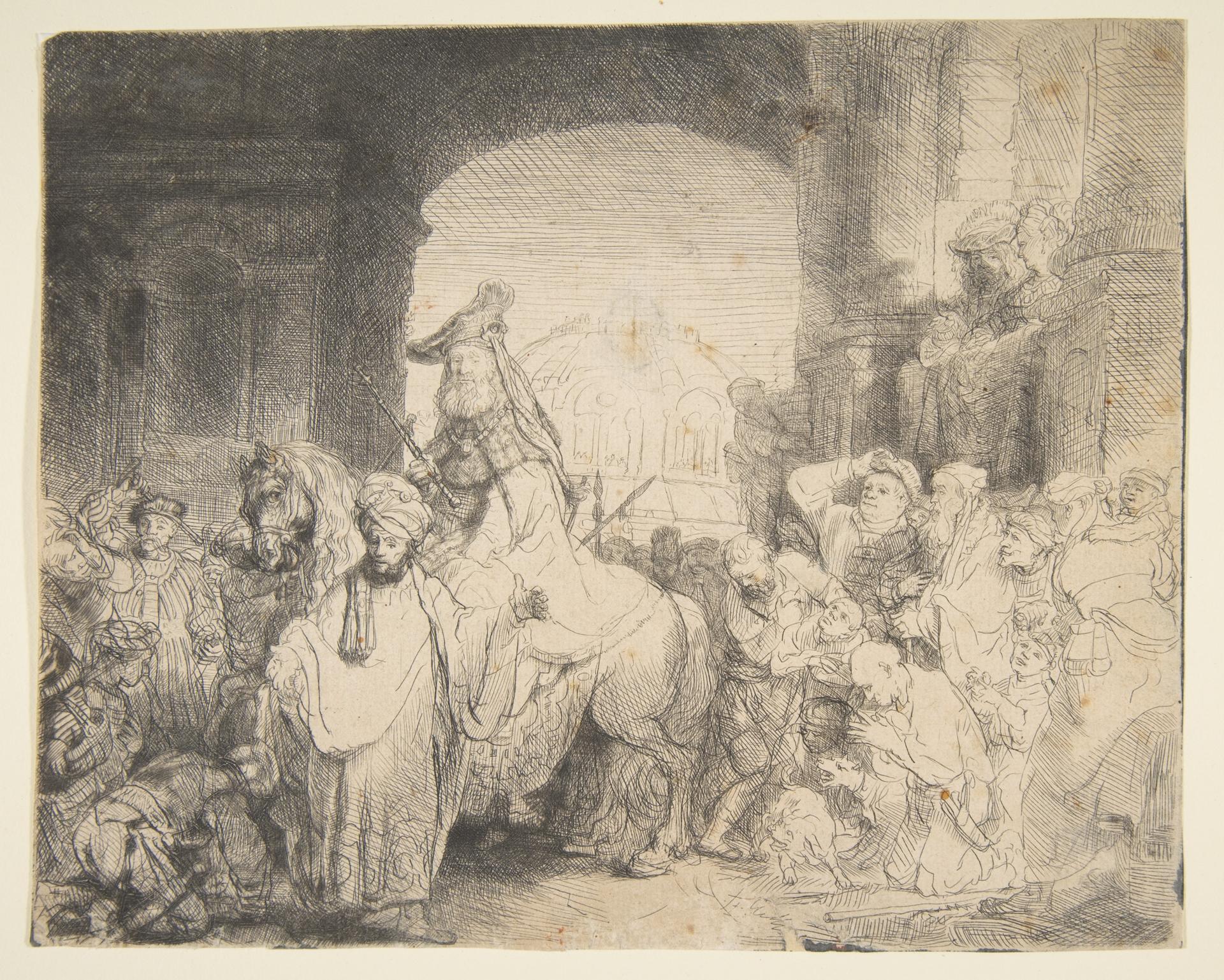
The Triumph of Mordecai (n.d.)
Original title: The Triumph of Mordecai
kurzbeschreibung
This undated sheet comes from Rembrandt's activity in the 17th century and presents the Triumph of Mordecai as told in the Book of Esther. The biblical hero appears on horseback, surrounded by a crowd. Neither technique nor dimensions have been recorded, but the monochrome character suggests a print or a pen drawing.
Description
A dynamic layout draws the eye to Mordecai riding high on his horse while a motley crowd presses around him. Some figures kneel, others stand or stride along, all in garments that evoke a past era. Behind them rise buildings that recall a temple or palace. Light falling from the front emphasizes the figures and the architecture. The style remains realistic, with dramatic accents typical of historical scenes.
Context
The source is the Book of Esther (Est 6:11): King Ahasuerus honors Mordecai by having him led through the city on the royal horse. Rembrandt turned to biblical subjects repeatedly, often in etchings that circulated widely in 17th-century Holland. A precise date is missing, yet the sheet falls within Rembrandt's working life, which spanned the entire 17th century. Triumphal processions were popular in the Baroque era, as they illustrated power and divine providence.
Impact
Because Mordecai is placed so centrally and the crowd is in motion, the sheet immediately conveys dramatic force. The monochrome execution and the incoming light create a solemn, almost theatrical mood. The viewer is drawn into the historical event and senses the grandeur of the moment.
Technique
The technique remains uncertain, but visual analysis points to an etching or pen drawing, indicated by delicate lines and shading. The monochrome palette and hatching match the practice of printmaking. Precise lines and targeted lighting demonstrate Rembrandt's mastery of chiaroscuro.
AI-generated description text
Source: Metropolitan Museum of Art · Public Domain (CC0 1.0)