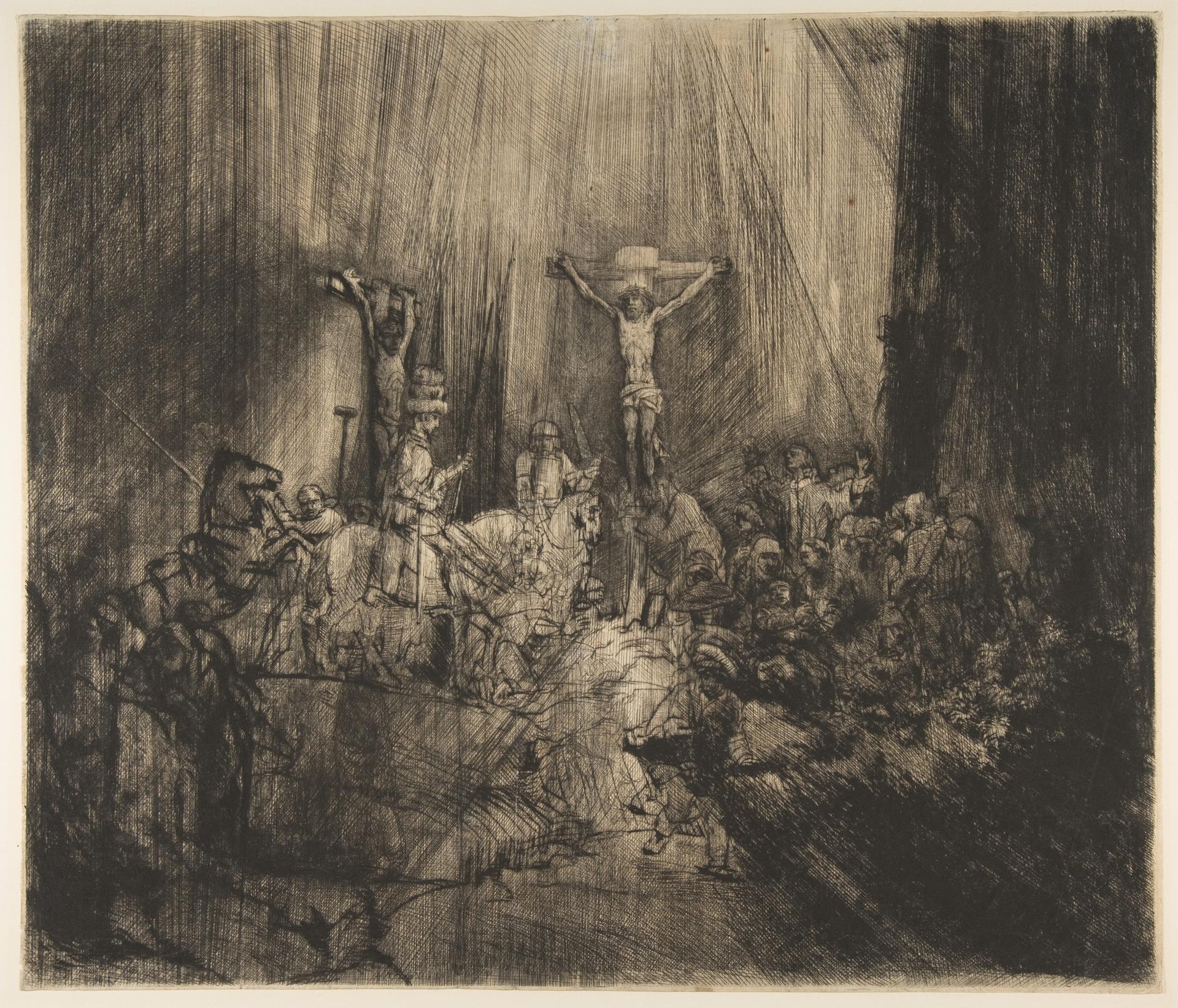
Christ Crucified Between the Two Thieves (The Three Crosses)
Original title: Christ Crucified Between the Two Thieves (The Three Crosses)
kurzbeschreibung
Rembrandt van Rijn took up the biblical scene of the Crucifixion in 1653: Christ between the two thieves. This drypoint print derives its force from vigorous lines and deliberate control of light.
Description
Christ's cross stands at the centre, flanked by the crosses of the two condemned men. A group of people appears on the left, while on the right spectators line the event. Light enters from above, modelling bodies and cross. Shades of grey dominate the monochrome image, with sharp contours and detailed lines standing out.
Context
This sheet was made during a period of intense experimentation in printmaking. Rembrandt often used the drypoint technique in the 1650s to achieve dramatic effects of light and shadow. Amsterdam, where he worked as a sought-after portraitist and history painter, was the place of its creation.
Impact
Strong contrasts of light and dark and dense hatching make the print profoundly arresting. The symmetrical arrangement and the light falling from above give the scene a solemn, almost monumental calm.
Technique
In drypoint, lines are scratched directly into the copper plate, producing soft, velvety strokes. Rembrandt used this to achieve fine gradations of light and shadow and varied the state of the print for different effects.
AI-generated description text
Source: Metropolitan Museum of Art · Public Domain (CC0 1.0)