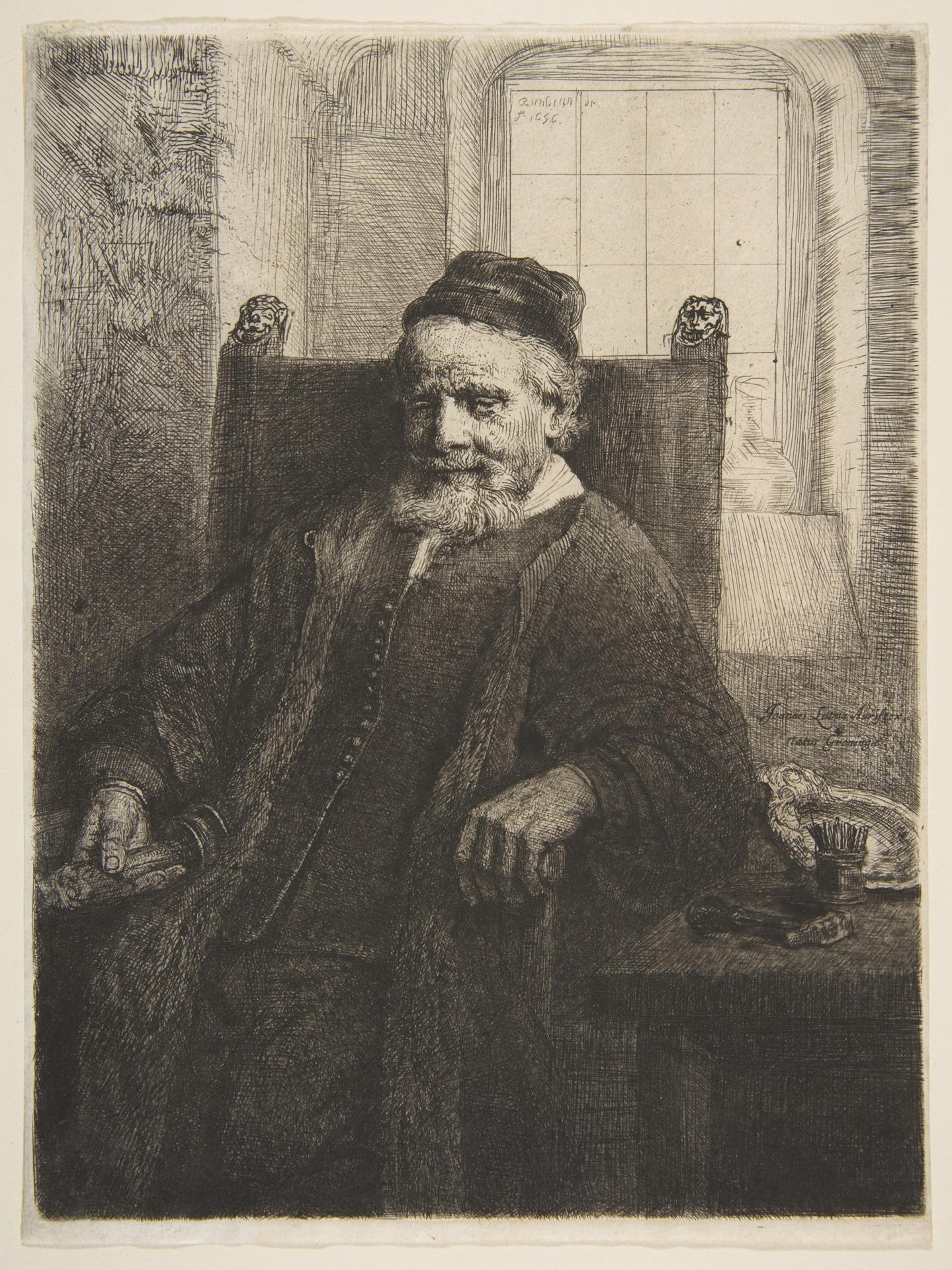
Jan Lutma, Goldsmith (1656, Met-Objekt 5363)
Original title: Jan Lutma, Goldsmith
kurzbeschreibung
Jan Lutma, the goldsmith, sits in an armchair – Rembrandt captured him in 1656 using etching, engraving and drypoint. This impression is the first of four states.
Description
Reclining in a cushioned armchair, the old man is flanked by two small sculptures. He wears a dark jacket with fur trim and a hat; his face is calm and pensive. Daylight falls through a wood-panelled window, modelling contours and surfaces. On the table lie a book, a quill and another utensil that resembles a tool. The layout is symmetrical, with side lighting emphasising textures.
Context
Jan Lutma was a respected Amsterdam goldsmith who died in 1656 at about 72. Rembrandt probably portrayed him in that year, either on commission or out of personal interest. At this time the artist was increasingly experimenting with printmaking techniques. The combination of several techniques characterises his late etchings.
Impact
The portrait feels intimate and collected; the sitter appears dignified and withdrawn. From the delicate interplay of light and shadow emerges a quiet, almost monumental presence.
Technique
Rembrandt combined etching, engraving and drypoint to achieve fine lines and soft tonal gradations. Drypoint leaves its typical slightly raised lines with a soft burr. The sheet measures 20.3 × 15.4 cm and survives in the first of four states.
AI-generated description text
Source: Metropolitan Museum of Art · Public Domain (CC0 1.0)