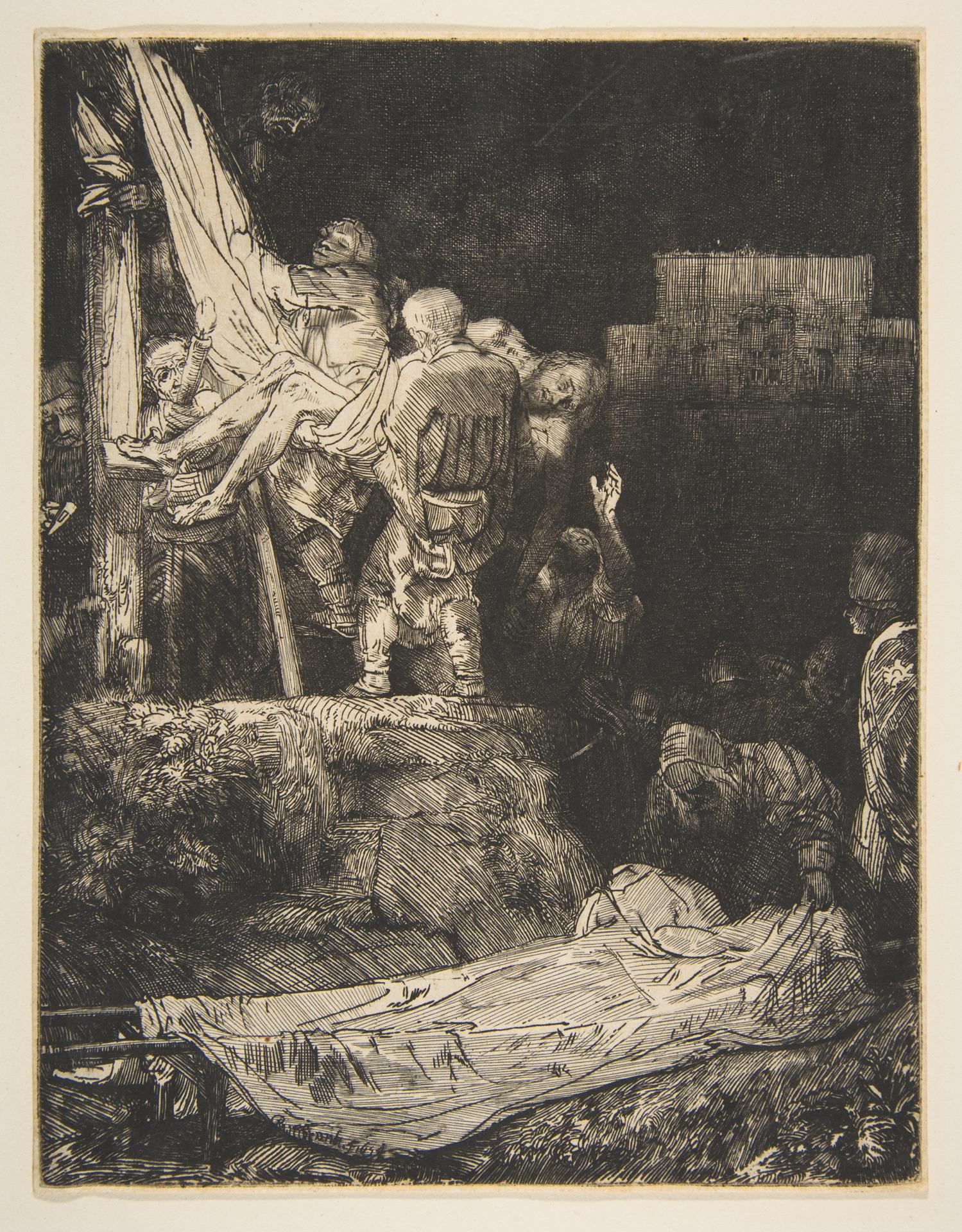
Descent from the Cross by Torchlight (1654, Met-Objekt 5355)
Original title: Descent from the Cross by Torchlight
kurzbeschreibung
Christ is taken down from the cross by torchlight in Rembrandt's 1654 etching, a biblical scene steeped in nocturnal atmosphere. Executed in etching and drypoint, the sheet survives in the first of four states.
Description
Hands reach for the lowered body while some figures move and others pause to watch. The action unfolds in the half-light of dusk. Light falls from the upper left onto the cross and those gathered there, leaving the rest in shadow. Behind the group a building with a roof and a window opening stands out. The participants wear clothing that is contemporary yet traditional.
Context
Rembrandt made this work in Amsterdam in 1654, a period when he engaged intensely with biblical subjects. It belongs to a series of Passion scenes produced in the 1650s. As the first state, the print captures an early stage before Rembrandt made further revisions.
Impact
Light and dark collide sharply, lending the event a dramatic yet intimate quality. Drypoint traces create a grainy surface and bring the figures forward in space; the viewer's gaze is drawn into the nighttime scene.
Technique
Etching and drypoint allow finely graded lines of varying strength, producing soft transitions and rich tonal values that are essential to the print's nocturnal effect. The trimmed sheet measures 21.2 × 16.4 cm.
AI-generated description text
Source: Metropolitan Museum of Art · Public Domain (CC0 1.0)