The Bathers (1651, Met-Objekt 5339)
Original title: The Bathers
kurzbeschreibung
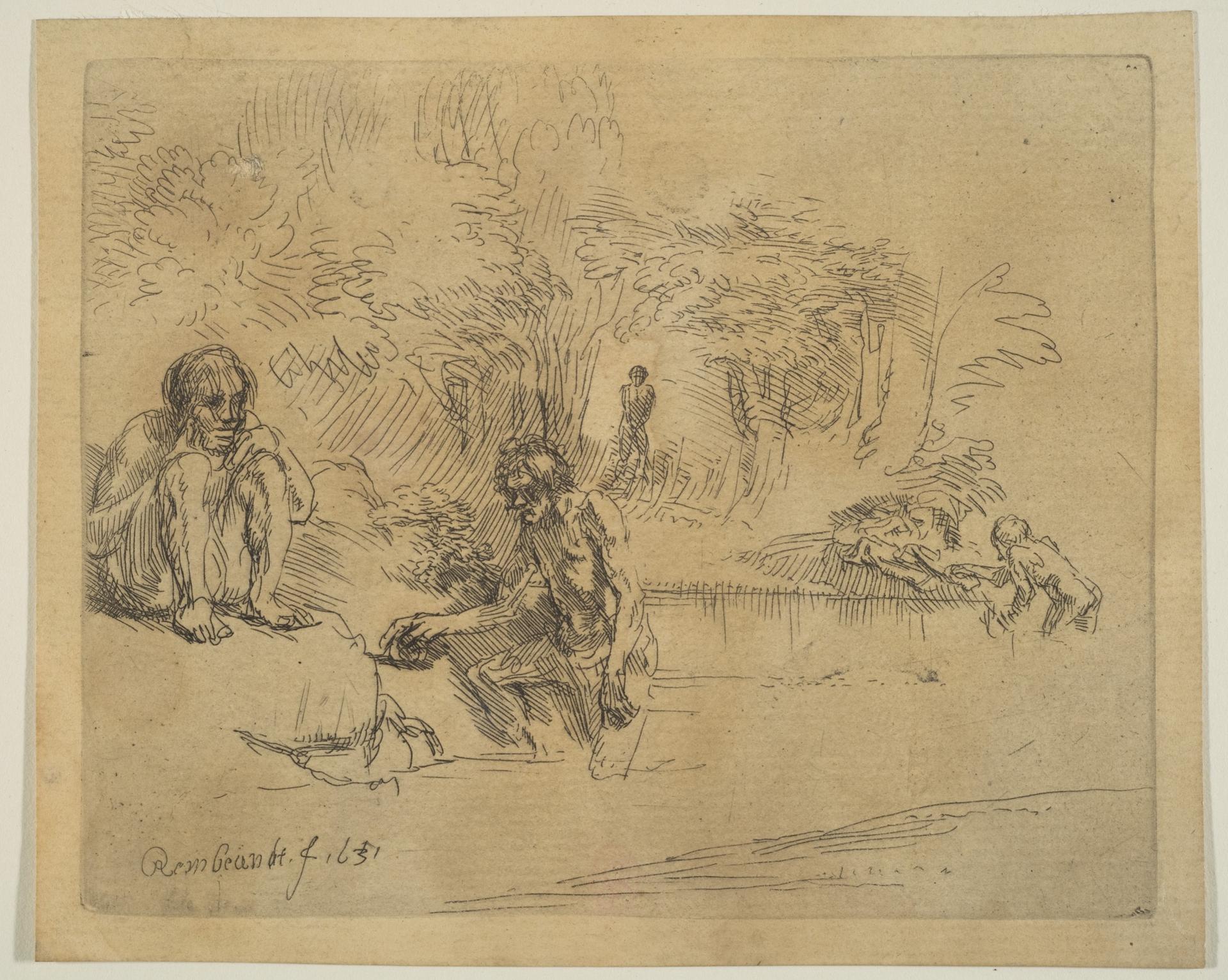
Two figures sit on a bank by the water while a third stands close to the edge. Rembrandt's etching "Die Badenden" (The Bathers) of 1651 presents a small group in a natural setting. The artist used etching, and this impression is the third of three states. It shows people bathing and lingering by the water.
Description
On a bench in the foreground, two figures have settled, while a third person stands near the water. Another figure can be made out further back on the bank. Trees and shrubs frame the scene, indicated with sketchy strokes. The figures remain simply and fleetingly outlined, giving the impression of direct observation. The black and white of the sheet is enlivened by the linework and shading that model light and dark.
Context
In 1651, during a phase of intensive engagement with printmaking, Rembrandt created this etching, in which he captured everyday scenes as he often did. The motif of bathers was common in 17th-century Dutch art and allowed the study of the human figure in natural movement. The work was made in Amsterdam, where Rembrandt had a well-equipped studio and access to high-quality printing presses.
Impact
The loose, almost fleeting linework lends the sheet something immediate and lively. A calm, intimate mood emanates from the scene and draws the viewer in. The interplay of light and shadow gives the simple view depth and density.
Technique
In etching, the drawing is scratched into an acid-resistant ground on a copper plate and then etched. Printing was done in black on paper; hatching and cross-hatching create the tonal values. This impression is the third of three known states, which differ in the working of the plate.
AI-generated description text
Source: Metropolitan Museum of Art · Public Domain (CC0 1.0)