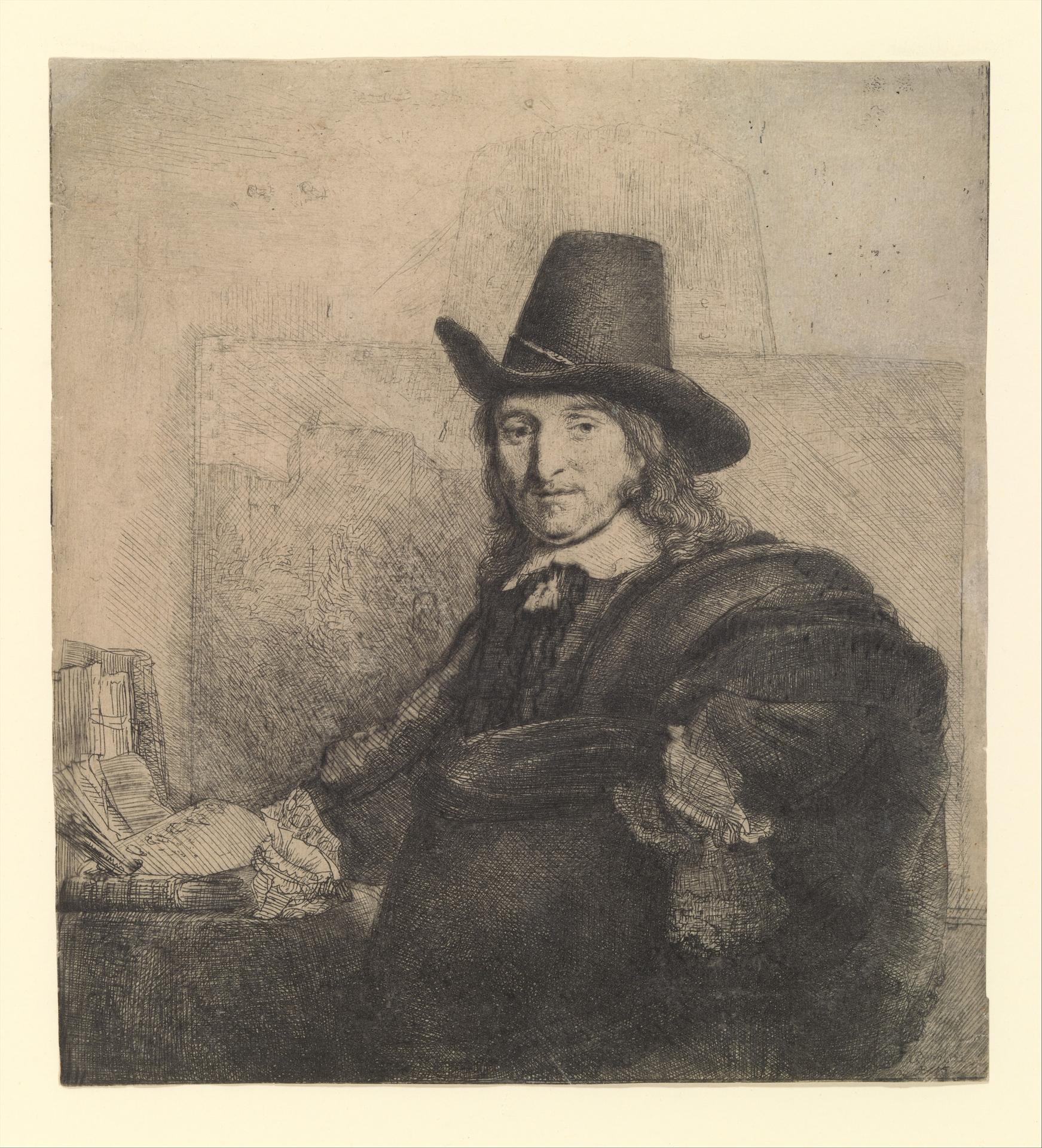
Jan Asselijn, Painter (Krabbetje) (ca. 1647)
Original title: Jan Asselijn, Painter (Krabbetje)
kurzbeschreibung
A book rests in Jan Asselijn's hands. Rembrandt etched this portrait of his fellow painter around 1647, capturing him in a quiet moment. The print, made with drypoint and burin, is shown here in the first of seven states. Asselijn, also known as Krabbetje, sits calmly, his gaze steady.
Description
A large black hat and a dark jacket with turned-up sleeves define the seated painter, who holds a book and looks out with a calm expression. Behind him, a landscape or a house can be made out, but these areas stay indistinct and restrained. The layout draws attention to the figure, which stands out through even light and fine contours. The grey tones shift with the mix of etching and drypoint, creating a quiet, detailed texture.
Context
This portrait was made in Amsterdam around 1647, where Jan Asselijn worked as a painter. A physical disability earned him the nickname Krabbetje (little crab); he was known for his Italian-influenced landscapes. At that time, Rembrandt was deeply engaged in portrait printmaking and depicted fellow artists. The existence of seven states suggests careful reworking of the plate.
Impact
The portrait feels focused and dignified thanks to the spare arrangement and subtle shading. Drypoint gives the dark areas a velvety depth that draws the viewer closer to the person. The sitter's calm posture conveys an atmosphere of quiet self-reflection.
Technique
Etching, drypoint, and burin were used for this work; some plate areas show tone. The print is in the first of seven states and trimmed to a format of 18.7 × 17.1 cm. Combining etching and drypoint produces fine lines and soft, dark accents.
AI-generated description text
Source: Metropolitan Museum of Art · Public Domain (CC0 1.0)