Landscape
Original title: Landscape
kurzbeschreibung
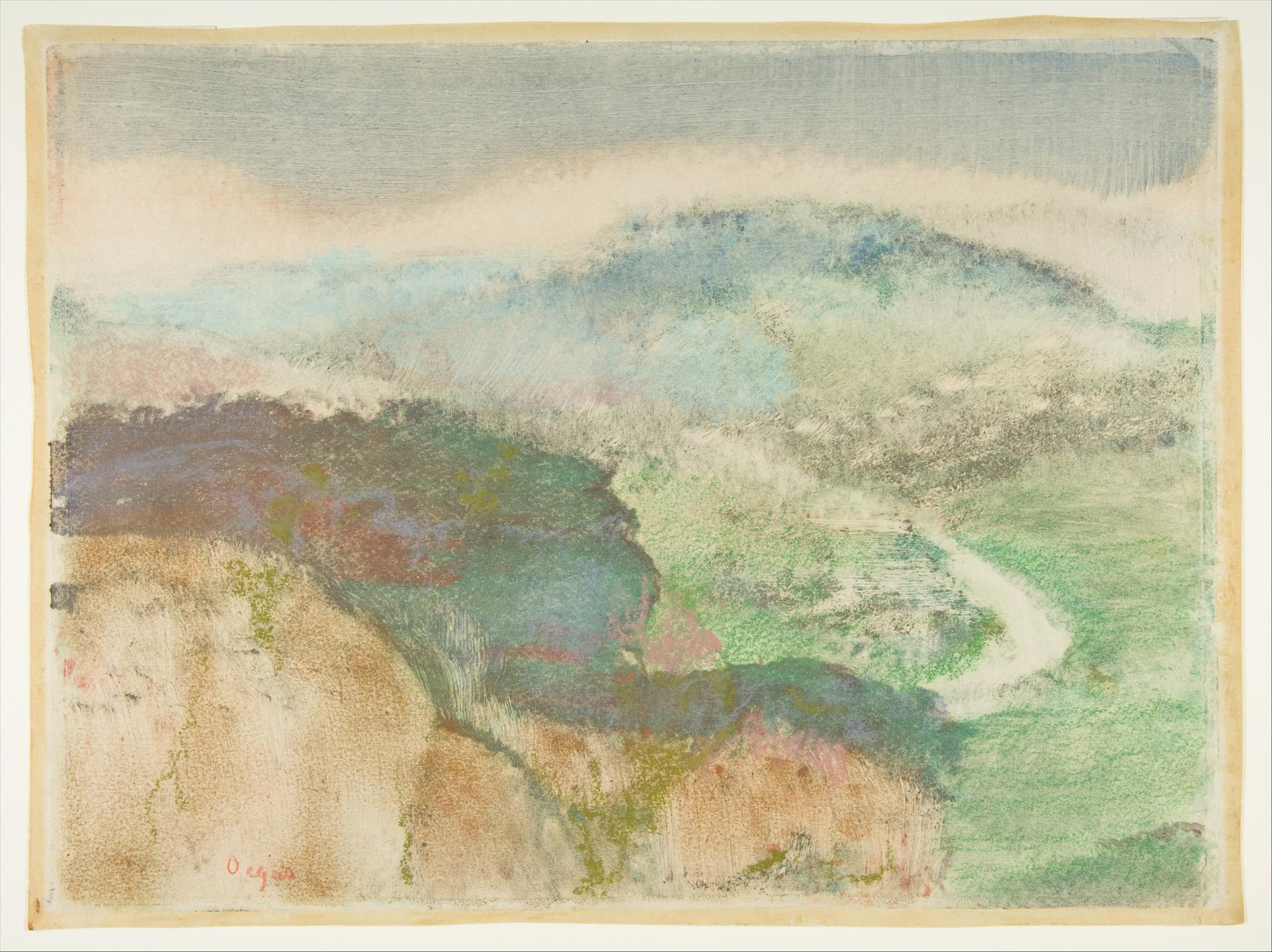
Edgar Degas made Landschaft in 1892 as a monotype in oil colors, which he then reworked with pastel. It captures a flat, gently rolling hill country in muted blues, greens, and browns.
Description
A low, softly undulating ridge crosses the image, broken into areas of color—chiefly blue, green, and brown. In the foreground, flat shapes suggest trees or bushes. The pastel-like softness of the hues creates a calm, peaceful mood. More hills in similar tones rise behind. The sky, in pale pastel shades, appears slightly hazy.
Context
This landscape dates from 1892, when Degas was turning away from modern city life and experimenting with other techniques. He had explored monotype since the 1870s, but only in the 1890s did he use it more intensively for landscapes. Such works often came about on travels or from memory, with Degas working oil paint directly on the plate.
Impact
The soft pastel tones and the flat, abstracted structure give the sheet a quiet, meditative presence. A misty atmosphere and gentle color transitions produce a still, almost dreamlike mood that draws the viewer into the landscape.
Technique
For this monotype, the artist applied oil paint to a smooth plate and transferred it to paper. Degas then heightened the print with pastel crayons to intensify colors and emphasize details. Printing and handwork together yield the characteristic soft texture and depth.
AI-generated description text
Source: Metropolitan Museum of Art · Public Domain (CC0 1.0)