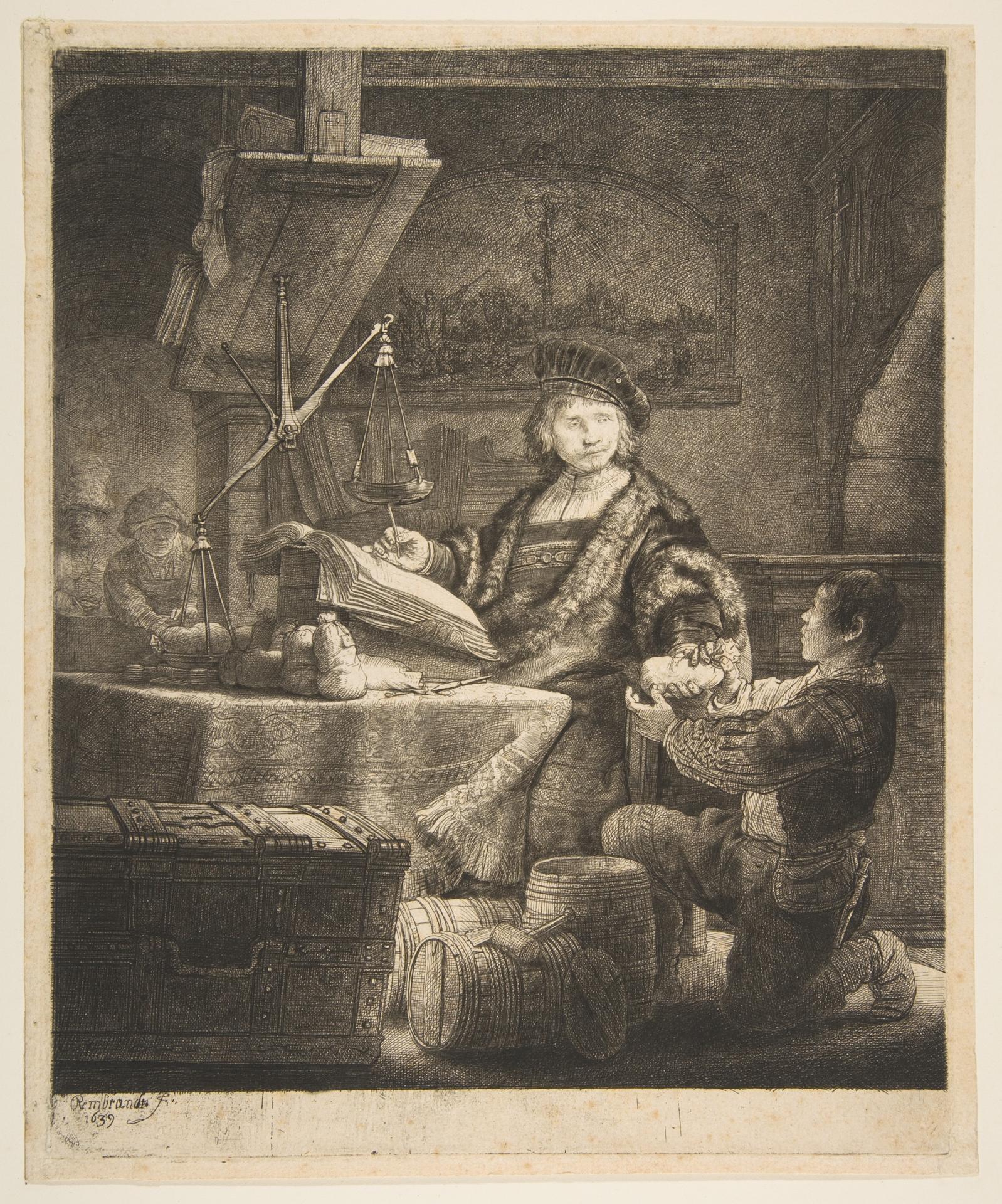
Jan Uytenbogaert (The Gold Weigher)
Original title: Jan Uytenbogaert (The Gold Weigher)
kurzbeschreibung
In 1639 Rembrandt etched Jan Uytenbogaert, an Amsterdam merchant and tax collector, in his office. The print blends portrait and everyday scene: the gold weigher sits among trade goods and tools that accompany his work. The work is executed as an etching with drypoint.
Description
A room with wooden beams and a large window opening forms the setting. In the foreground a well-dressed man in a fur jacket and cap writes in a book with a pen. A child kneels beside him and hands him something; on the table lie a weight, a book, a box, and a barrel. Another male figure in traditional clothing sits in the background and looks up. Light falls from above, bringing out the surfaces of fabrics and objects. The layout is detailed and carefully ordered.
Context
Jan Uytenbogaert was a wealthy merchant and tax farmer in Amsterdam, known for his precision. Rembrandt portrayed him as the Dutch Republic was enjoying economic prosperity and merchants were gaining social weight. By 1639 Rembrandt was already established in Amsterdam and regularly received commissions from the prosperous bourgeoisie.
Impact
A calm, concentrated mood pervades the print; the soft light and the precise rendering of things reinforce it. Portrait and genre scene merge into each other, creating a sense of closeness to the sitter. At the same time, the gold weigher's social standing becomes visible.
Technique
Rembrandt worked with etching and drypoint: lines were etched into a copper plate and additionally scratched directly into the metal with a needle, producing fine, soft lines. Printing the plate on paper creates the black-and-white effect. Through varying etching times and drypoint strokes, Rembrandt achieved graduated tonal values and textures.
AI-generated description text
Source: Metropolitan Museum of Art · Public Domain (CC0 1.0)