Horses in the Meadow
Original title: Horses in the Meadow
kurzbeschreibung
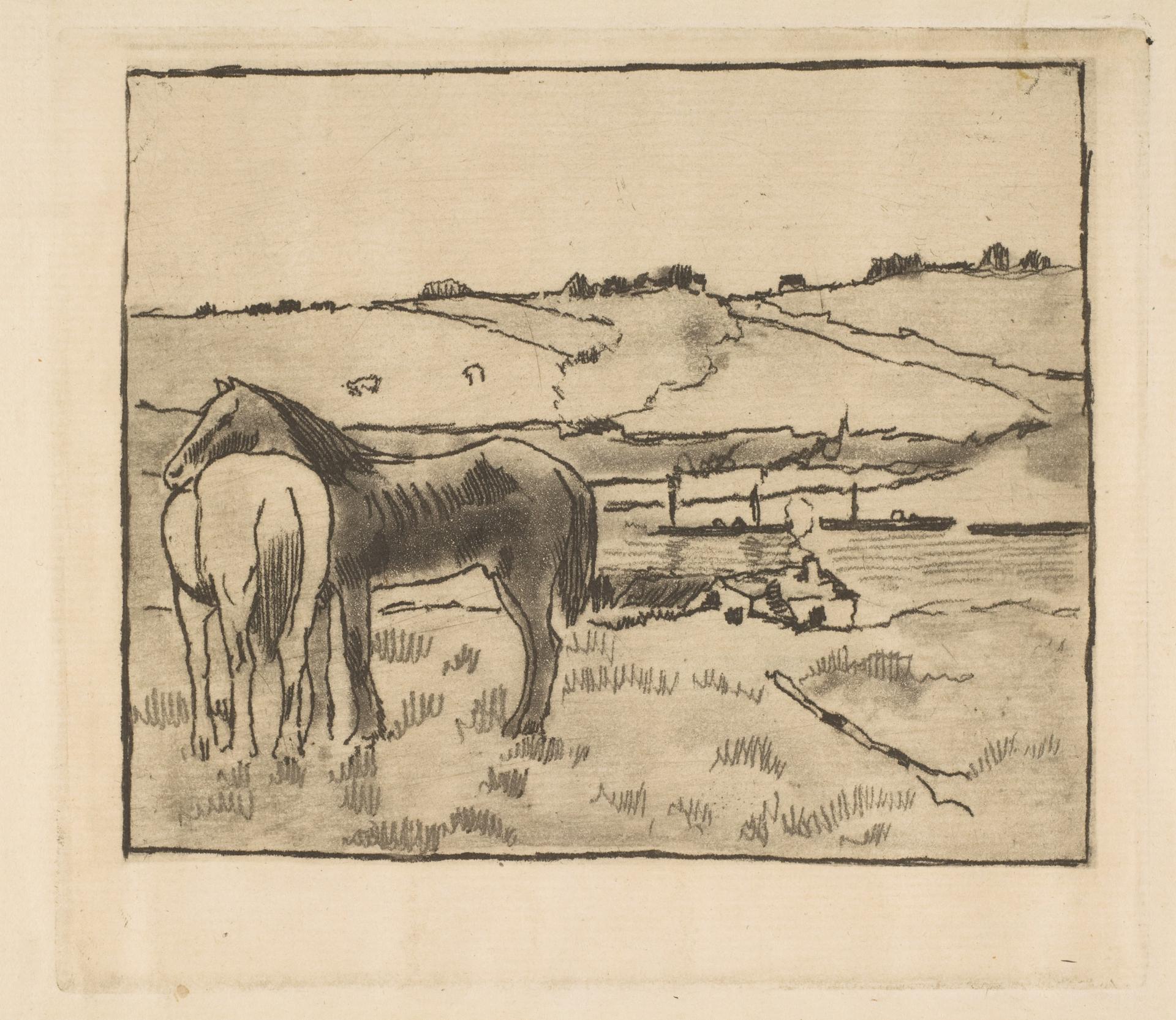
Edgar Degas made Pferde auf der Wiese in 1891–92 as an etching with drypoint and aquatint on laid paper. It features two horses in a landscape—a subject the artist returned to often in his later years.
Description
Two horses stand close together in half-profile on a meadow. Delicate lines and hatching build their bodies, while the outlines remain distinct. Gentle hills with scattered trees form the backdrop and frame the scene. The layout feels calm and balanced: the animals in front, the landscape behind. Light appears even, with no harsh shadows or strong contrasts.
Context
This print emerged during a period of intense engagement with printmaking, especially drypoint and aquatint. It is a rare state impression, considered unique. Horse imagery runs through Degas's work from the 1860s onward, often in racing or stable settings. The quiet meadow landscape, however, differs from his more dynamic racing pictures.
Impact
The reduced, monochrome execution gives the sheet a quiet, almost intimate mood. Fine linework and soft aquatint tones create a subtle plasticity that draws the viewer to look more closely.
Technique
Softground etching, aquatint, and drypoint on laid paper come together here. Drypoint yields rich, velvety lines, while aquatint allows fine tonal gradations. This impression is the second state of three and a unique print—a sign of Degas's experimental approach.
AI-generated description text
Source: Metropolitan Museum of Art · Public Domain (CC0 1.0)