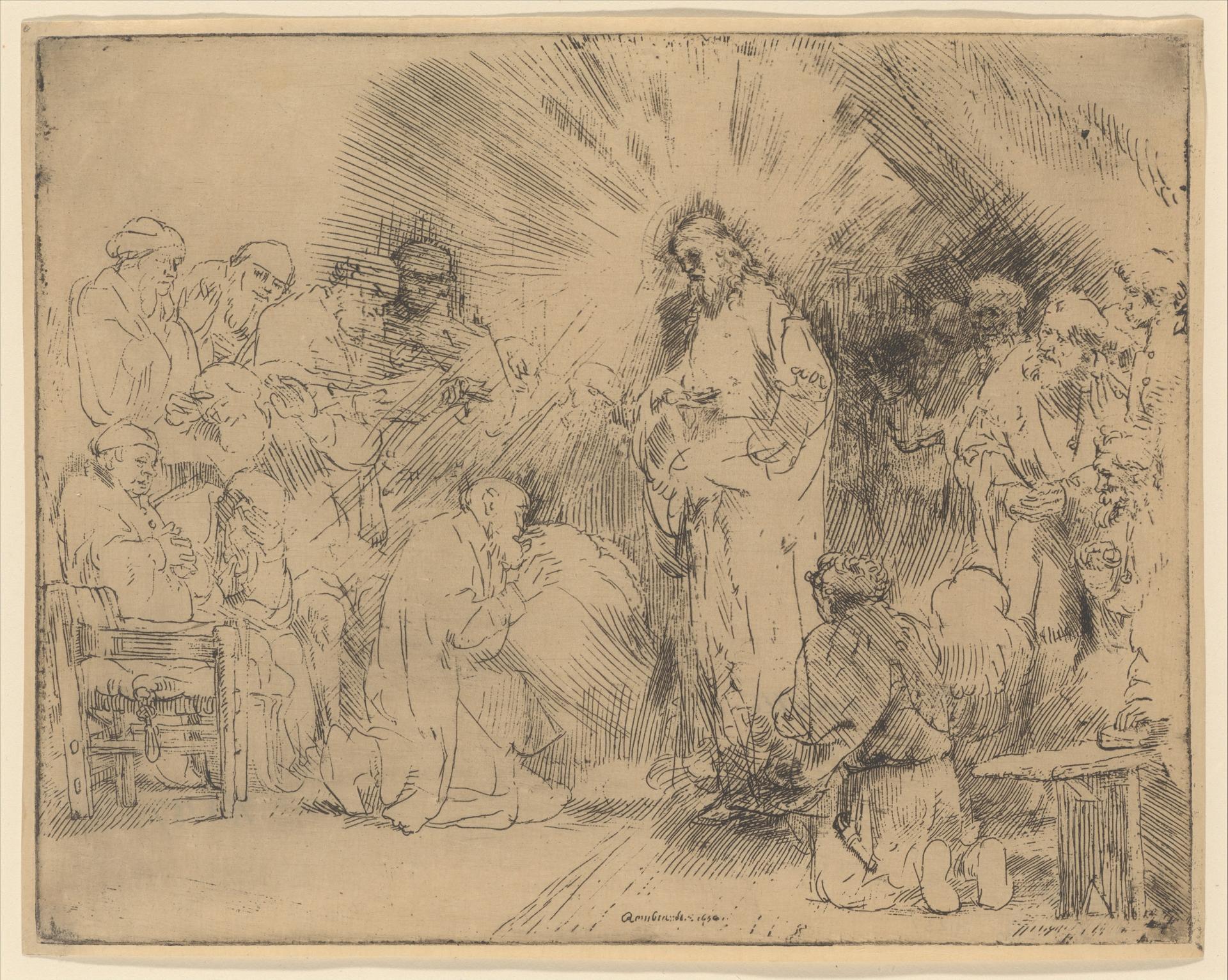
Christ Appearing to the Apostles
Original title: Christ Appearing to the Apostles
kurzbeschreibung
In 1656 Rembrandt etched the scene of Christ appearing before the apostles. The print is executed in etching and drypoint, with a very light plate tone; the sheet measures 16.4 x 20.8 cm.
Description
Jesus stands at the center, bathed in bright light that falls from above. He is barefoot, wearing a long-sleeved tunic, his hands raised as if he is speaking. Around him are the apostles: some sit on chairs, others stand or kneel; their gazes are directed partly at Jesus, partly wandering off. Fine hatching and drypoint effects model light and shadow in the monochrome image.
Context
This print was made in the mid-1650s, when Rembrandt was deeply engaged with biblical subjects. It belongs to a series of etchings depicting scenes from the life of Christ. The artist had mastered the etching technique and used it for effective lighting direction.
Impact
The dramatic lighting highlights the divine apparition. The way each apostle reacts gives the scene emotional depth and invites the viewer to linger. Rembrandt's line is lively, almost sketch-like, and lends the event dynamism.
Technique
Etching with drypoint and very light plate tone. The drypoint leaves fine, velvety lines that are especially evident in the shadows. The plate tone provides an evenly darker base and thus enhances the lighting effects.
AI-generated description text
Source: Metropolitan Museum of Art · Public Domain (CC0 1.0)