Man at a Desk Wearing a Cross and Chain
Original title: Man at a Desk Wearing a Cross and Chain
kurzbeschreibung
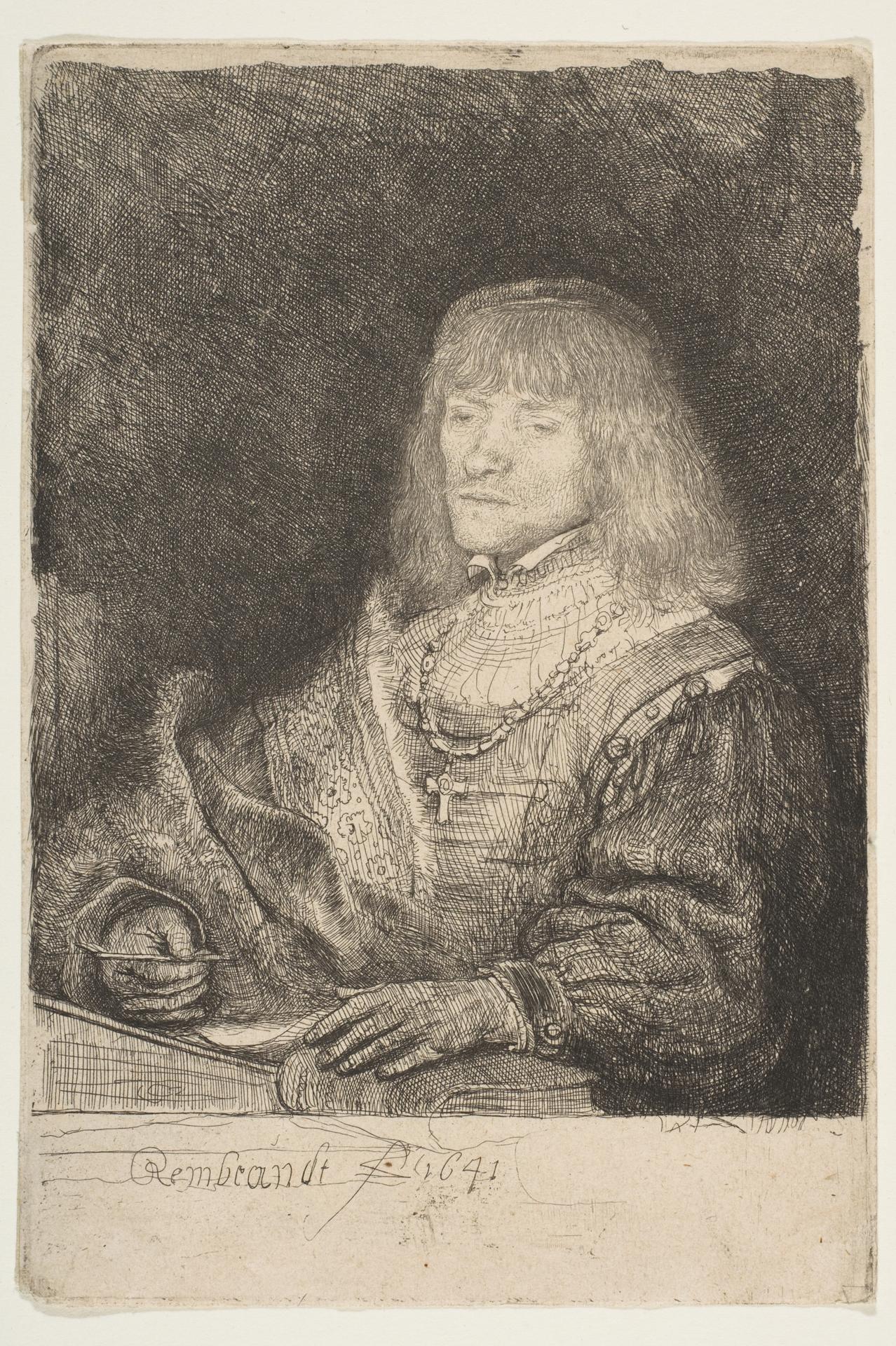
Rembrandt (Rembrandt van Rijn) made this etching with drypoint in 1641. It shows a person seated at a table, wearing an elaborately patterned gown and adorned with a chain and cross, holding a book or similar object in their hands.
Description
At the center, the figure sits at a table, both hands resting on the plate and holding a book-like object. The gown is richly embroidered, and around the neck hangs a chain with a cross. A dark, plain background strongly emphasizes the person. The arrangement is symmetrical, with light falling from the front and accentuating contours and fabric folds. The etching remains monochrome in shades of gray and black; fine lines and shading create depth. At the bottom, the signature “Rembrandt” and the year 1641 are visible.
Context
This print was made in 1641, during a period when Rembrandt was active in Amsterdam as a sought-after portraitist and graphic artist. The motif of the scholar or thinker at a desk was widespread in 17th-century Dutch art and reflected an interest in introspection and knowledge. The cross and chain might suggest a religious or clerical figure, but the identity of the sitter is not definitively established. During this time, Rembrandt experimented intensively with etching techniques, which is evident in the detailed execution.
Impact
The dark, reduced surroundings and the targeted light give the etching a calm, concentrated mood. Fine lines and subtle shading create an intimate, contemplative atmosphere that draws the viewer into the scene. Through the symmetry and the central position of the figure, the work gains a dignified, almost monumental presence.
Technique
Etching is supplemented by drypoint, producing fine, burred lines and giving the print a soft, painterly texture. Rembrandt used the etching technique for precise lines and combined it with drypoint to create darker, tonal areas. With a plate edge of 15.3 x 10.5 cm, the sheet is relatively small, which underscores the detail and the close-up view of the subject.
AI-generated description text
Source: Metropolitan Museum of Art · Public Domain (CC0 1.0)