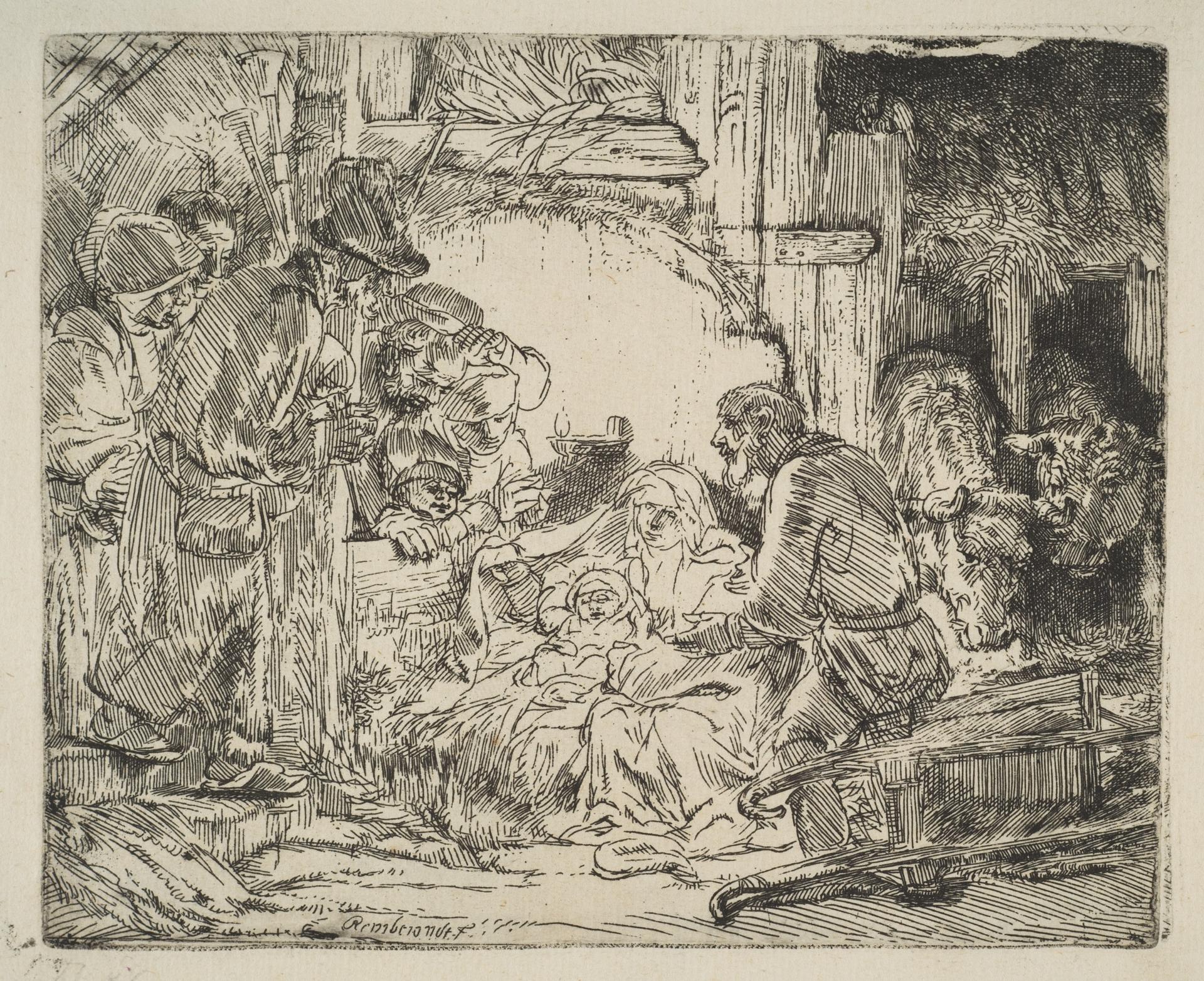
The Adoration of the Shepherds, with the lamp
Original title: The Adoration of the Shepherds, with the lamp
kurzbeschreibung
Rembrandt van Rijn made this etching, The Adoration of the Shepherds with the Lamp, around 1654, as part of his printmaking output in the 1650s. The print measures 14.2 x 17.2 cm and shows the adoration of the Christ Child in a stable. This impression is from the first of three states.
Description
The Christ Child lies at the center, surrounded by shepherds and other figures who stand, kneel, or sit. Light falls from above, drawing the main figures into view. Deep in the space, animals—likely goats—can be made out. Fine hatching and lines run across the sheet, creating an overall monochrome effect.
Context
In the 1650s Rembrandt devoted himself intensively to etching and experimented with various techniques. The Adoration of the Shepherds was a widespread subject in the seventeenth-century Netherlands, often treated with emphasis on the human, familiar side of the event. Rembrandt returned to the theme several times; this version stands out for a lamp as an additional light source.
Impact
An interplay of bright light and deep shadow gives the print a quiet, devotional atmosphere. The careful linework and detailed rendering of the figures invite close looking. The simple setting makes the event appear down-to-earth and human.
Technique
In etching, the drawing is incised into an acid-resistant layer on a copper plate and then bitten with acid. This impression is the first of three states, printed before later reworkings of the plate. Hatching and lines produce nuanced gray values and a sense of volume.
AI-generated description text
Source: Metropolitan Museum of Art · Public Domain (CC0 1.0)