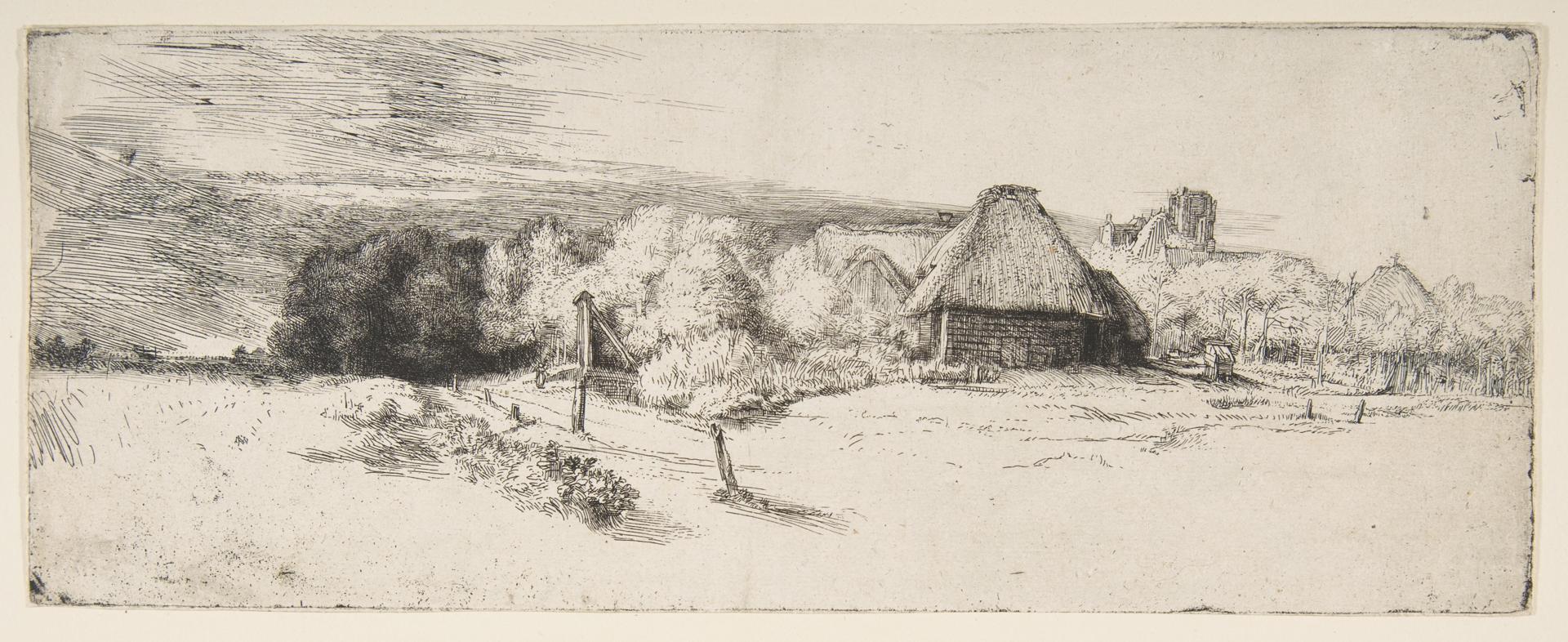
Landscape with Trees, Farm Buildings, and a Tower
Original title: Landscape with Trees, Farm Buildings, and a Tower
kurzbeschreibung
Around 1651, Rembrandt van Rijn made this etching, capturing a rural view with fields, farmhouses, and a striking tower in the distance. The print is an etching with drypoint and survives in its fourth of four states. The horizontal format emphasizes the architecture and the natural surroundings.
Description
A path draws the eye through fields in the foreground. On the right, a large building with a thatched roof—likely a farmhouse—stands surrounded by other houses and shrubs. Trees and hills close off the view toward the horizon. Light falls evenly, with no directed sunlight, suggesting an overcast day. Varying line thickness creates depth and texture in the black-and-white image.
Context
The etching dates from around 1651, when Rembrandt was deeply engaged with landscape motifs. Amsterdam, where he worked, had a growing art market that demanded landscape etchings as collectibles. Prints like this were cheaper than paintings and thus reached a wider audience. Rembrandt used etching to capture the moods and details of the Dutch landscape.
Impact
A calm, idyllic mood emanates from the print, carried by even light and naturalistic rendering. The fine hatching and the emphasized architecture give the view a textural depth that draws the viewer into the scene. The horizontal orientation and quiet arrangement feel meditative.
Technique
Etching with drypoint is a process in which the printing plate is bitten with acid and then worked directly with a needle. Drypoint leaves fine, burred lines that produce soft, velvety effects when printed. This fourth state documents Rembrandt's working method: he reworked the plate several times to refine effects of light and shadow.
AI-generated description text
Source: Metropolitan Museum of Art · Public Domain (CC0 1.0)