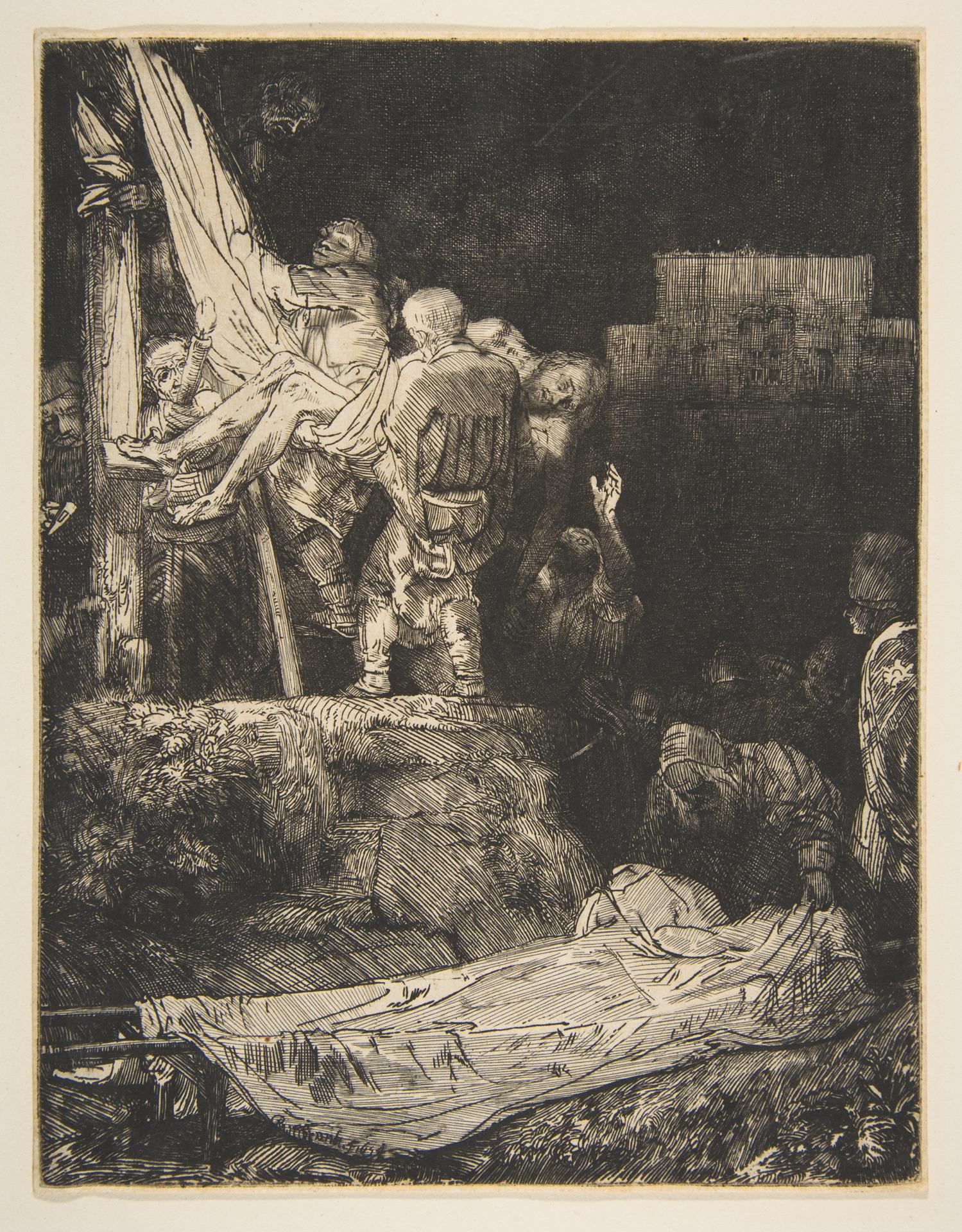
Descent from the Cross by Torchlight (1654, Met-Objekt 5161)
Original title: Descent from the Cross by Torchlight
kurzbeschreibung
Rembrandt's etching Kreuzabnahme bei Fackellicht, made in 1654, presents the body of Christ taken down from the cross in a nocturnal setting. This impression reproduces the first of four states and measures 23.8 × 17.8 cm. Etching and drypoint were combined for the plate.
Description
Twilight settles over the action. At the front stands the cross, where several figures in contemporary dress support Christ's body, their postures conveying grief and helplessness. Behind them a building with a window can be made out, giving off a faint glow. A forceful perspective pulls the eye into depth, and the whole arrangement feels restless. Tonal steps produced by the printing process are finely graded, bathing everything in a sombre, almost monochrome mood.
Context
This etching of 1654 belongs to a period of intensive experiment in printmaking. The Descent from the Cross was a familiar subject in the seventeenth-century Netherlands, yet Rembrandt's staging of it by night sets the sheet apart. It was made in Amsterdam, where the artist was then living and working, and forms part of a series of Passion scenes he carried out in various techniques.
Impact
A solemn, melancholy atmosphere radiates from the dark, nearly monochrome tonality. The dull light at the window draws attention to Christ's body and heightens the emotional force of the mourning scene. Restless structure and differentiated shading make this sheet an eloquent witness to Baroque printmaking.
Technique
Etching and drypoint were joined here, allowing both delicate, soft lines and rich areas of black. The plate measures 21 × 16.2 cm, while the sheet is somewhat larger. The shading results from varying etching times and from reworking with the drypoint needle, which leaves its characteristic burr.
AI-generated description text
Source: Metropolitan Museum of Art · Public Domain (CC0 1.0)