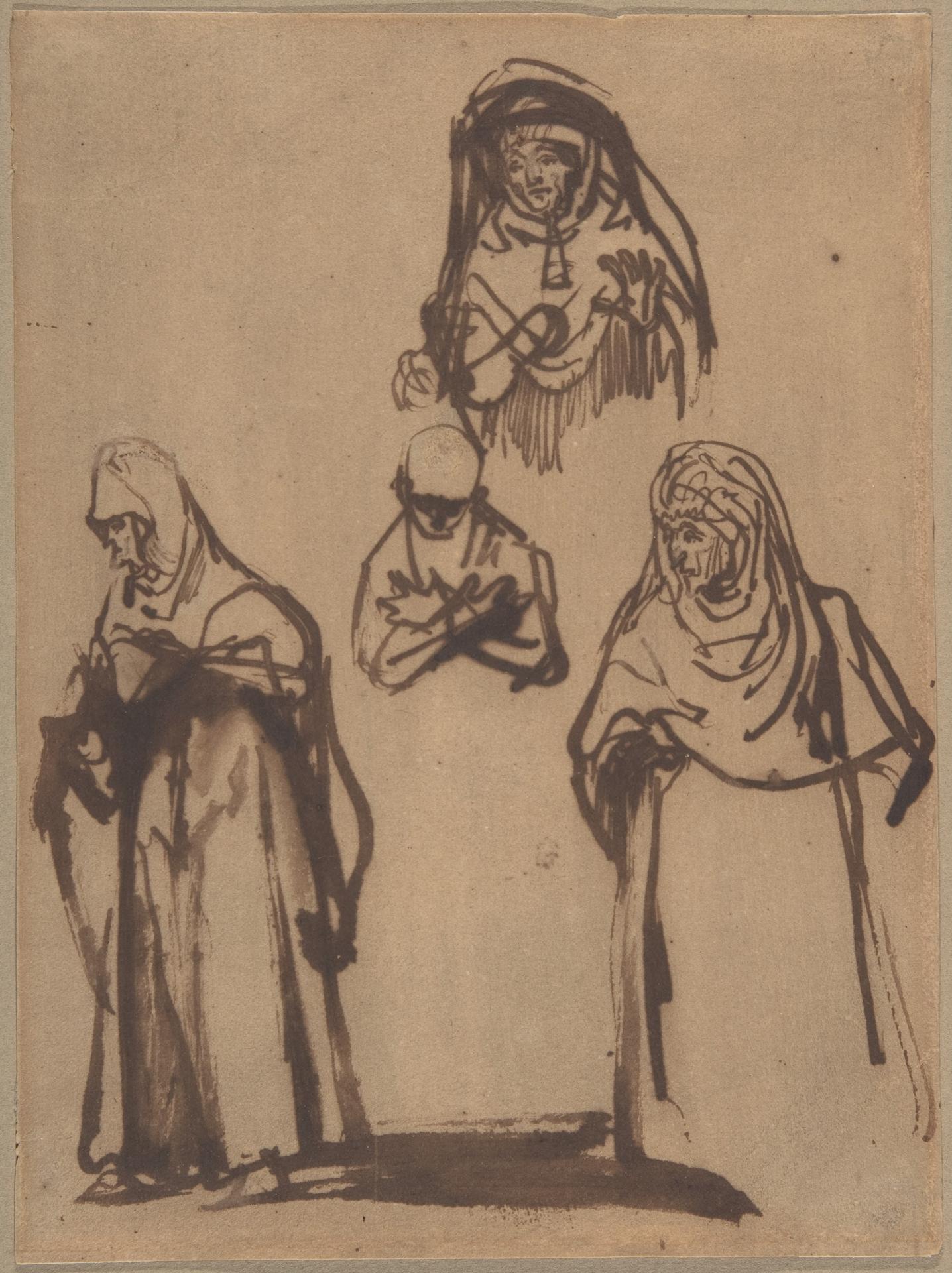
Study Sheet with Three Women and a Boy
Original title: Study Sheet with Three Women and a Boy
kurzbeschreibung
A seated woman holds a quill pen, accompanied by two other women and a boy — Rembrandt van Rijn captured these four figures in brown ink around 1638–39. The women wear long robes and headscarves, their poses shifting between sitting and standing. This sheet belongs to Rembrandt's characteristic pen studies, often made as preparatory work for larger compositions.
Description
On the right, a woman sits with a quill in her hand; to the left and in the middle, two more women and a boy stand. The women's robes are long and traditional, their heads covered with cloths. Some figures face forward, others appear in profile. Brown ink models the bodies through varying line thickness and shading. The paper looks beige and shows signs of age. Brown and gray tones dominate the palette, and the light falls evenly without harsh shadows.
Context
During his Amsterdam years around 1638–39, Rembrandt produced numerous drawings. He used study sheets like this one to test figures, poses, and drapery, and to prepare for paintings or etchings. The women in headscarves and long robes suggest biblical or historical scenes, which appear often in his work. What exactly this sheet was meant for is not recorded; yet it fits among the surviving studies that testify to his working method.
Impact
The loose yet precise linework makes the sheet feel lively and spontaneous. Brown tones and delicate shading give the figures a calm, intimate presence. Looking at the drawing offers an immediate glimpse into Rembrandt's draftsmanship — a closeness to the artistic process.
Technique
Brown ink and pen on paper — a common technique for Rembrandt's studies. The visible pen strokes and changing line strength reveal a fast, assured hand. Age-related yellowing and weathering marks on the paper emphasize the materiality of the drawing.
AI-generated description text
Source: Metropolitan Museum of Art · Public Domain (CC0 1.0)