Jan Lutma
Original title: Jan Lutma
kurzbeschreibung
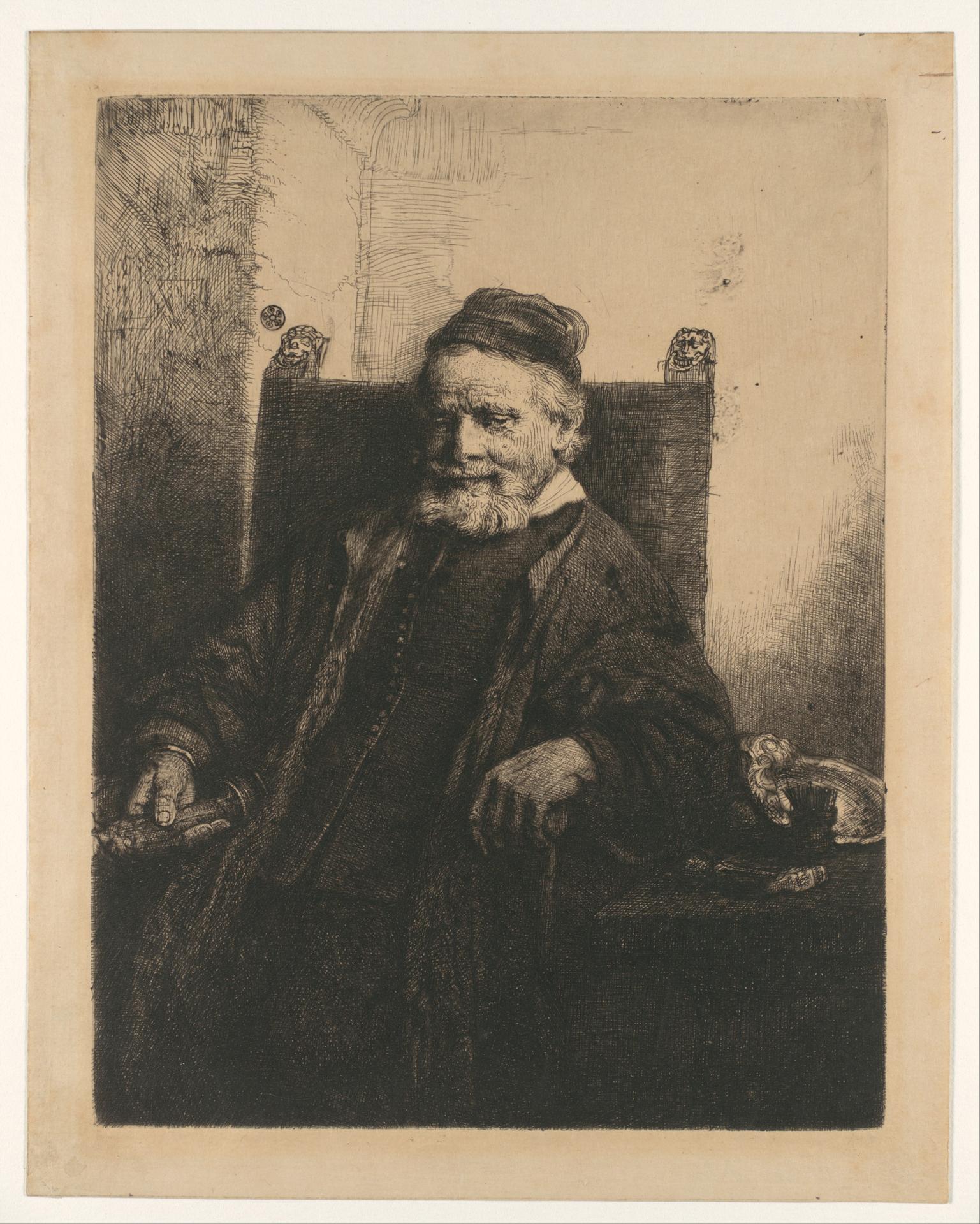
Jan Lutma, the goldsmith, sits in his chair wearing a cap and a fur-trimmed jacket, his hands resting quietly on the armrests. Rembrandt made this portrait in 1656 as an etching with engraving and drypoint on Japanese paper; it is the first of four states. The elderly artist appears calm and composed.
Description
An old man sits upright in his chair, both hands laid on the armrests. Cap and fur-trimmed jacket are rendered with clear attention to texture, while a plain dark ground lets the figure stand out. Soft light comes from the front, picking out the features of the face and the weave of the fabrics. The arrangement is centered and pared down to essentials.
Context
Jan Lutma was a respected goldsmith and engraver in Amsterdam and was already advanced in years in 1656. Rembrandt portrayed him at a time when he himself was struggling with financial difficulties. The work was made in Amsterdam in 1656. Japanese paper was often used at the time for high-quality impressions.
Impact
The sheet has an intimate, dignified atmosphere; the sitter comes across as collected and self-assured. Fine lines and shading give the image a lively presence and an almost painterly quality.
Technique
Etching, engraving, and drypoint are combined here, producing a wide range of lines and tonal values. Printing on Japanese paper makes the lines appear soft and deep. That this is the first of four states points to careful reworking by the artist.
AI-generated description text
Source: Metropolitan Museum of Art · Public Domain (CC0 1.0)