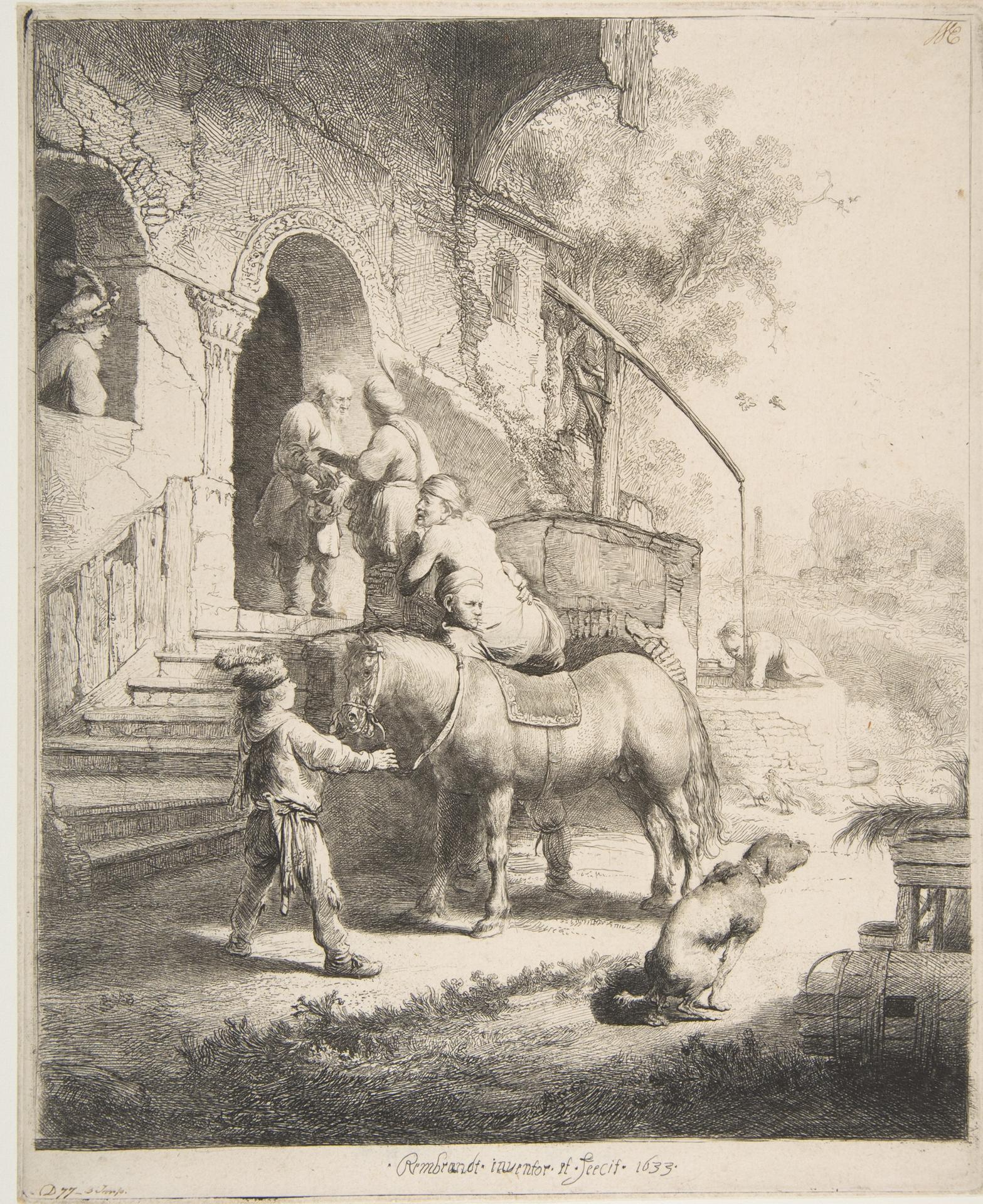
The Good Samaritan (1633, Met-Objekt 5142)
Original title: The Good Samaritan
kurzbeschreibung
Rembrandt captured the biblical parable of the Good Samaritan tending a wounded traveler in this 1633 etching. The print combines etching, engraving and drypoint and measures 26.8 × 21.5 cm.
Description
A rider sits on horseback in the foreground while a second man holds the reins; another figure carries the injured man. A child leads the horse, and behind them an ivy-covered ruin with a door and window appears. Several people stand at the edge of the image, one looking into the church, and a dog crouches on the ground. Black and white dominate the sheet, with fine, varied hatching creating depth and texture. The light falls clear and sharp, so that the outlines of figures and objects stand out.
Context
Rembrandt made this etching in 1633, a time when he was deeply engaged with biblical subjects and already established as a sought-after portraitist in Amsterdam. The parable of the Good Samaritan was widely popular in Protestant art of the seventeenth century because it places Christian charity at its center. Rembrandt treated the theme several times; this sheet is known as the first of four states.
Impact
The strong contrast of light and dark lends the composition dramatic tension and directs the gaze immediately to the central action. The detailed execution and lively portrayal of the figures make the scene feel emotionally immediate.
Technique
The print was made using a mixture of etching, engraving and drypoint; drypoint allows fine, soft lines. The hatching varies in thickness and spacing to model shadows and light effects. The first state shows particularly fine and precise linework that was lost through later reworking.
AI-generated description text
Source: Metropolitan Museum of Art · Public Domain (CC0 1.0)