The Baptism of The Eunuch
Original title: The Baptism of The Eunuch
kurzbeschreibung
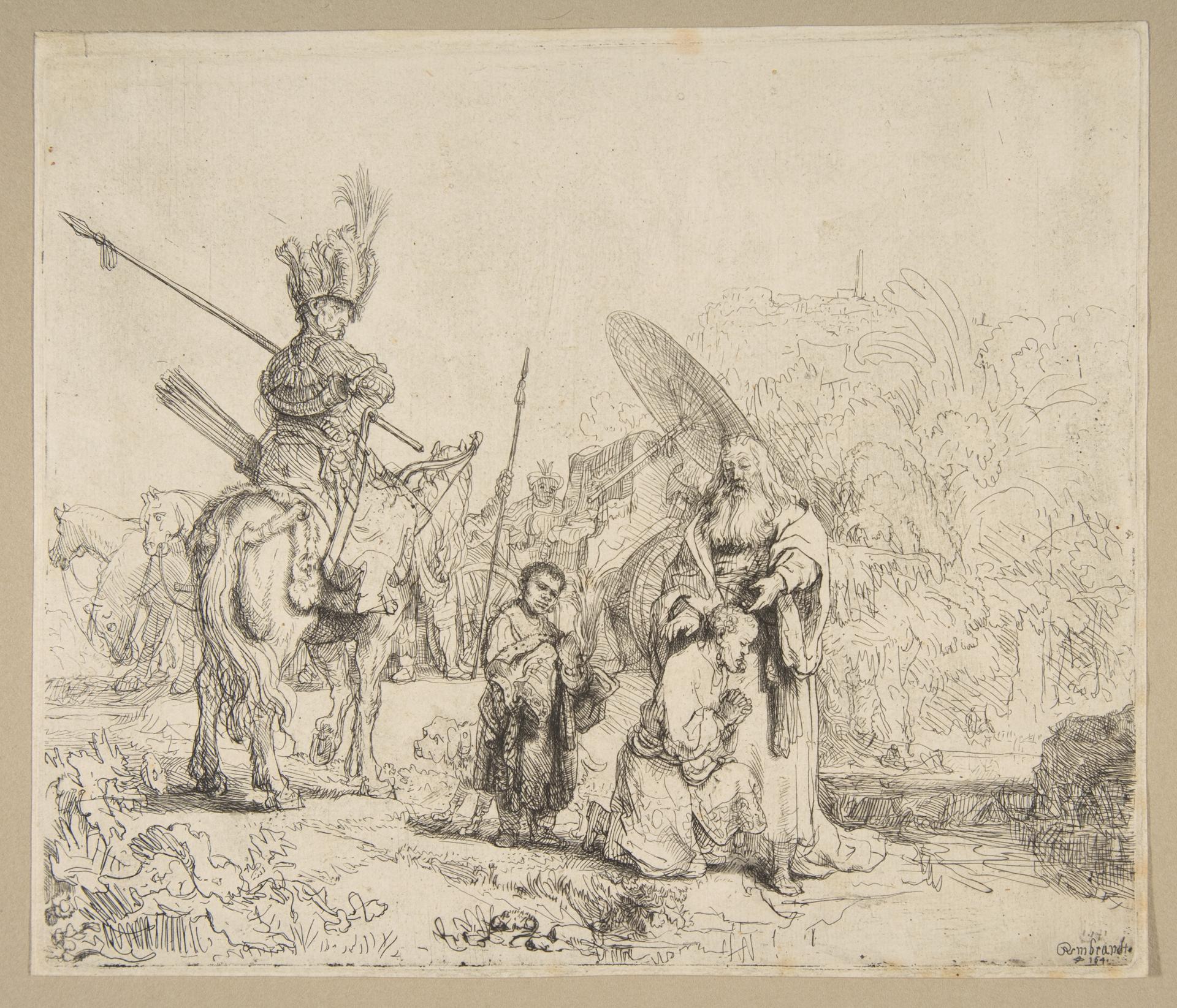
In 1641 Rembrandt etched the meeting of Philip with the Ethiopian eunuch, a biblical baptism set in open countryside with several onlookers. Four states of the print are known; this impression is the second.
Description
A mounted rider sits at the left, helmeted and plumed, a lance in his hand. Beside him stands a figure in a broad-brimmed hat, holding out a scroll and evidently explaining it. Two listeners have settled on the ground, and further back more people can be made out. The layout is spread unevenly, the light falls softly from the front and rests evenly on the figures, and trees and shrubs enclose the action.
Context
The print was made in Amsterdam in 1641, at a time when Rembrandt turned to biblical subjects with particular frequency. His source was the eighth chapter of the Acts of the Apostles, which tells of Philip's encounter with the eunuch. In these years he was visibly testing his handling of the etching needle and working through several states of his prints.
Impact
The calm, narrative arrangement catches the moment of instruction and baptism. Soft light and delicate lines give the sheet a quiet, almost devotional mood that draws the viewer's eye into the event.
Technique
Executed as an etching, the sheet survives in the second of four states and was additionally given gray washes in ink. The thin lines and hatching are characteristic of Rembrandt's etching manner, while the wash adds further tones and a sense of depth.
AI-generated description text
Source: Metropolitan Museum of Art · Public Domain (CC0 1.0)