The Blindness of Tobit
Original title: The Blindness of Tobit
kurzbeschreibung
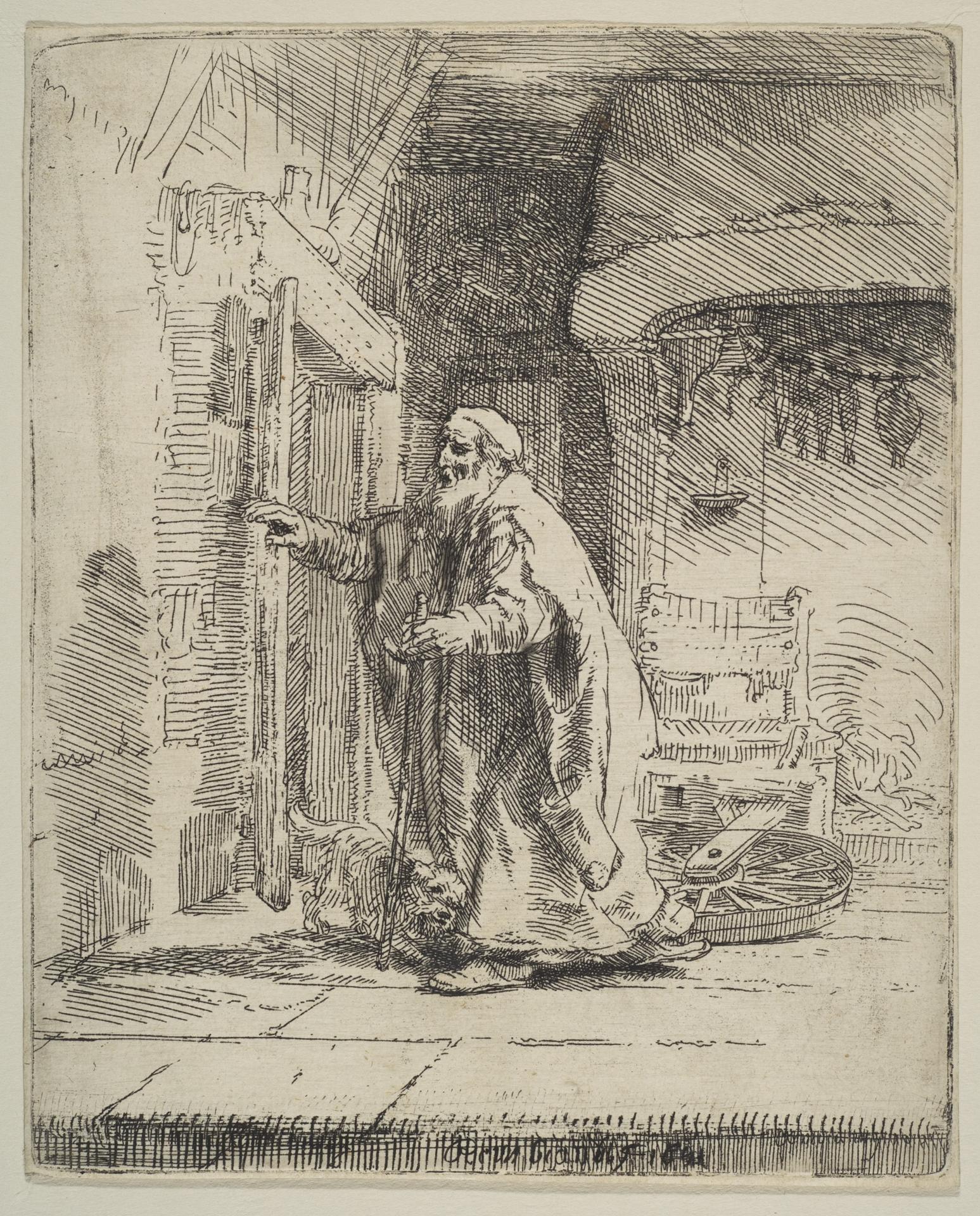
Etching with touches of drypoint, Rembrandt's "The Blindness of Tobit" from 1651 places the biblical Tobias leaning against a door inside a room. The plate survives in two states; this impression is the first.
Description
A bearded man in a long coat rests against the door, a small dog standing at his side. Behind him other shapes stay indistinct, animals among them, most likely. Light arrives from the front and traces the edges of man and dog. Fine strokes and hatching build up the shadows, and everything remains in a single tone.
Context
In 1651 Rembrandt was working through biblical subjects with real intensity. The story of Tobias, from the apocryphal Book of Tobit, was among the favourite themes of seventeenth-century Dutch art. Rembrandt left several treatments of it, in paintings and drawings as well as prints.
Impact
The quiet, carefully graded line gives the sheet a reflective cast. There is something heavy in the way Tobias leans on the door, and the dog, a faithful companion, lightens it a little.
Technique
Etched and then reworked with the drypoint needle, the print combines two operations on one copper plate: lines bitten into the metal, then deepened with the needle. How surely Rembrandt commanded this method shows in the delicate strokes and the softly graded shadows.
AI-generated description text
Source: Metropolitan Museum of Art · Public Domain (CC0 1.0)