The Sheepshearer
Original title: The Sheepshearer
kurzbeschreibung
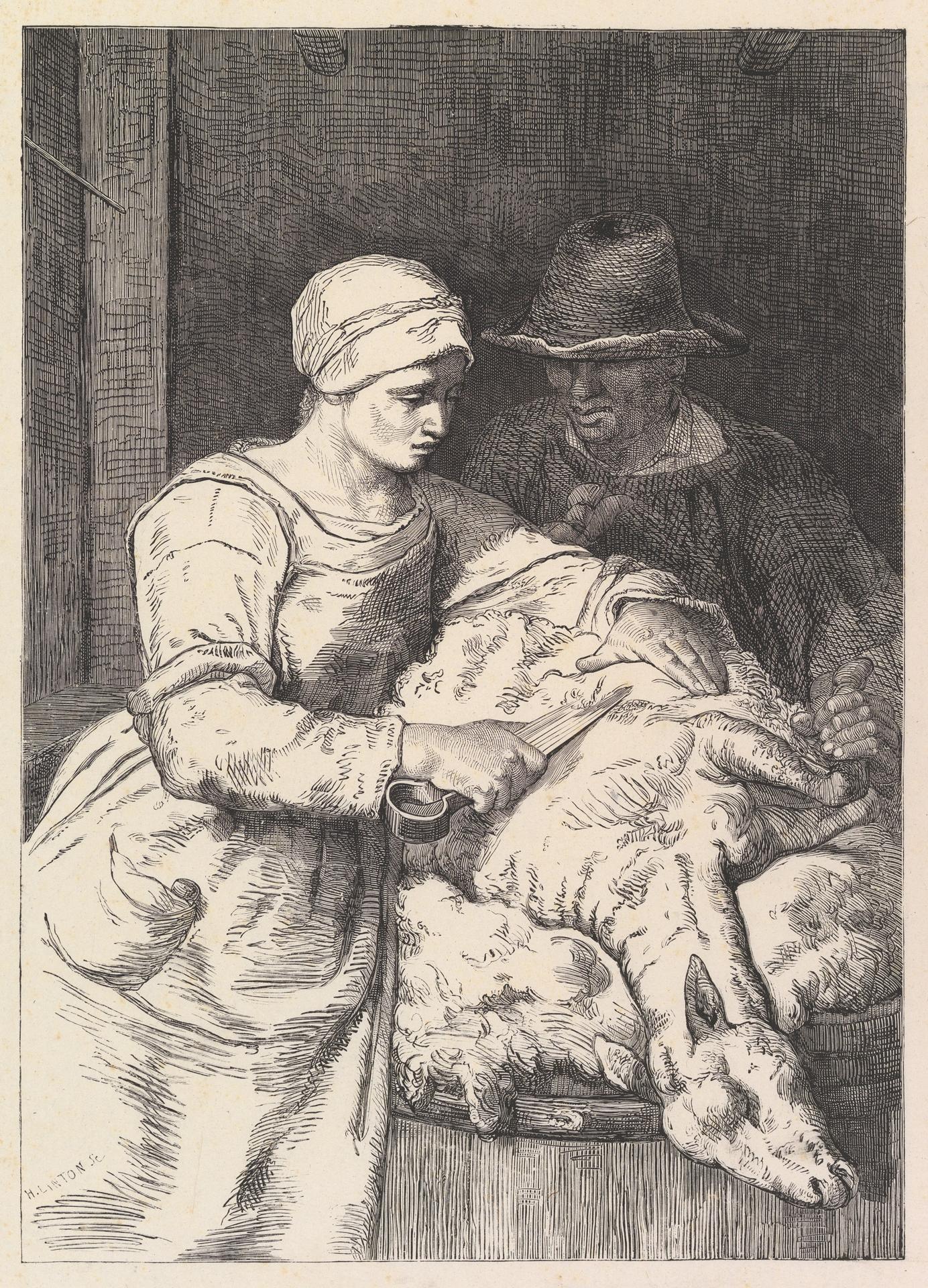
A woman and a man are shown shearing sheep in a barn. Henry Linton captured this scene in the 19th century as a woodcut. The print renders rural work realistically and with considerable detail.
Description
A seated woman in traditional peasant dress shears a sheep with scissors in her right hand, the animal lying on a wooden board; her left hand holds the fleece. Behind her stands a man in a wide-brimmed hat, watching calmly. The sheep lies on its back, partly shorn. Dark wooden walls suggest a barn or stable.
Context
Henry Linton was a 19th-century British wood engraver known for illustrations in books and periodicals. Rural activities such as sheep shearing were highly popular in Victorian art and reflect an interest in idyllic scenes of country life. The work was executed as a woodcut, a technique used for mass circulation in print media.
Impact
The scene feels quiet and focused, the figures wholly absorbed in their work. Even lighting and clear contours give it a factual, documentary tone. The detailed rendering of textures such as wool and wood conveys a tactile closeness to the subject.
Technique
In a woodcut, the design is cut into a woodblock and then printed on paper. The monochrome execution with even lighting is typical of this technique. Precise lines and hatching attest to the artist's high level of craftsmanship.
AI-generated description text
Source: Metropolitan Museum of Art · Public Domain (CC0 1.0)