Landscape (1830–75)
Original title: Landscape
kurzbeschreibung
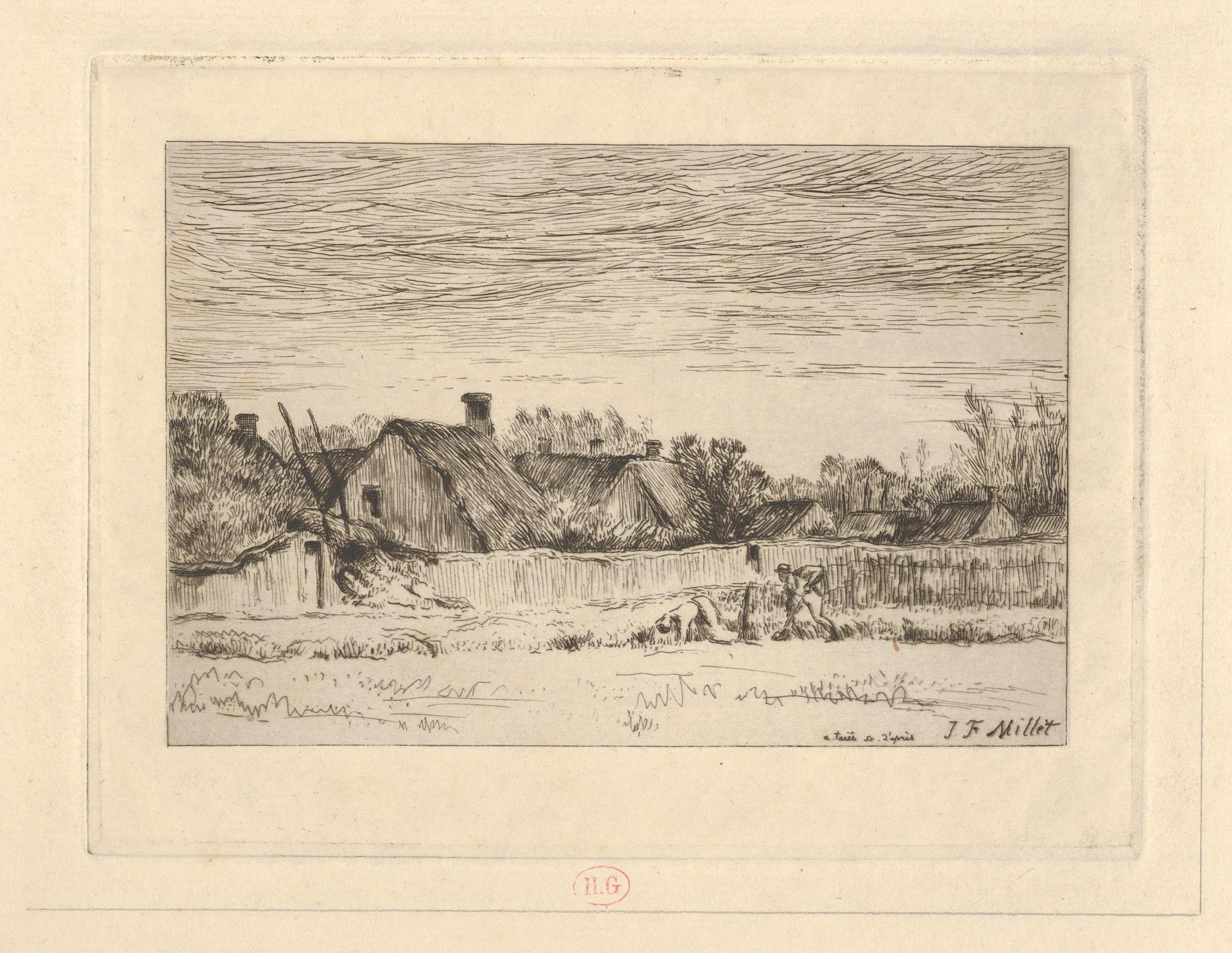
Unlike many contemporary landscape etchings, this print by Jean-François Millet, made between 1830 and 1875, puts peasant labor itself at the center: two figures are seen working in the fields, with a group of buildings rising behind them. The etching combines a rural setting with closely observed figure staffage.
Description
Two bent figures dominate the foreground, picking grain or similar crops and wearing traditional clothing that points to an earlier era. Behind them stand several buildings with shingled roofs, enclosed by a wall. Trees and bushes line the landscape, while the sky suggests a cloudy atmosphere.
Context
Jean-François Millet (1814–1875), a French painter and printmaker, became known for his depictions of peasant labor. This etching falls in a period when he was deeply engaged with rural life. Works of this kind cemented his reputation as a representative of the Barbizon School.
Impact
A quiet yet industrious mood emanates from the sheet, drawing the viewer into a rural idyll. Fine lines and detailed texture make the scene vivid and almost tangible.
Technique
As an etching, an intaglio process in which the drawing is etched into a metal plate, this monochrome black-and-white print uses fine hatching to render light and shadow as well as the structure of buildings and landscape.
AI-generated description text
Source: Metropolitan Museum of Art · Public Domain (CC0 1.0)