Sketches
Original title: Sketches
kurzbeschreibung
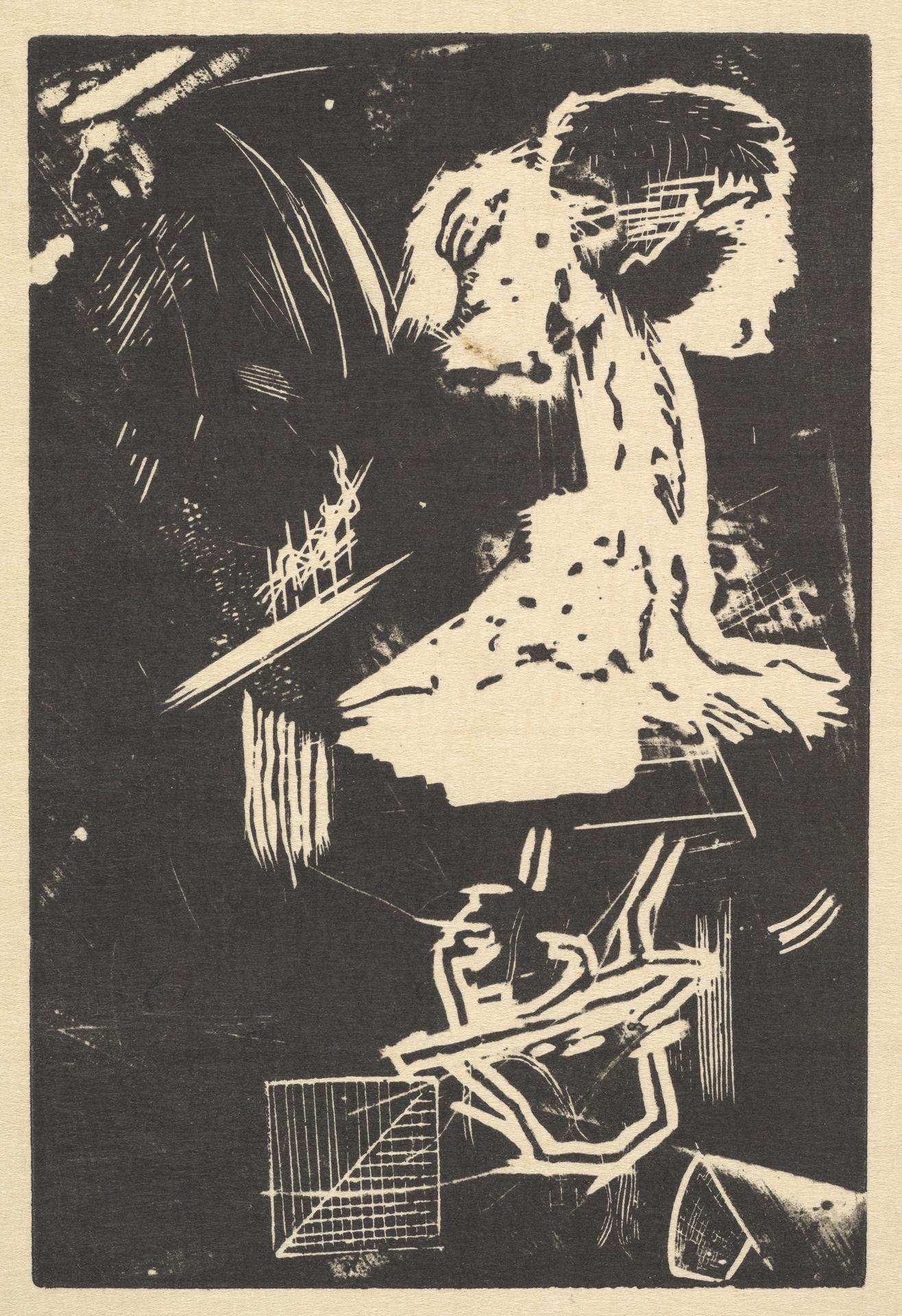
Jean-François Millet's woodcut Skizzen presents a pensive man in profile, made sometime between 1834 and 1875. This sheet is the second and final state, a posthumous impression measuring 14.2 by 9.5 cm.
Description
A barefoot man with a cloth wrapped around his waist turns to the left in profile. His expression is inward-looking, his posture calm. Behind him, abstract lines and shapes suggest a landscape or setting. The man occupies the foreground, and the layout is asymmetrical. Black and white dominate the palette, with no visible shadows.
Context
The French artist Jean-François Millet (1814–1875) painted and drew mainly scenes of peasant labor. This woodcut arose during a period when he was deeply engaged with printmaking, often as a preparatory study for paintings. That the impression was pulled posthumously indicates the block was printed only after Millet's death, pointing to a later appreciation of his graphic work.
Impact
The spare visual language and even light create a quiet, reflective mood. Because the background recedes into abstraction, attention falls on the human figure and his inner state.
Technique
For printing, the drawing was cut into a woodblock and pulled in black ink on paper. In this second and final state the block shows reworking; it was printed after Millet's death. Clear lines and strong contrasts define the process, in which only the raised areas carry ink.
AI-generated description text
Source: Metropolitan Museum of Art · Public Domain (CC0 1.0)