Proof from a block of sketches
Original title: Proof from a block of sketches
kurzbeschreibung
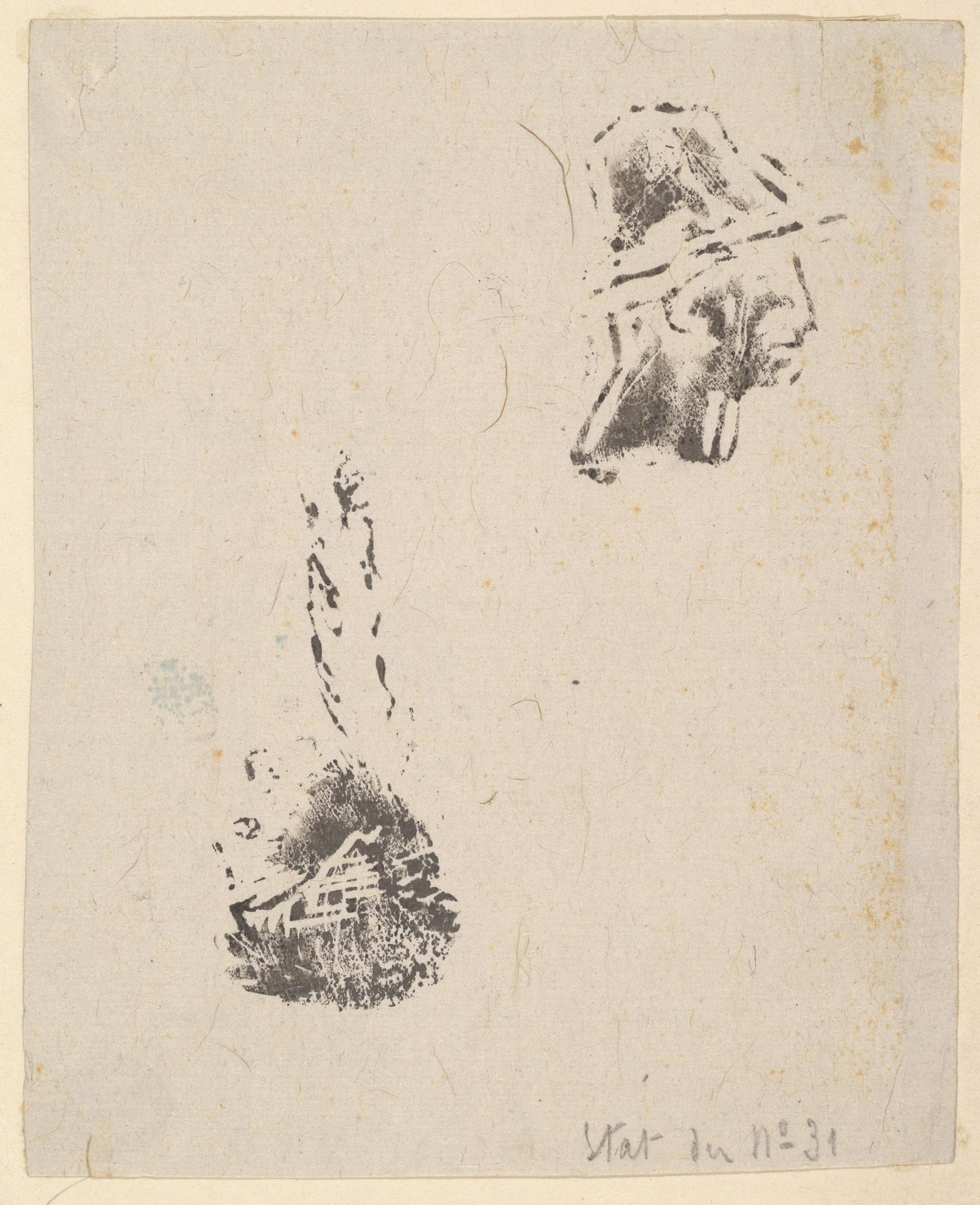
Two stylized figures, one larger and in motion, the other smaller and standing, define this woodcut by Jean-François Millet. The sheet was made between 1834 and 1875 and survives as a posthumous impression in the second and final state, laid down on card.
Description
On the left a larger figure seems caught mid-stride, while a smaller, standing figure occupies the right; both rise as dark, shadowed shapes against a lighter ground. Neither form is worked out in detail, which points to an early or exploratory stage of the work. Monochrome tones and diffuse light push shadow and outline to the fore. At the lower right an handwritten note reads 'Stat. in n° 31'.
Context
This woodcut probably served Millet as a study or proof taken from a sketchbook. The existence of a posthumous impression suggests the block was not printed until after the artist's death. Such prints were common practice in the nineteenth century, preserving drafts or making them available to a wider public.
Impact
Reducing the image to essentials gives the sheet a quiet, almost meditative note. For all its abstraction, the figures keep their liveliness and invite the viewer to follow their movements. Dark shapes against a light ground make for a clear, concentrated arrangement.
Technique
For this woodcut the motif was cut into a wooden block and then printed. The present impression, mounted on card, represents the second and definitive state. The process allows lines and shadows to be reproduced precisely, which brings out the sketch-like character of the motif.
AI-generated description text
Source: Metropolitan Museum of Art · Public Domain (CC0 1.0)