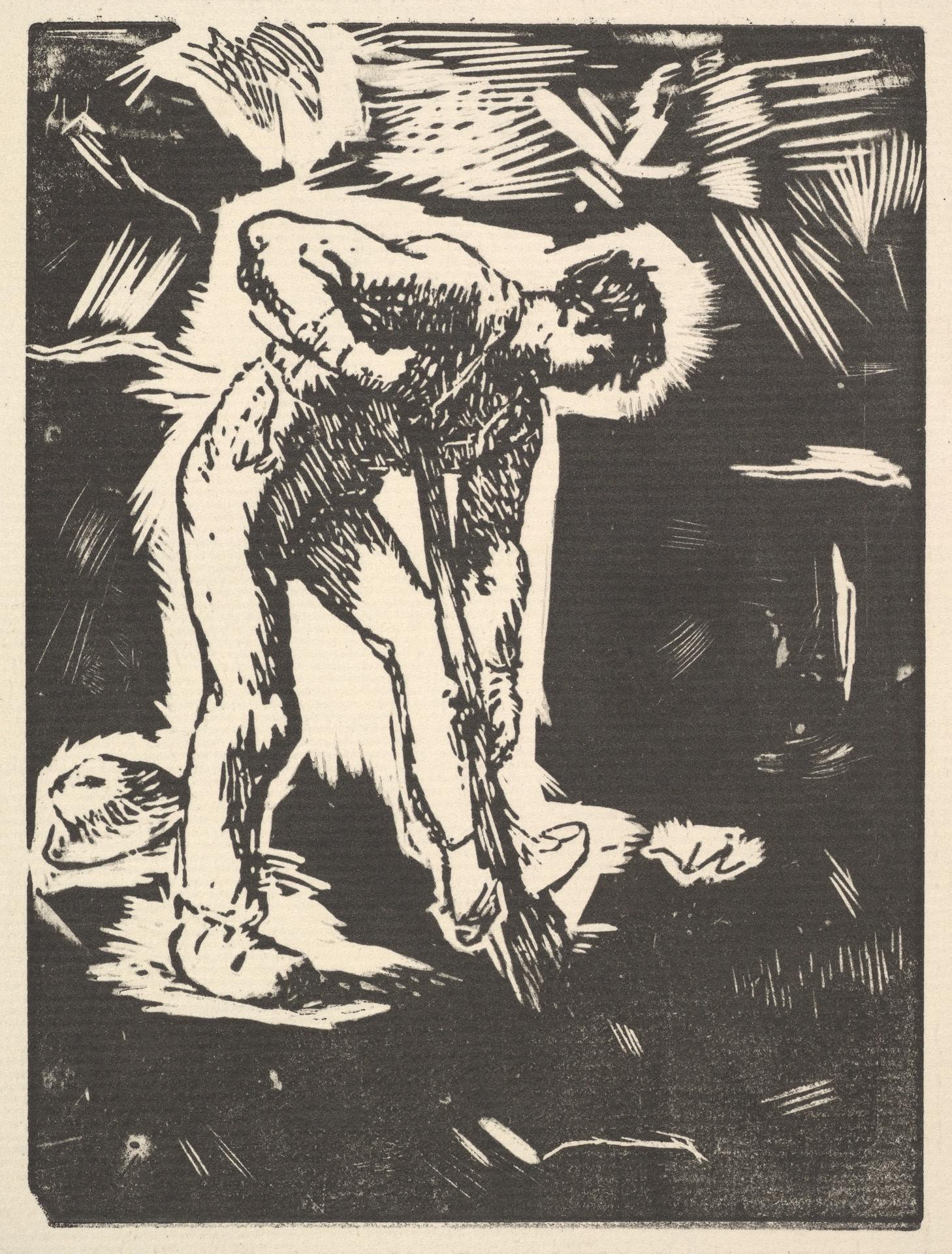
Digger (1863, Met-Objekt 4921)
Original title: Digger
kurzbeschreibung
Jean-François Millet made this woodcut, The Digger, in 1863, presenting a crouching, powerfully built labourer in peasant dress who grips a spade. The sheet was printed in brown ink and belongs to the second and final state of the block, and the impression here is posthumous.
Description
A crouching figure with a spade in both hands occupies the middle of the image. Taut muscles make the physical effort almost palpable. Fine parallel lines give folds to the traditional peasant clothing. Abstract, radiating strokes suggest sky or landscape behind him. In the monochrome brown rendering, light lines stand out against dark areas; the face has no detailed features.
Context
In 1863 Millet turned increasingly to rural life, and this woodcut falls within that phase. It belongs among his graphic works, which often take up everyday scenes of country people. That the impression is posthumous points to a later edition and to the continuing reception of his art.
Impact
The working figure gains an immediate, almost monumental presence, heightened by the reduced formal language. Dynamic tension arises from the abstract lines behind him, which draw the eye toward the digger's physical exertion. The monochrome palette evokes a grave, dignified mood.
Technique
The woodcut was printed in brown ink on paper. The technique is visible in the fine, parallel strokes that model contours and textures. The block measures 14 x 10.5 cm; the impression reproduces the second, definitive state of the block.
AI-generated description text
Source: Metropolitan Museum of Art · Public Domain (CC0 1.0)