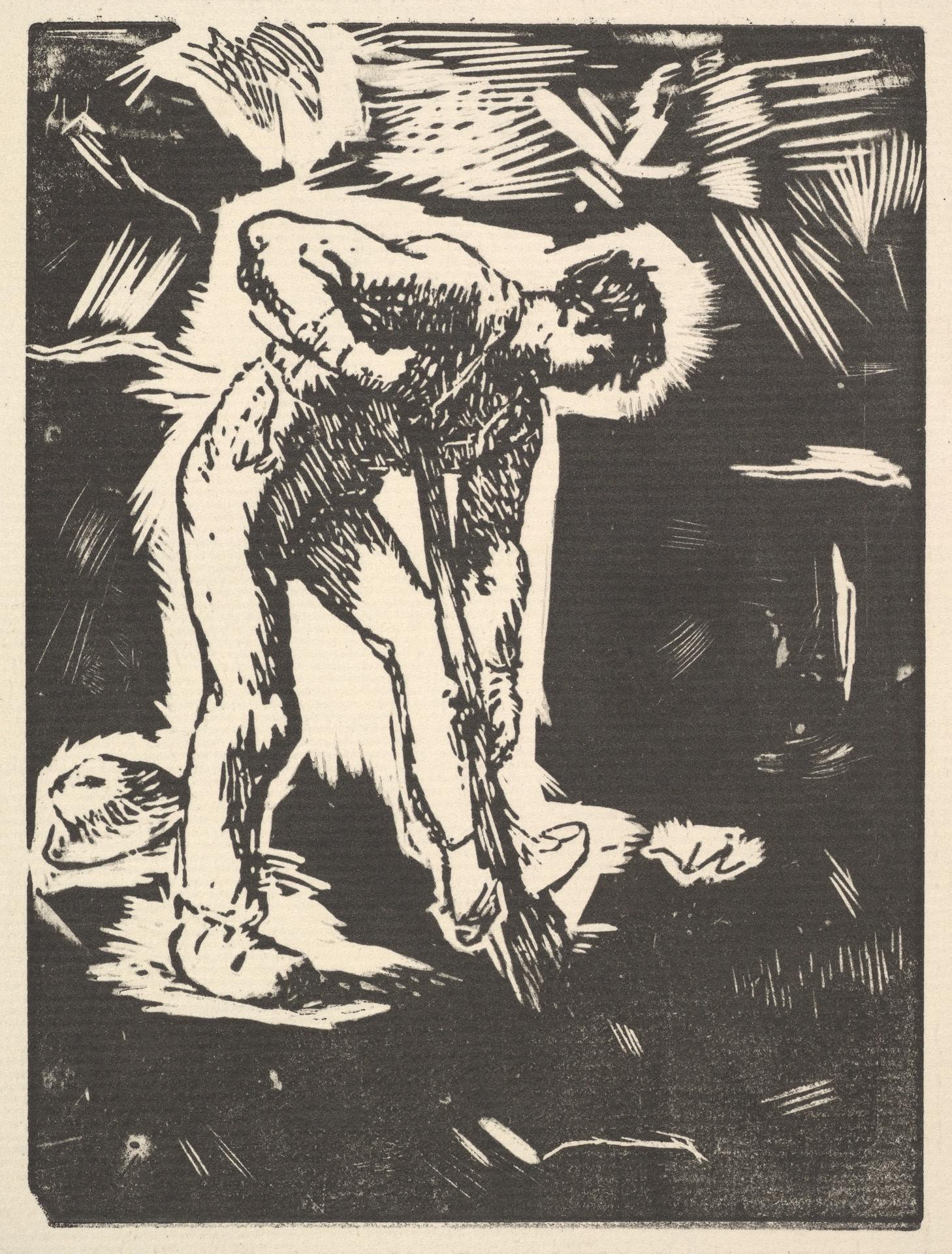
Digger (1863, Met-Objekt 4920)
Original title: Digger
kurzbeschreibung
A man works with a spade — Jean-François Millet captured this motif in a woodcut in 1863. It is the second and final state of the print, which appeared only in a posthumous edition. The scene takes its place among Millet's many images of peasant labor.
Description
Crouching, a man drives the spade into the ground. He wears a cap and jacket, and his face shows the strain. Behind him run abstract, radiating lines that suggest light or air. Scattered strokes and specks mark the soil as earth. The layout thrives on stark contrasts: a dark ground thrusts the worker forward.
Context
Millet made this print in 1863, during a period when he was deeply engaged with the life of rural people. It belongs in the orbit of his well-known paintings such as The Sower and The Gleaners. That the print appeared in a posthumous edition speaks to the esteem his work later enjoyed. Contemporary art criticism responded to Millet's portrayals of peasant labor with considerable controversy.
Impact
The print makes the physical presence of labor immediately palpable. Strong contrasts and a form reduced to essentials give the motif a monumental dignity. The viewer's gaze is drawn to the worker's exertion and concentration.
Technique
For this woodcut, Millet transferred the motif to a wooden block, which was then printed. Sharp lines and clearly defined shadows are characteristic of the process. The impression was made in black and white, which makes the contrasts stand out even more.
AI-generated description text
Source: Metropolitan Museum of Art · Public Domain (CC0 1.0)