The Diggers (1814–75)
Original title: The Diggers
kurzbeschreibung
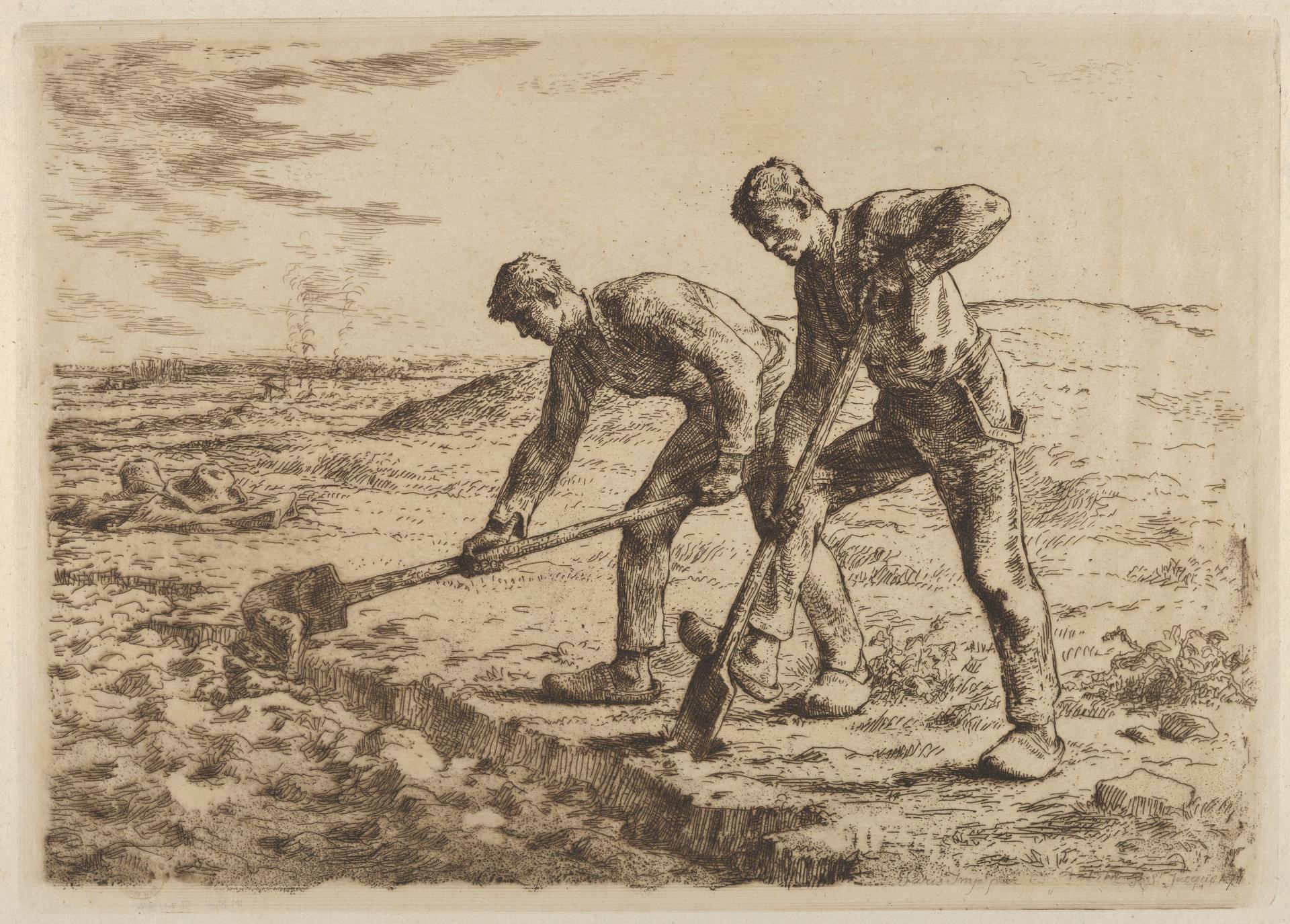
Two figures with spades stand in the soil: Jean-François Millet's etching 'The Graves' (1814–1875) turns attention to hard labor in the fields. The print is part of his engagement with peasant life and its hardships.
Description
In simple work clothes, two men lift earth, their spades thrust deep into the ground. The layout stays spare: an open expanse, with a few trees and bushes marking the horizon. Even light without harsh shadows suggests an overcast day. The arrangement focuses entirely on the two figures and their task, with no distracting details.
Context
Millet devoted many paintings and prints to the lives of rural people; this etching belongs to that series. It was made at a time when industrialization and migration from the countryside were reshaping the French population. The artist was part of the Barbizon school, which emphasized rural reality. The motif was printed in several states; this fourth and final state represents the completed version of the plate.
Impact
A quiet but insistent mood pervades the print, making the physical effort of the work palpable. Because almost all embellishment is absent, the eye is drawn to the dignity and drudgery of the laborers.
Technique
The etching on thin laid paper uses fine lines and hatching. In the fourth and final state, the plate is fully worked, just as it was intended for printing.
AI-generated description text
Source: Metropolitan Museum of Art · Public Domain (CC0 1.0)