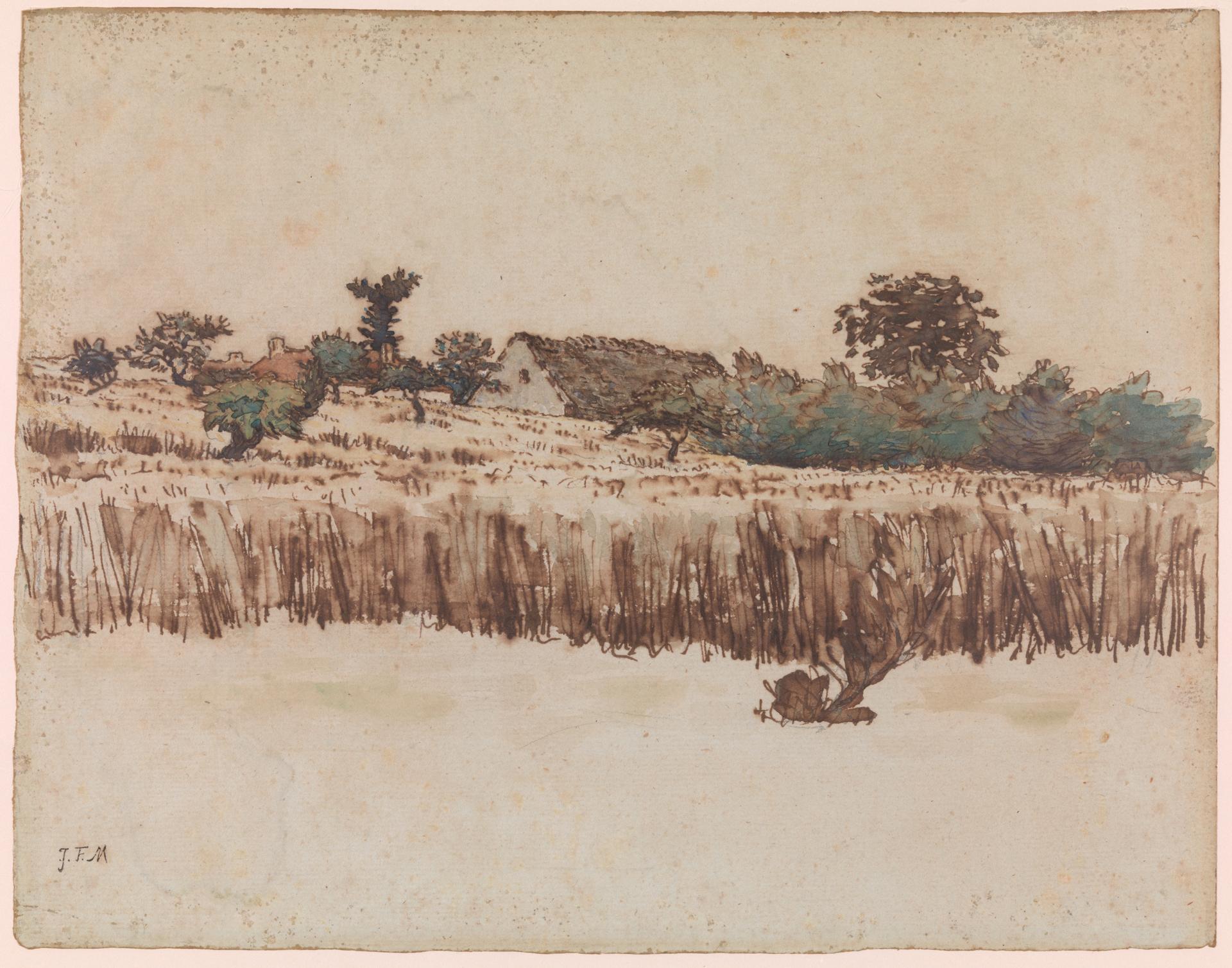
Hamlet in a Wheat Field, Vichy
Original title: Hamlet in a Wheat Field, Vichy
kurzbeschreibung
In 1867 Jean-François Millet made this sheet with pen and brown ink, adding brush, brown wash, and watercolor. It shows a rural area near Vichy: a wheatfield in the foreground, framed by trees and bushes. The study reflects Millet's engagement with the French landscape and its quiet grandeur.
Description
A field fills the foreground, bordered by a line of trees and bushes. Behind, more trees rise, along with a building with a roof that closes off the view. The arrangement is horizontal. Muted browns, green, and a few colored tints in the vegetation dominate the palette. The light seems diffuse, suggesting a daytime view. There are no figures or actions; the atmosphere is calm and almost deserted.
Context
Millet, known for his scenes of peasant life and rural landscapes, made this work during a stay in Vichy, a spa town in central France. It dates from a period when he was closely studying nature and the countryside, often as studies for larger paintings. Vichy is an unusual subject, since Millet otherwise worked mainly in Barbizon and Normandy. The technique of pen drawing, wash, and watercolor was typical of his spontaneous nature studies on site.
Impact
The muted colors and diffuse light create a calm, contemplative mood that draws the viewer into the rural idyll. With no figures present, the landscape itself takes center stage, emphasizing its timeless beauty. Precise pen work and soft washes together give the sheet depth and liveliness.
Technique
For contours and details Millet used pen and brown ink; brush and brown wash served for shadows and tonal values. Watercolors set subtle accents that highlight vegetation and field. This mixed technique allowed a quick yet nuanced capture of the landscape, characteristic of his study sheets.
AI-generated description text
Source: Metropolitan Museum of Art · Public Domain (CC0 1.0)